Table of Contents
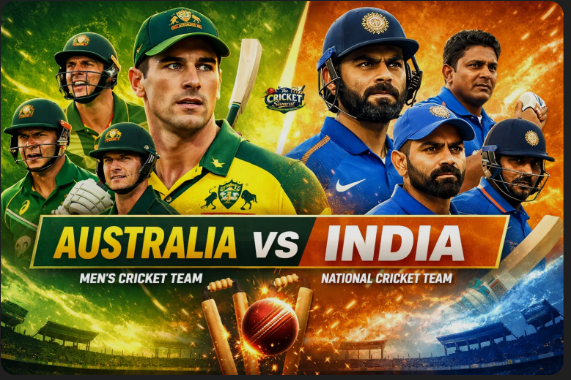
The India vs Australia rivalry is not just cricket. It is a contest of mindset, skill, and survival. From the first meeting to modern-day battles, every match has carried intensity, pressure, and emotion. This timeline captures how two cricketing giants shaped one of the sport’s greatest rivalries.
Latest Matches: India National Cricket Team vs Australian Men’s Cricket Team Timeline
| Tournament | Venue | Date | Toss | India Score | Australia Score | Result | Series | Player of the Match |
|---|---|---|---|---|---|---|---|---|
| Bilateral T20I | The Gabba, Brisbane | Nov 8, 2025 | N/A | 52/0 (4.5) | Did not bat | No result (rain) | India tour of Australia, 2025 | None |
| Bilateral T20I | Carrara Oval, Gold Coast | Nov 6, 2025 | N/A | 167/8 (20) | 119 (18.2) | India won by 48 runs | India tour of Australia, 2025 | N/A |
| Bilateral T20I | Bellerive Oval, Hobart | Nov 2, 2025 | N/A | 188/5 (18.3) | 186/6 (20) | India won by 5 wkts | India tour of Australia, 2025 | N/A |
| Bilateral T20I | Melbourne Cricket Ground | Oct 31, 2025 | N/A | 125 (18.4) | 126/6 (13.2) | Australia won by 4 wkts | India tour of Australia, 2025 | N/A |
| Bilateral T20I | Manuka Oval, Canberra | Oct 29, 2025 | N/A | 97/1 (9.4) | Did not bat | No result (rain) | India tour of Australia, 2025 | None |
| Bilateral ODI | Sydney Cricket Ground | Oct 25, 2025 | N/A | 237/1 (38.3) | 236 (46.4) | India won by 9 wkts | India tour of Australia, 2025 | N/A |
| Bilateral ODI | Adelaide Oval | Oct 23, 2025 | N/A | 264/9 (50) | 265/8 (46.2) | Australia won by 2 wkts | India tour of Australia, 2025 | N/A |
| Bilateral ODI | Perth Stadium | Oct 19, 2025 | N/A | 136/9 (26) | 131/3 (21.1) | Australia won by 7 wkts (DLS) | India tour of Australia, 2025 | N/A |
| ICC Champions Trophy | Dubai International Cricket Stadium | Mar 4, 2025 | Australia (bat) | 267/6 (48.1) | 264 (49.3) | India won by 4 wkts (11 balls rem.) | ICC Champions Trophy, 2025 | Virat Kohli (IND) |
| Border-Gavaskar Trophy | Sydney Cricket Ground | Jan 3, 2025 | N/A | 185 & 157 | 181 & 162/4 | Australia won by 6 wkts | India tour of Australia, 2024-25 | N/A |
| Border-Gavaskar Trophy | Melbourne Cricket Ground | Dec 26, 2024 | N/A | 369 & 155 | 474 & 234 | Australia won by 184 runs | India tour of Australia, 2024-25 | N/A |
| Border-Gavaskar Trophy | The Gabba, Brisbane | Dec 14, 2024 | N/A | 260 & 8/0 | 445 & 89/7d | Match drawn | India tour of Australia, 2024-25 | N/A |
| Border-Gavaskar Trophy | Adelaide Oval | Dec 6, 2024 | N/A | 180 & 175 | 337 & 19/0 | Australia won by 10 wkts | India tour of Australia, 2024-25 | N/A |
| Border-Gavaskar Trophy | Perth Stadium | Nov 22, 2024 | N/A | 150 & 487/6d | 104 & 238 | India won by 295 runs | India tour of Australia, 2024-25 | N/A |
| ICC Men’s T20 World Cup | Daren Sammy National Cricket Stadium, Gros Islet, St Lucia | Jun 24, 2024 | Australia (field) | 205/5 (20) | 181/7 (20) | India won by 24 runs | ICC Men’s T20 World Cup, 2024 | Rohit Sharma (IND) |
The First Collision (1947–1956) – When India Faced the World Champions
When India first walked onto the field against Australia in 1947, it was not just a cricket match. It was a reality check. India were a young Test nation, still learning the rhythm of five-day cricket, while Australia were the undisputed kings of the game. Confidence, depth, and ruthless efficiency separated the two sides.
Australia played like a team that expected to win. India played like a team learning how to survive. The gap was visible in shot selection, bowling discipline, and fielding sharpness. Australian batters dictated terms session by session, while Indian bowlers fought for respect rather than dominance. Yet even in heavy defeats, there were moments of resistance that mattered deeply for India’s cricketing future.
Crowds in India watched with mixed emotions. Pride in seeing their team face the best, frustration at the margins of defeat, and hope that one day these scorecards would tell a different story. Australia, meanwhile, began to recognize India not as pushovers, but as a team that would eventually challenge them in its own conditions.
This phase laid the foundation of the rivalry. One side ruled. The other observed, absorbed, and quietly prepared.
| Year | Match No. | Venue | Format | Result | Australia Key Performer | India Key Performer |
|---|---|---|---|---|---|---|
| 1947 | 1st Test | Brisbane | Test | Australia won | Don Bradman 185 | Vijay Hazare 116 |
| 1947 | 2nd Test | Sydney | Test | Australia won | Arthur Morris 155 | Lala Amarnath 51 |
| 1947 | 3rd Test | Melbourne | Test | Australia won | Lindsay Hassett 137 | Dattu Phadkar 123 |
| 1947 | 4th Test | Adelaide | Test | Draw | Don Bradman 201 | Vinoo Mankad 116 |
| 1947 | 5th Test | Sydney | Test | Australia won | Ray Lindwall 7 wickets | Vinoo Mankad 62 |
| 1956 | 1st Test | Madras | Test | Draw | Keith Miller 109 | Polly Umrigar 145 |
| 1956 | 2nd Test | Bombay | Test | Australia won | Richie Benaud 6 wickets | Vinoo Mankad 75 |
| 1956 | 3rd Test | Calcutta | Test | Draw | Neil Harvey 122 | Subhash Gupte 5 wickets |
The 1970s Shift – Confidence, Class, and First Big Statements
The 1970s changed everything in the India vs Australia rivalry. For the first time, India did not arrive as learners or survivors. They arrived with belief. Technique met temperament, and suddenly Australia were facing a team that expected to compete, not just endure.
India’s historic tour of Australia in 1969–70 became the loudest statement yet. Indian batters showed patience against pace. Bowlers executed plans instead of hoping for mistakes. The moment India won a Test on Australian soil, the rivalry tilted forever. Australia were shocked, fans were stunned, and Indian cricket found its voice.
Crowds back home followed every session like a movement. This was not just about winning matches, it was about dignity and confidence. India proved they could control games overseas. Australia, for the first time, felt pressure against India.
By the end of the decade, the tone had changed. No longer was this a mismatch. It was a contest of styles, minds, and nerve. The scorecards from the 1970s do not just show results, they show a psychological shift that shaped everything that followed.
| Year | Series | Venue | Match Result | Key Indian Performance | Key Australian Performance |
|---|---|---|---|---|---|
| 1969–70 | Test Series | Brisbane | India won | Ajit Wadekar leadership | Ian Chappell 75 |
| 1969–70 | Test Series | Melbourne | Draw | Sunil Gavaskar 116 | Graham McKenzie 6 wickets |
| 1969–70 | Test Series | Sydney | India won | Bhagwat Chandrasekhar 8 wickets | Doug Walters 103 |
| 1977–78 | Test Series | Madras | Draw | Gundappa Viswanath 97 | Rick McCosker 114 |
| 1977–78 | Test Series | Bangalore | India won | Bishan Singh Bedi 6 wickets | Greg Chappell 86 |
| 1979–80 | Test Series | Melbourne | Draw | Kapil Dev all-round show | Dennis Lillee 7 wickets |
The 1990s – Superstars Take Over the Rivalry
The 1990s transformed the India vs Australia rivalry into a battle of icons. This was no longer just about teams. It was about personalities colliding under pressure. Every match felt like a heavyweight contest, where one great performance could tilt the balance and ignite millions of fans.
India entered the decade powered by flair and skill, while Australia brought ruthless pace and mental toughness. Matches were shaped by confrontations between elite batters and aggressive fast bowlers. Short balls flew. Tempers flared. Crowds roared with every boundary and every hostile spell.
Australian teams played hard, pushed limits, and tested resolve. India responded with bravery and brilliance. Some matches slipped away, others were rescued by individual genius. Even in defeat, India’s resistance made Australia work harder than ever.
Television turned these battles into national events. Fans argued, celebrated, and suffered together. Scorecards from the 1990s are still debated today because they capture moments when cricket stopped being polite and became personal. This decade didn’t just produce results. It produced memories, grudges, and legends that carried the rivalry into a new age.
| Year | Series or Event | Venue | Result | India Key Performance | Australia Key Performance |
|---|---|---|---|---|---|
| 1991–92 | Test Series | Sydney | Australia won | Mohammad Azharuddin 93 | Mark Taylor 108 |
| 1991–92 | Test Series | Melbourne | Draw | Ravi Shastri 100 | Shane Warne 5 wickets |
| 1992 | World Cup | Brisbane | Australia won | Kapil Dev 48 | Mark Waugh 126 |
| 1996 | World Cup | Mumbai | India won | Ajay Jadeja late assault | Steve Waugh 120 |
| 1998 | Test Series | Chennai | India won | Sachin Tendulkar 155 | Michael Slater 127 |
| 1999 | Test Series | Adelaide | Australia won | Rahul Dravid 66 | Glenn McGrath 6 wickets |
| 1999 | ODI Series | Sharjah | Australia won | Sourav Ganguly 77 | Shane Warne 4 wickets |
2000–2004 – When the Rivalry Turned Explosive
Between 2000 and 2004, the India vs Australia rivalry stopped being competitive and started becoming combustible. This was the phase where cricket felt raw. Every session carried tension. Every player interaction felt personal. Australia arrived with swagger and domination. India responded with defiance and pride.
Australia pushed limits with relentless aggression. Verbal pressure, close-in fielding, and hostile spells became routine. India, once accused of folding under pressure, stood its ground. Batters refused to back away. Bowlers attacked instead of containing. Tempers flared, stares were exchanged, and crowds fed off the hostility.
This era produced matches where momentum swung violently. One session changed entire series narratives. Indian fans rode emotional highs and crushing lows. Australian fans admired dominance but felt resistance growing stronger.
The scorecards from this phase are unforgettable. They reflect collapses, comebacks, and moments when skill met mental strength. More importantly, this period cemented the rivalry’s identity. No smiles. No softness. Just elite cricket played on the edge, where respect existed only after survival.
| Year | Series | Venue | Result | India Key Performance | Australia Key Performance |
|---|---|---|---|---|---|
| 2000 | Test Series | Mumbai | Australia won | Sachin Tendulkar 76 | Glenn McGrath 6 wickets |
| 2000 | Test Series | Bangalore | Australia won | Anil Kumble 7 wickets | Steve Waugh 102 |
| 2001 | Test Series | Kolkata | India won | VVS Laxman 281 | Ricky Ponting 86 |
| 2001 | Test Series | Chennai | India won | Harbhajan Singh 15 wickets | Adam Gilchrist 122 |
| 2003 | World Cup Final | Johannesburg | Australia won | Virender Sehwag 82 | Ricky Ponting 140 |
| 2004 | Test Series | Adelaide | Australia won | Rahul Dravid 233 | Jason Gillespie 201 |
| 2004 | Test Series | Chennai | India won | Virender Sehwag 155 | Michael Clarke 91 |
Border Gavaskar Era (2004–2010) – The Rivalry Gets Its Name
By 2004, the India vs Australia rivalry had earned its own identity. The Border Gavaskar Trophy was no longer just a series title. It became a symbol of pride, pressure, and elite Test cricket. Every match felt like a referendum on character.
Australia still carried the aura of dominance, but India arrived prepared, fearless, and tactically sharp. Captains fought battles within battles. Bowlers hunted in packs. Batters absorbed pressure and counterpunched when it mattered most. There was no room for passive cricket anymore.
Crowds sensed it too. Stadiums buzzed from the first ball. One session could flip a Test. One dropped catch could haunt an entire tour. The rivalry matured during this phase. Aggression remained, but it was backed by discipline and planning.
The scorecards from this era tell stories of epic duels, last-day drama, and series that went down to the wire. By 2010, it was clear. This was not about history anymore. This was about supremacy in the present.
| Year | Series Location | Match Venue | Result | India Key Performance | Australia Key Performance |
|---|---|---|---|---|---|
| 2004 | Australia | Adelaide | Australia won | Rahul Dravid 233 | Michael Clarke 91 |
| 2004 | Australia | Melbourne | Australia won | Virender Sehwag 195 | Shane Warne 8 wickets |
| 2004 | Australia | Sydney | Draw | Sachin Tendulkar 241 | Glenn McGrath 5 wickets |
| 2007–08 | Australia | Melbourne | Australia won | Anil Kumble 5 wickets | Ricky Ponting 92 |
| 2007–08 | Australia | Sydney | Australia won | Rahul Dravid 117 | Andrew Symonds 162 |
| 2008 | India | Delhi | India won | Gautam Gambhir 167 | Brett Lee 5 wickets |
| 2010 | India | Mohali | India won | Sachin Tendulkar 214 | Doug Bollinger 5 wickets |
2018–2021 – India Breaks the Australian Fortress
Between 2018 and 2021, the India vs Australia rivalry reached a moment many believed would never come. India did not just compete in Australia. They conquered it. Twice. And they did it under pressure that would have crushed most teams.
The 2018–19 series announced the shift. India played fearless cricket, matched Australia’s intensity, and stayed disciplined across five brutal days. For the first time, Australia’s home advantage looked fragile. Indian bowlers hunted relentlessly, and batters showed patience and authority.
But 2020–21 elevated the rivalry into legend. India were battered by injuries, written off by experts, and humiliated early in the series. What followed was one of the greatest fightbacks in Test history. Young players stepped into hostile stadiums with calm faces and unbreakable belief.
Fans watched in disbelief as India refused to surrender. Every session felt like defiance. Every partnership felt symbolic. The scorecards from this era are not just numbers. They are proof that mental strength can rewrite history and that the Australian fortress was finally breached.
| Year | Series | Venue | Result | India Key Performance | Australia Key Performance |
|---|---|---|---|---|---|
| 2018–19 | Test Series | Adelaide | India won | Cheteshwar Pujara 123 | Travis Head 72 |
| 2018–19 | Test Series | Melbourne | India won | Jasprit Bumrah 6 wickets | Aaron Finch 50 |
| 2018–19 | Test Series | Sydney | Draw | Rishabh Pant 159 | Nathan Lyon 5 wickets |
| 2020–21 | Test Series | Adelaide | Australia won | R Ashwin 28 and 4 wickets | Pat Cummins 5 wickets |
| 2020–21 | Test Series | Melbourne | India won | Ajinkya Rahane 112 | Marnus Labuschagne 48 |
| 2020–21 | Test Series | Sydney | Draw | Hanuma Vihari resistance | Steve Smith 131 |
| 2020–21 | Test Series | Brisbane | India won | Shubman Gill 91 | Josh Hazlewood 5 wickets |
White Ball Warfare (ODIs and T20s) – Modern Firepower Era
When India and Australia clashed in ODIs and T20s, the rivalry took on a faster heartbeat. There was no time to settle, no room for patience. One over could change the match. One mistake could go viral across the world in seconds.
Australia brought brute force, fearless hitting, and ruthless efficiency. India answered with depth, adaptability, and calculated aggression. Powerplays became battlefields. Death overs felt like street fights. Fielding intensity rose, sledging returned, and captains played tactical poker with matchups and bowling changes.
Fans experienced this rivalry differently in white ball cricket. Stadiums turned electric under lights. Social media exploded after every six or dropped catch. Pressure was instant and unforgiving. Unlike Tests, there was no tomorrow.
Scorecards from this era reflect modern cricket’s chaos. Massive totals. Unreal chases. Individual brilliance under extreme pressure. These matches were not about wearing teams down. They were about striking first and striking hard. The white ball era ensured the rivalry stayed relevant, ruthless, and globally captivating in the modern age.
| Year | Format | Tournament or Series | Venue | Result | India Key Performance | Australia Key Performance |
|---|---|---|---|---|---|---|
| 2003 | ODI | World Cup Final | Johannesburg | Australia won | Virender Sehwag 82 | Ricky Ponting 140 |
| 2007 | T20 | World T20 | Durban | India won | Yuvraj Singh 70 | Matthew Hayden 73 |
| 2013 | ODI | Bilateral Series | Jaipur | India won | Rohit Sharma 141 | James Faulkner 5 wickets |
| 2016 | T20 | World T20 | Mohali | India won | Virat Kohli 82 | Shane Watson 44 |
| 2019 | ODI | Bilateral Series | Ranchi | India won | MS Dhoni 87 | Peter Handscomb 59 |
| 2020 | ODI | Bilateral Series | Canberra | Australia won | Hardik Pandya 92 | Steve Smith 104 |
| 2023 | ODI | World Cup Final | Ahmedabad | Australia won | KL Rahul 66 | Travis Head 137 |
Aggression, Respect, and Legacy – Why This Rivalry Is Eternal
What makes the India vs Australia rivalry eternal is not just wins or trophies. It is the edge. The fire. And the respect that survives after five days of war. Few rivalries have walked this fine line so consistently.
Aggression has always been visible. Hard stares, sharp words, hostile spells, and fearless counterattacks. Neither side ever backed down. Australia tested mental limits. India answered with resilience and skill. Over time, this aggression evolved. It stopped being reckless and became purposeful.
Yet beneath the intensity lies deep respect. Players from both teams have repeatedly acknowledged that facing each other brings out their best cricket. This rivalry has produced tougher athletes, smarter tacticians, and mentally stronger teams.
Fans feel it too. Every match carries history. Every session echoes past battles. Even in defeat, there is pride. Even in victory, there is acknowledgment of the opponent.
The legacy of this rivalry is simple but powerful. When India and Australia play, cricket feels bigger. More serious. More alive. That is why this rivalry never fades. It renews itself with every generation.
| Aspect | Defining Detail |
|---|---|
| Nature of Rivalry | Fierce, aggressive, elite-level competition |
| Most Intense Era | 2000–2010 Border Gavaskar years |
| Key Emotional Element | Mental toughness under pressure |
| Fan Impact | Stadium sell-outs, global viewership |
| On-Field Identity | Fearless cricket, no backing down |
| Respect Factor | Mutual admiration after hard-fought series |
| Lasting Legacy | Rivalry that defines modern international cricket |
Key Performances
| Player | Team | Match Date | Performance |
|---|---|---|---|
| Rohit Sharma | 🇮🇳 IND | Jun 24, 2024 | 92 off 41 balls (blistering T20I knock powering India to a 24-run win in World Cup Super 8s) |
| Yashasvi Jaiswal | 🇮🇳 IND | Nov 22, 2024 | 161 off 297 balls (anchoring India’s massive 295-run Test victory in Perth) |
| Travis Head | 🇦🇺 AUS | Dec 14, 2024 | 152 off 160 balls (counterattacking century rescuing Australia in Brisbane Test draw) |
| Jasprit Bumrah | 🇮🇳 IND | Nov 22, 2024 | 5/30 (devastating spell dismantling Australia in Perth Test) |
| Mitchell Starc | 🇦🇺 AUS | Dec 6, 2024 | 6/48 (fiery pace ripping through India in Adelaide Test triumph) |
| Nathan Lyon | 🇦🇺 AUS | Mar 9, 2023 | 8/64 (spin wizardry collapsing India in Indore Test) |
| Travis Head | 🇦🇺 AUS | Nov 19, 2023 | 137 off 120 balls (match-winning ODI World Cup final century sealing Australia’s sixth title) |
| Ravindra Jadeja | 🇮🇳 IND | Feb 9, 2023 | 7/42 (all-round magic with the ball in Nagpur Test rout) |
| Virat Kohli | 🇮🇳 IND | Mar 19, 2023 | 186 off 364 balls (marathon innings grinding out a draw in Ahmedabad Test) |
| Adam Zampa | 🇦🇺 AUS | Mar 22, 2023 | 4/45 (crucial wickets clinching ODI series decider in Chennai) |
Conclusion
From early mismatches to modern masterpieces, the India vs Australia rivalry has evolved into cricket’s ultimate test of character. Aggression, respect, heartbreak, and glory define its journey. Every generation adds new chapters, but the essence remains unchanged. When these teams meet, cricket reaches its highest level.
Frequently Asked Questions (FAQs)
When did India and Australia first play a cricket match?
India and Australia first played against each other in Test cricket in 1947 during India’s tour of Australia, marking the beginning of a historic rivalry.
Why is the India vs Australia rivalry so intense?
The rivalry is intense due to competitive matches, aggressive playing styles, iconic player battles, and frequent high-pressure clashes in Tests, World Cups, and bilateral series.
What is the Border Gavaskar Trophy?
The Border Gavaskar Trophy is a Test series played between India and Australia, named after Allan Border and Sunil Gavaskar, symbolizing elite Test cricket rivalry.
When did India first win a Test series in Australia?
India won its first Test series in Australia during the 2018–19 tour, breaking a long-standing Australian home dominance.
Which formats have defined the India vs Australia rivalry the most?
While Tests shaped the rivalry’s identity, ODIs and T20s added speed, aggression, and global fan engagement, making it fierce across all formats.