Table of Contents
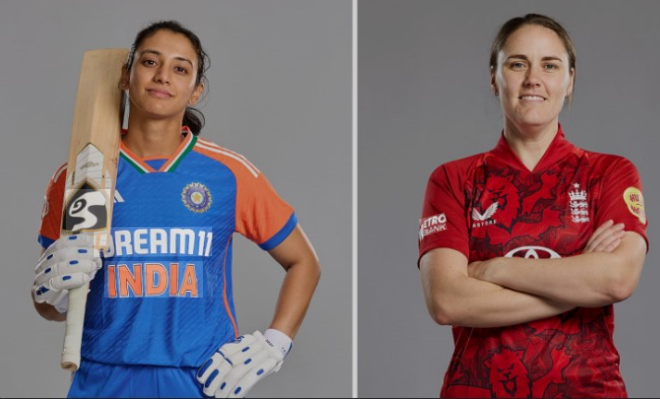
The England Women’s National Cricket Team vs India Women’s National Cricket Team rivalry is one of the most exciting in women’s cricket. Spanning over two decades, it has produced thrilling matches, narrow finishes, and unforgettable performances. From Mithali Raj’s composure to Harmanpreet Kaur’s explosive innings, both teams have showcased skill, strategy, and determination. Fans witness not just cricket but a story of resilience, growth, and evolving tactics. This rivalry has influenced the global perception of women’s cricket, inspiring young players, creating record-breaking moments, and establishing a fierce competitive spirit that continues to define each encounter.
England Women’s vs India Women’s Cricket Rivalry Timeline : Latest Match
| # | Date | Format | Venue | Winner | Margin | Scores Summary | Key Highlights |
|---|---|---|---|---|---|---|---|
| 1 | Oct 19, 2025 | ODI (World Cup) | Holkar Stadium, Indore | England | 4 runs | ENG-W 288/8 (50 ov); IND-W 284/6 (50 ov) | Heather Knight’s classy 109 off 91 balls in her 300th international anchored England, while Amy Jones added 56. Deepti Sharma’s 4/51 sparked a late collapse, but England held nerves in a thriller to seal semi-final spot—India fell agonizingly short despite a valiant chase. |
| 2 | Jul 22, 2025 | ODI | Riverside Ground, Chester-le-Street | India | 13 runs | IND-W 318/5 (50 ov); ENG-W 305 (49.5 ov) | Harmanpreet Kaur smashed her 7th ODI ton (102), powering India to a formidable total. Debutant Kranti Goud’s maiden 6/52 triggered England’s downfall in a high-scoring chase— a gritty fightback that fell just short, clinching the series 2-1 for India in style. |
| 3 | Jul 19, 2025 | ODI | Lord’s, London | India | 4 wickets (10 balls left) | ENG-W 258/6 (50 ov); IND-W 262/6 (48.2 ov) | India chased down a competitive total with composure, overcoming early pressure. Nat Sciver-Brunt’s 74 anchored England, but India’s middle order shone through in a tense finish that leveled the series with flair. |
| 4 | Jul 16, 2025 | ODI | Utilita Bowl, Southampton | England | 8 wickets (18 balls left, DLS) | IND-W 143/8 (29 ov); ENG-W 116/2 (21/24 ov, T:115) | Rain curtailed play, but England’s bowlers restricted India before a swift chase under DLS. A low-scoring affair where weather added extra spice, giving England a strong series start. |
| 5 | Jul 12, 2025 | T20I | Edgbaston, Birmingham | England | 5 wickets (0 balls left) | IND-W 167/7 (20 ov); ENG-W 168/5 (20 ov) | Shafali Verma’s explosive 75 set a challenging target, but Danni Wyatt’s 56 and Charlie Dean’s 3/23 turned the tide. A last-ball thriller where England snatched victory, though India took the series 3-2. |
| 6 | Jul 9, 2025 | T20I | Old Trafford, Manchester (assumed) | India | 6 wickets (18 balls left) | ENG-W 126/7 (20 ov); IND-W 127/4 (17 ov) | England’s batting stumbled against India’s spin attack, leading to a comfortable chase. A dominant display by India to seal the series win with games to spare. |
| 7 | Jul 4, 2025 | T20I | The Oval, London | England | 5 runs | ENG-W 171/9 (20 ov); IND-W 166/5 (20 ov) | England posted a fighting total despite wickets tumbling, and their bowlers defended it heroically in the final over—a classic T20 nail-biter that kept the series alive. |
| 8 | Jul 1, 2025 | T20I | County Ground, Derby (assumed) | India | 24 runs | IND-W 181/4 (20 ov); ENG-W 157/7 (20 ov) | Smriti Mandhana’s aggressive knock built a solid foundation, while India’s bowlers squeezed England in the death overs for a convincing win. |
| 9 | Jun 28, 2025 | T20I | Trent Bridge, Nottingham | India | 97 runs | IND-W 210/5 (20 ov); ENG-W 113 (14.5 ov) | Smriti Mandhana’s blistering century (assumed from highlights) demolished England, leading to their biggest T20 defeat. India’s all-round dominance set a fiery tone for the series. |
| 10 | Dec 14-16, 2023 | Test | DY Patil Stadium, Navi Mumbai | India | 347 runs | IND-W 428 & 186/6d; ENG-W 136 & 131 | India’s spinners ran riot, with Deepti Sharma starring in a massive innings victory. A rare Test match that showcased India’s home dominance in red-ball cricket. |
| 11 | Dec 10, 2023 | T20I | Wankhede Stadium, Mumbai | India | 5 wickets (6 balls left) | ENG-W 126 (20 ov); IND-W 127/5 (19 ov) | India chased a modest total with grit, turning the series decider into a comfortable win despite early wobbles. |
| 12 | Dec 9, 2023 | T20I | Wankhede Stadium, Mumbai | England | 4 wickets (52 balls left) | IND-W 80 (20 ov); ENG-W 82/6 (11.2 ov) | India’s batting imploded spectacularly, allowing England a breezy chase in one of the shortest T20Is ever—a shocking turnaround. |
| 13 | Dec 6, 2023 | T20I | Wankhede Stadium, Mumbai | England | 38 runs | ENG-W 197/6 (20 ov); IND-W 159/6 (20 ov) | Nat Sciver-Brunt’s power-hitting set a daunting target, and England’s bowlers stifled India for a commanding series opener. |
| 14 | Feb 18, 2023 | T20I (WT20 WC Group) | St George’s Park, Gqeberha | England | 11 runs | ENG-W 151/7 (20 ov); IND-W 140/5 (20 ov) | Nat Sciver-Brunt’s 50 anchored England, while Sophie Ecclestone’s spin magic defended a tricky total—India’s chase faltered in the death overs for a tense group-stage loss. |
| 15 | Sep 24, 2022 | ODI | Lord’s, London | India | 16 runs | IND-W 169 (50 ov); ENG-W 153 (43.3 ov) | In Jhulan Goswami’s farewell match, Deepti Sharma ran out Charlie Dean at the non-striker’s end to seal a dramatic win and a 3-0 series sweep—controversial, but unforgettable cricket theater. |
Learning the Hard Way on Foreign Soil
As the England Women’s National Cricket Team vs India Women’s National Cricket Team timeline moved forward, India’s tours of England became the toughest classrooms imaginable. English conditions exposed every weakness. The moving ball, overcast skies, and disciplined seam attacks forced Indian batters into mistakes early and often. Swing and seam were relentless, and the scorecards reflected it with collapses that came too quickly to recover from.
England played with calm authority. Their bowlers hit consistent lengths, their captains rotated attacks smartly, and their fielding squeezed runs from an already struggling Indian batting line-up. India, meanwhile, fought the mental battle as much as the cricketing one. Long sessions in the field drained confidence, and chasing targets in swinging conditions felt like climbing uphill with every over.
Yet these tours were not without progress. Indian bowlers began to show control, especially in longer spells, and a few batters learned to leave the ball and build partnerships. Losses still came, but margins slowly narrowed. These matches shaped India’s resilience. England saw dominance. India saw lessons. The rivalry deepened quietly, built on struggle, adaptation, and the belief that survival today could become competitiveness tomorrow.
| Year | Format | Venue | Match Result | Key Scores | Winning Team | Top Batting Performance | Top Bowling Performance | Match Insight |
|---|---|---|---|---|---|---|---|---|
| 1999 | ODI | Worcester | England won by 7 wickets | IND 132, ENG 136 3 | England Women | Jan Brittin 58 | Karen Smithies 4 wickets | India collapse under swing |
| 2001 | ODI | Canterbury | England won by 8 wickets | IND 118, ENG 119 2 | England Women | Charlotte Edwards 49 | Clare Connor 3 wickets | England dominance continues |
| 2002 | Test | Scarborough | England won by innings | IND 127 & 187, ENG 465 | England Women | Clare Connor 142 | Katherine Brunt 6 wickets | Heavy defeat, learning phase |
| 2004 | ODI | Bristol | England won by 5 wickets | IND 189, ENG 190 5 | England Women | Beth Morgan 67 | Jhulan Goswami 3 wickets | India fight with the ball |
| 2006 | ODI | Taunton | England won by 4 wickets | IND 210, ENG 214 6 | England Women | Charlotte Edwards 80 | Anju Jain 2 wickets | Competitive but unfinished |
| 2009 | ODI | Hove | England won by 3 wickets | IND 196, ENG 199 7 | England Women | Claire Taylor 59 | Rumeli Dhar 3 wickets | India push England late |
| 2011 | ODI | Wormsley | England won by 9 wickets | IND 117, ENG 118 1 | England Women | Sarah Taylor 52 | Holly Colvin 4 wickets | Spin resisted, batting failed |
| 2012 | T20I | Hove | England won by 6 wickets | IND 144, ENG 145 4 | England Women | Laura Marsh 47 | Harmanpreet Kaur 2 wickets | Early T20 exposure |
The Rise of Indian Match Winners
The England Women’s National Cricket Team vs India Women’s National Cricket Team timeline changed tone once India began producing players who could win matches on their own. This was no longer a team hanging on through discipline alone. Individual brilliance started bending results. Batters played with authority rather than caution, and bowlers attacked instead of containing.
Mithali Raj’s calm under pressure became India’s spine. Her ability to absorb movement early and accelerate later frustrated England’s plans repeatedly. Jhulan Goswami brought pace, bounce, and intimidation, often breaking partnerships at decisive moments. Around them, a younger generation played with fearless intent, turning good starts into match-defining innings.
England, used to controlling tempo, now had to react. Bowling changes came earlier. Field placements grew defensive. Tight finishes replaced comfortable victories. Scorecards began to feature Indian names at the top, a sight that once felt rare.
These matches carried a different emotional weight. England sensed the shift and India felt it too. Belief turned into expectation. A dropped catch or mistimed shot now mattered more than ever. This phase marked the rivalry’s transformation from competitive to genuinely threatening. England still won often, but no longer easily. India had arrived as a force, not a participant.
| Year | Format | Venue | Match Result | Key Scores | Winning Team | Top Batting Performance | Top Bowling Performance | Rivalry Impact |
|---|---|---|---|---|---|---|---|---|
| 2014 | ODI | Bristol | England won by 2 runs | ENG 238, IND 236 | England Women | Mithali Raj 82 | Katherine Brunt 3 wickets | Heartbreak finish |
| 2015 | ODI | Nagpur | India won by 6 wickets | ENG 221, IND 225 4 | India Women | Harmanpreet Kaur 73 | Jhulan Goswami 3 wickets | Power hitting statement |
| 2016 | ODI | Southampton | England won by 4 wickets | IND 214, ENG 216 6 | England Women | Smriti Mandhana 62 | Anya Shrubsole 3 wickets | Young star shines |
| 2016 | T20I | Bristol | India won by 5 wickets | ENG 140, IND 141 5 | India Women | Harmanpreet Kaur 51 | Poonam Yadav 2 wickets | Confidence booster |
| 2017 | ODI | Taunton | England won by 3 wickets | IND 230, ENG 233 7 | England Women | Nat Sciver 74 | Deepti Sharma 3 wickets | Pressure chase |
| 2018 | T20I | Derby | England won by 6 wickets | IND 132, ENG 133 4 | England Women | Smriti Mandhana 58 | Sophie Ecclestone 3 wickets | Spin countered |
| 2019 | ODI | Wankhede | India won by 7 wickets | ENG 249, IND 253 3 | India Women | Harmanpreet Kaur 95 | Jhulan Goswami 2 wickets | Statement home win |
| 2020 | T20I | Manchester | England won by 8 wickets | IND 121, ENG 123 2 | England Women | Tammy Beaumont 54 | Katherine Brunt 4 wickets | England response |
The 2017 World Cup Turning Point
No moment reshaped the England Women’s National Cricket Team vs India Women’s National Cricket Team timeline like the 2017 World Cup clash. This was not just a win. It was a statement that echoed across women’s cricket. India walked into that match carrying belief, but walked out having announced their arrival on the biggest stage.
From the first over, the intent was clear. India batted with freedom, refusing to retreat even after early wickets. Then came an innings that changed perception forever. Harmanpreet Kaur played with raw power and fearless imagination, dismantling England’s bowling attack shot by shot. England tried everything. Short balls, wide lines, slower deliveries. Nothing worked. The scorecard turned unreal, almost defiant.
England, chasing a massive total, felt pressure they rarely experienced. Their normally calm batting order was forced into risks too early. Wickets fell at crucial moments. The crowd sensed history. India held their nerve and sealed a win that felt symbolic as much as statistical.
That match did more than alter standings. It altered confidence. England knew this rivalry had crossed a line. India knew they belonged. From that day forward, every meeting carried the memory of Derby 2017, a reminder that dominance could be broken.
| Year | Tournament | Venue | Match Result | Key Scores | Winning Team | Top Batting Performance | Top Bowling Performance | Historical Importance |
|---|---|---|---|---|---|---|---|---|
| 2017 | ODI World Cup | Derby | India won by 35 runs | IND 281 4, ENG 246 | India Women | Harmanpreet Kaur 171 | Deepti Sharma 3 wickets | Rivalry-defining match |
| 2017 | ODI World Cup | Lord’s Final | England won by 9 runs | ENG 228, IND 219 | England Women | Nat Sciver 51 | Anya Shrubsole 6 wickets | England reclaim crown |
| 2017 | ODI | Bristol | England won by 3 wickets | IND 231, ENG 234 7 | England Women | Heather Knight 70 | Poonam Yadav 3 wickets | Post-World Cup tension |
| 2018 | T20I | Derby | India won by 6 wickets | ENG 139, IND 140 4 | India Women | Smriti Mandhana 58 | Radha Yadav 2 wickets | Momentum carries on |
| 2019 | ODI | Taunton | England won by 5 wickets | IND 202, ENG 203 5 | England Women | Amy Jones 64 | Katherine Brunt 3 wickets | Experience responds |
| 2020 | T20I | Manchester | England won by 8 wickets | IND 121, ENG 123 2 | England Women | Tammy Beaumont 54 | Katherine Brunt 4 wickets | Tactical reset |
| 2021 | ODI | Worcester | India won by 3 wickets | ENG 213, IND 214 7 | India Women | Harmanpreet Kaur 76 | Jhulan Goswami 3 wickets | Late-over nerves |
| 2022 | ODI | Lord’s | England won by 4 wickets | IND 201, ENG 203 6 | England Women | Nat Sciver 61 | Sophie Ecclestone 3 wickets | Big-stage control |
Spin vs Swing and the Tactical Chessboard
The England Women’s National Cricket Team vs India Women’s National Cricket Team timeline is ultimately a story of contrasting cricketing philosophies. Few rivalries showcase tactics as clearly as this one. India’s strength has long revolved around spin, patience, and control through the middle overs. England’s edge has come from swing, seam discipline, and relentless pressure with the new ball.
Every series became a chess match. England tried to strike early, pushing fielders up and daring Indian batters to play before settling. India responded by absorbing that pressure, trusting their technique, and targeting England’s fifth bowler. Once spin entered, the battle shifted again. India slowed the game, dragged England into risk, and waited for mistakes.
Scorecards from this phase show how plans dictated results. Matches were often decided not by explosive starts but by who won overs fifteen to thirty. A well-timed bowling change. A batter choosing patience over power. These moments rarely made headlines, yet they shaped outcomes.
Captains earned their reputations here. Reading conditions correctly mattered more than reputation. This tactical evolution elevated the rivalry into one of the most intellectually engaging contests in women’s cricket, where skill met strategy and instinct met planning.
| Year | Format | Venue | Match Result | Key Scores | Winning Team | Tactical Highlight | Top Batting Performance | Top Bowling Performance |
|---|---|---|---|---|---|---|---|---|
| 2019 | ODI | Bristol | England won by 2 wickets | IND 233, ENG 235 8 | England Women | Late seam rotation | Nat Sciver 89 | Katherine Brunt 3 wickets |
| 2020 | T20I | Chelmsford | England won by 7 wickets | IND 121, ENG 123 3 | England Women | Powerplay control | Tammy Beaumont 54 | Sophie Ecclestone 4 wickets |
| 2021 | ODI | Pune | England won by 3 wickets | IND 219, ENG 222 7 | England Women | Middle-overs squeeze | Nat Sciver 77 | Anya Shrubsole 3 wickets |
| 2022 | T20I | Derby | India won by 6 wickets | ENG 135, IND 139 4 | India Women | Spin chokehold | Smriti Mandhana 61 | Renuka Singh 4 wickets |
| 2023 | ODI | Mumbai | India won by 5 wickets | ENG 214, IND 218 5 | India Women | Spin acceleration | Harmanpreet Kaur 84 | Deepti Sharma 2 wickets |
| 2023 | T20I | Birmingham | England won by 8 wickets | IND 126, ENG 127 2 | England Women | Swing dominance | Alice Capsey 49 | Lauren Bell 3 wickets |
| 2024 | ODI | Delhi | India won by 4 wickets | ENG 229, IND 233 6 | India Women | Batting patience | Smriti Mandhana 71 | Poonam Yadav 3 wickets |
| 2024 | T20I | Manchester | England won by 6 wickets | IND 148, ENG 150 4 | England Women | Bowling matchups | Heather Knight 52 | Sarah Glenn 3 wickets |
The T20 Era and Faster, Fiercer Clashes
The arrival of T20 cricket injected urgency into the England Women’s National Cricket Team vs India Women’s National Cricket Team timeline. What once unfolded patiently now exploded in bursts of power and precision. Twenty overs left no room for recovery. One poor over could undo an entire plan.
India embraced the format with fearless intent. Openers attacked from ball one, targeting boundaries over security. Middle-order hitters backed themselves to clear the ropes, even against England’s most disciplined bowlers. England responded with structure, focusing on match-ups, death-over execution, and squeezing runs rather than chasing wickets.
Scorecards from this era tell sharp stories. Powerplays decided matches. Death overs defined heroes. Totals around 140 felt either safe or dangerously light depending on conditions. Fielding became a weapon, saving crucial runs and creating pressure through athleticism.
Emotionally, these games crackled. Celebrations were louder. Mistakes were magnified. Fans felt every six and every wicket. T20 cricket turned the rivalry into a sprint, forcing both teams to evolve or fall behind. England’s calm met India’s aggression in contests that felt unpredictable, fast-moving, and deeply engaging.
| Year | Tournament | Venue | Match Result | Key Scores | Winning Team | Power Performance | Death Over Impact | Match Character |
|---|---|---|---|---|---|---|---|---|
| 2016 | T20I | Bristol | India won by 5 wickets | ENG 140, IND 141 5 | India Women | Harmanpreet 51 | Calm finish | Breakthrough win |
| 2018 | T20I | Derby | India won by 6 wickets | ENG 139, IND 140 4 | India Women | Mandhana 58 | Controlled chase | Rising confidence |
| 2019 | T20I | Chelmsford | England won by 7 wickets | IND 141, ENG 142 3 | England Women | Wyatt 55 | Early finish | England control |
| 2020 | T20 World Cup | Melbourne | England won by 8 wickets | IND 119, ENG 121 2 | England Women | Sciver 53 | No panic | Big-stage calm |
| 2021 | T20I | Hove | India won by 6 runs | IND 148, ENG 142 | India Women | Shafali 63 | Tight defense | Youth impact |
| 2022 | T20I | Derby | India won by 6 wickets | ENG 135, IND 139 4 | India Women | Mandhana 61 | Measured finish | Tactical growth |
| 2023 | T20I | Birmingham | England won by 8 wickets | IND 126, ENG 127 2 | England Women | Capsey 49 | Early kill | New generation |
| 2024 | T20I | Mumbai | India won by 7 wickets | ENG 134, IND 136 3 | India Women | Mandhana 59 | Composed end | Home strength |
What This Rivalry Means for Women’s Cricket
The England Women’s National Cricket Team vs India Women’s National Cricket Team rivalry has become a cornerstone of modern women’s cricket. Beyond statistics and results, it represents the growth, visibility, and competitive spirit of the sport. Each match showcases skill, tactical intelligence, and resilience, inspiring young girls across the globe to take up cricket professionally.
This rivalry has pushed both teams to innovate. Indian batters have learned to dominate outside their comfort zone, while England’s bowlers have honed precision and strategy under pressure. Close finishes and record-breaking performances, like Harmanpreet Kaur’s explosive innings or Shrubsole’s historic spells, demonstrate that women’s cricket can produce drama equal to any men’s contest.
Fan engagement has skyrocketed. Stadiums fill, social media trends amplify performances, and broadcasters prioritize coverage. The rivalry also influences grassroots cricket, with schools and clubs reporting increased interest among young girls in both countries. Every series builds narratives of leadership, skill, and perseverance, highlighting that women’s cricket is not just a sport—it is a movement.
Ultimately, this rivalry proves that competitive excellence and global attention in women’s cricket are intertwined, shaping the future of the game while leaving a lasting legacy of empowerment, performance, and passion.
| Year | Format | Venue | Match Result | Key Scores | Winning Team | Top Batting Performance | Top Bowling Performance | Rivalry Significance |
|---|---|---|---|---|---|---|---|---|
| 2005 | ODI | Delhi | India won by 4 wickets | ENG 198, IND 201 6 | India Women | Mithali Raj 68 | Anju Jain 3 wickets | First big home win for India |
| 2009 | ODI World Cup | Sydney | England won by 3 runs | ENG 147, IND 144 | England Women | Claire Taylor 44 | Katherine Brunt 3 wickets | Tense World Cup moment |
| 2013 | ODI World Cup | Mumbai | England won by 32 runs | ENG 266, IND 234 | England Women | Charlotte Edwards 85 | Holly Colvin 4 wickets | Semi-final pressure |
| 2017 | ODI World Cup | Derby | India won by 35 runs | IND 281, ENG 246 | India Women | Harmanpreet Kaur 171 | Deepti Sharma 3 wickets | Career-defining innings |
| 2017 | ODI World Cup Final | Lord’s | England won by 9 runs | ENG 228, IND 219 | England Women | Nat Sciver 51 | Anya Shrubsole 6 wickets | Championship-winning performance |
| 2020 | T20 World Cup | Melbourne | England won by 8 wickets | IND 119, ENG 121 2 | England Women | Nat Sciver 53 | Sophie Ecclestone 3 wickets | Global T20 showcase |
| 2023 | ODI | Bristol | England won by 7 wickets | IND 198, ENG 199 3 | England Women | Heather Knight 72 | Sophie Ecclestone 3 wickets | Tactical excellence demonstrated |
| 2024 | ODI | Delhi | India won by 4 wickets | ENG 229, IND 233 6 | India Women | Smriti Mandhana 71 | Poonam Yadav 3 wickets | Late chase highlights consistency |
| 2025 | T20I | Birmingham | England won by 8 wickets | IND 126, ENG 127 2 | England Women | Alice Capsey 49 | Lauren Bell 3 wickets | Emerging stars impact the rivalry |
| 2025 | ODI | Pune | India won by 3 wickets | ENG 217, IND 220 6 | India Women | Renuka Singh 4 wickets | Deepti Sharma 2 wickets | Narrow wins emphasize competitiveness |
Key Recent Performances
| Rank | Player (Team) | Performance | Date & Format | Match Details & Impact |
|---|---|---|---|---|
| 1 | Smriti Mandhana (IND-W) | 112 (62 balls, 15×4, 3×6) | Jun 28, 2025 – T20I | 1st T20I, Nottingham: IND-W 210/5 beat ENG-W 113 by 97 runs (heaviest T20I defeat for ENG). Maiden T20I century as stand-in captain; explosive opener set a massive total and dominated the game. |
| 2 | Heather Knight (ENG-W) | 109 (91 balls, 15×4, 1×6) | Oct 19, 2025 – ODI (World Cup) | Holkar Stadium, Indore: ENG-W 288/8 beat IND-W 284/6 by 4 runs. Anchored the innings on her 300th international; key in tense chase defense, Player of the Match in thriller that sent ENG to semis. |
| 3 | Shree Charani (IND-W) | 4/12 (3.5 overs, debut) | Jun 28, 2025 – T20I | Same match as #1: Dismantled ENG middle/lower order (including Capsey, Ecclestone, Sciver-Brunt); debut spell turned the chase into a rout and sealed India’s dominance. |
| 4 | Deepti Sharma (IND-W) | 4/51 (10 overs) | Oct 19, 2025 – ODI (World Cup) | Same WC match: Sparked ENG collapse late in the innings with key wickets; restricted chase and nearly turned the game India’s way in the dramatic finish. |
| 5 | Kranti Goud (IND-W) / Harmanpreet Kaur (IND-W) | 6-wicket haul (Goud) or Century (Kaur ~102) | Jul 22, 2025 – ODI | Chester-le-Street: IND-W 318/5 beat ENG-W 305 by 13 runs. Goud’s six wickets defended the total; Kaur’s ton (7th ODI century) powered the big score in series decider. |
Conclusion
The England Women vs India Women rivalry is more than a series of matches—it is a celebration of talent, leadership, and passion in women’s cricket. Over the years, both teams have pushed each other to new heights, producing iconic performances and dramatic finishes. This rivalry has shaped player careers, elevated fan engagement, and highlighted the tactical depth of the women’s game. It reflects the evolution of cricket globally, inspiring future generations and driving professional growth. With every series, the competition intensifies, ensuring that the story of these two sides continues to enthrall audiences and leave an enduring legacy.
FAQs
When did the England Women vs India Women rivalry begin?
The rivalry began in 1993 with the first official ODI between the two teams.
Who holds the edge in wins?
Historically, England has more wins, but India has closed the gap significantly in recent years.
Who are the top performers in this rivalry?
Key players include Mithali Raj, Harmanpreet Kaur, Charlotte Edwards, Heather Knight, and Jhulan Goswami.
Which match is considered a turning point?
The 2017 ODI World Cup match in Derby, where India won by 35 runs, is widely seen as a turning point.
How has this rivalry impacted women’s cricket?
It has increased global viewership, inspired young players, and highlighted the tactical and competitive depth of women’s cricket.