Table of Contents
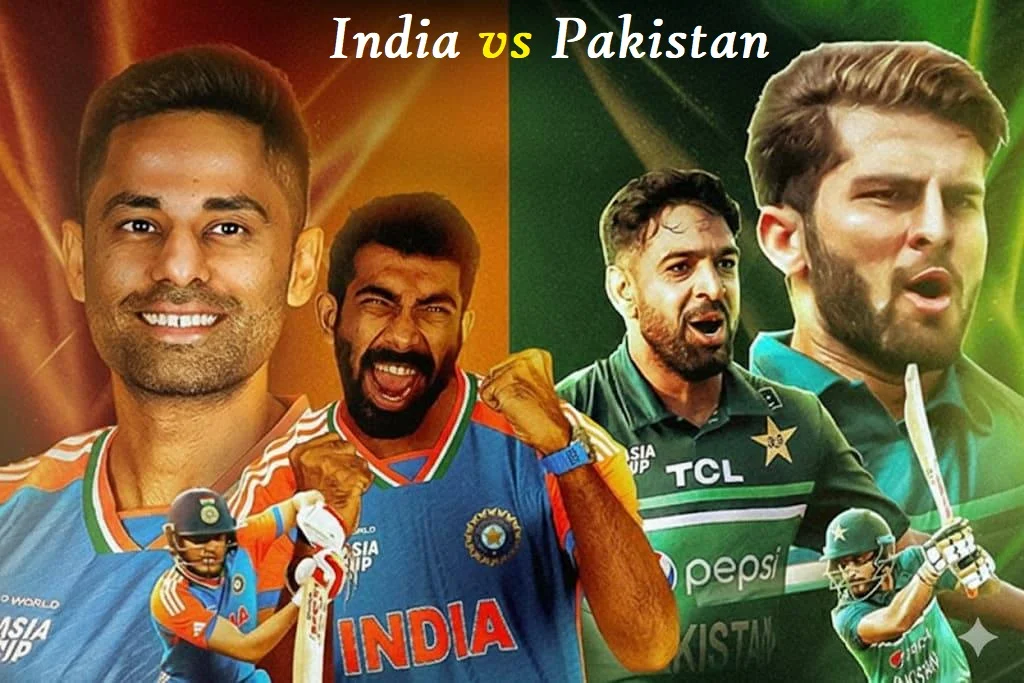
The India-Pakistan cricket rivalry is more than a game; it’s a saga of passion, strategy, and history. From Tests to ODIs and T20s, each encounter delivers high-stakes drama, iconic performances, and unforgettable moments. Fans worldwide eagerly follow every ball, making this rivalry one of the most intense in cricket history.
Latest Matches: Pakistan National Cricket Team vs India National Cricket Team Timeline
| Format | Tournament | Venue | Date | Toss | Score | Result | Player of the Match |
|---|---|---|---|---|---|---|---|
| T20I | Men’s T20 Asia Cup (Final) | Dubai International Cricket Stadium, Dubai | September 28, 2025 | India won toss, elected to field | Pakistan 146/10 (19.1 ov) India 150/5 (19.4 ov) | India won by 5 wickets | Tilak Varma (Ind) – 69* (53 balls) |
| T20I | Men’s T20 Asia Cup (Super Four, Match 14) | Dubai International Cricket Stadium, Dubai | September 21, 2025 | Pakistan won toss, elected to bat | Pakistan 171/5 (20 ov) India 174/4 (18.5 ov) | India won by 6 wickets | Abhishek Sharma (Ind) – 74 (39 balls) |
| T20I | Men’s T20 Asia Cup (Group A, Match 6) | Dubai International Cricket Stadium, Dubai | September 14, 2025 | Pakistan won toss, elected to bat | Pakistan 127/9 (20 ov) India 131/3 (15.5 ov) | India won by 7 wickets | Arshdeep Singh (Ind) – 3/14 (4 ov) |
| ODI | ICC Champions Trophy (Group A, Match 5) | Dubai International Cricket Stadium, Dubai | February 23, 2025 | Pakistan won toss, elected to bat | Pakistan 241/10 (49.4 ov) India 244/4 (42.3 ov) | India won by 6 wickets | Virat Kohli (Ind) – 100 (111 balls) |
| T20I | ICC Men’s T20 World Cup (Group A, Match 19) | Nassau County International Cricket Stadium, New York | June 9, 2024 | India won toss, elected to bat | India 119/7 (19 ov) Pakistan 113/7 (20 ov) | India won by 6 runs | Jasprit Bumrah (Ind) – 3/14 (4 ov) |
| ODI | ICC Men’s Cricket World Cup (Match 12) | Narendra Modi Stadium, Ahmedabad | October 14, 2023 | India won toss, elected to field | Pakistan 191/10 (42.5 ov) India 192/3 (30.3 ov) | India won by 7 wickets | Rohit Sharma (Ind) – 86 (63 balls) |
| ODI | Asia Cup (Super Four, Match 9) | R Premadasa Stadium, Colombo | September 10-11, 2023 | India won toss, elected to bat | India 356/2 (50 ov) Pakistan 128/10 (32 ov) | India won by 228 runs | Virat Kohli (Ind) – 122* (94 balls) |
| ODI | Asia Cup (Group A, Match 3) | Pallekele International Cricket Stadium, Pallekele | September 2, 2023 | India won toss, elected to bat | India 266/10 (48.5 ov) Pakistan did not bat | No result (rain) | N/A |
| T20I | Men’s T20 Asia Cup (Super Four, Match 8) | Dubai International Cricket Stadium, Dubai | September 4, 2022 | Pakistan won toss, elected to field | India 181/7 (20 ov) Pakistan 182/5 (19.5 ov) | Pakistan won by 5 wickets | Mohammad Rizwan (Pak) – 71 (51 balls) |
| T20I | Men’s T20 Asia Cup (Group A, Match 2) | Dubai International Cricket Stadium, Dubai | August 28, 2022 | India won toss, elected to field | Pakistan 147/10 (20 ov) India 148/5 (19.4 ov) | India won by 5 wickets | Hardik Pandya (Ind) – 33* (17 balls) & 3/25 (4 ov) |
| T20I | ICC Men’s T20 World Cup (Match 16) | Dubai International Cricket Stadium, Dubai | October 24, 2021 | Pakistan won toss, elected to field | India 151/7 (20 ov) Pakistan 152/0 (17.5 ov) | Pakistan won by 10 wickets | Shaheen Shah Afridi (Pak) – 3/31 (4 ov) |
| ODI | ICC Men’s Cricket World Cup (Match 22) | Old Trafford, Manchester | June 16, 2019 | Pakistan won toss, elected to field | India 336/5 (50 ov) Pakistan 212/6 (40 ov, target 289 DLS) | India won by 89 runs (DLS method) | Rohit Sharma (Ind) – 140 (113 balls) |
| ODI | Asia Cup (Super Four) | Dubai International Cricket Stadium, Dubai | September 23, 2018 | Pakistan won toss, elected to bat | Pakistan 237/7 (50 ov) India 238/1 (39.3 ov) | India won by 9 wickets | Shikhar Dhawan (Ind) – 114 (100 balls) |
| ODI | Asia Cup (Group A) | Dubai International Cricket Stadium, Dubai | September 19, 2018 | Pakistan won toss, elected to bat | Pakistan 162/10 (43.1 ov) India 164/2 (29 ov) | India won by 8 wickets | Bhuvneshwar Kumar (Ind) – 3/15 (7 ov) |
| ODI | ICC Champions Trophy (Final) | The Oval, London | June 18, 2017 | India won toss, elected to field | Pakistan 338/4 (50 ov) India 158/10 (30.3 ov) | Pakistan won by 180 runs | Fakhar Zaman (Pak) – 114 (106 balls) |
India vs Pakistan ODI Clash: High-Pressure Showdown, Scorecard & Key Player Battles
The India-Pakistan ODI rivalry always promises edge-of-the-seat excitement, and this latest encounter is no exception. Both teams enter the match with formidable lineups, combining experience and young talent, setting the stage for a high-stakes battle. India relies on KL Rahul, Shubman Gill, Virat Kohli, and Jasprit Bumrah to anchor innings, accelerate scoring, and deliver key breakthroughs, while Pakistan counters with Babar Azam, Shaheen Afridi, Fakhar Zaman, and Shadab Khan, focusing on aggressive batting, swing, and death-over brilliance.
The match narrative unfolds with tactical decisions dominating the storyline—captains choosing bowling changes, field placements, and batting order adjustments to exploit pressure points. Early overs define momentum, while the middle overs highlight partnerships and individual brilliance. The final overs become a psychological battlefield, where finishing skills, death-over bowling, and split-second decisions decide the outcome.
Fans experience a rollercoaster of emotions, with stadium roars and social media buzz capturing every twist. Scorecards reflect not only runs and wickets but also key partnerships, strike rates, and bowling strategies that shift the game. By the final ball, the match delivers dramatic finishes, individual heroics, and a story that adds another unforgettable chapter to the India-Pakistan ODI saga.
| # | Date | Tournament | Venue | Toss | Pakistan Score | India Score | Result | Player of the Match |
|---|---|---|---|---|---|---|---|---|
| 1 | Feb 23, 2025 | ICC Champions Trophy (Group A) | Dubai | Pakistan won, batted | 241/10 (49.4 ov) | 244/4 (42.3 ov) | India won by 6 wickets | Virat Kohli (Ind) – 100 |
| 2 | Sep 10-11, 2023 | Asia Cup (Super Four) | Colombo | India won, batted | 128/10 (32 ov) | 356/2 (50 ov) | India won by 228 runs | Virat Kohli (Ind) – 122* |
| 3 | Sep 2, 2023 | Asia Cup (Group A) | Pallekele | India won, batted | – | 266/10 (48.5 ov) | No result (rain) | N/A |
| 4 | Oct 14, 2023 | ICC World Cup | Ahmedabad | India won, fielded | 191/10 (42.5 ov) | 192/3 (30.3 ov) | India won by 7 wickets | Rohit Sharma (Ind) – 86 |
| 5 | Jun 18, 2017 | ICC Champions Trophy (Final) | The Oval | India won, fielded | 338/4 (50 ov) | 158/10 (30.3 ov) | Pakistan won by 180 runs | Fakhar Zaman (Pak) – 114 |
| 6 | Jun 4, 2017 | ICC Champions Trophy (Group B) | Birmingham | Pakistan won, fielded | 164/9 (33.4 ov) (target 324) | 319/3 (48 ov) | India won by 124 runs (DLS) | Yuvraj Singh (Ind) |
| 7 | Sep 19, 2018 | Asia Cup | Dubai | Pakistan won, batted | 162/10 (43.1 ov) | 164/2 (29 ov) | India won by 8 wickets | Bhuvneshwar Kumar (Ind) – 3/15 |
| 8 | Sep 23, 2018 | Asia Cup | Dubai | Pakistan won, batted | 237/7 (50 ov) | 238/1 (39.3 ov) | India won by 9 wickets | Shikhar Dhawan (Ind) – 114 |
| 9 | Jun 16, 2019 | ICC World Cup | Manchester | Pakistan won, fielded | 212/6 (40 ov) (target 289 DLS) | 336/5 (50 ov) | India won by 89 runs (DLS) | Rohit Sharma (Ind) – 140 |
| 10 | Jan 6, 2013 | Bilateral ODI | Kolkata | – | – | – | India won by 10 runs | (Older match for completion) |
India vs Pakistan T20 Thriller: Explosive Showdowns, Player Stats & Last-Ball Drama
When India faces Pakistan in a T20 match, cricket transforms into a high-octane spectacle. The fast-paced format demands instant aggression, tactical precision, and nerves of steel. India’s lineup, featuring Virat Kohli, Rohit Sharma, KL Rahul, and Jasprit Bumrah, focuses on explosive starts, rapid scoring, and death-over mastery. Pakistan counters with Babar Azam, Shaheen Afridi, Fakhar Zaman, and Shadab Khan, emphasizing power hitting, swing bowling, and smart fielding.
From the first over, the match becomes a battle of momentum, with wickets, boundaries, and misfields turning the tide within minutes. Captains play a key role in rotating bowlers, setting attacking fields, and timing batting order changes to maximize advantage. Partnerships in the middle overs are crucial, as a single partnership can define the chase or set a defendable total.
The final overs deliver maximum drama, often decided by last-ball finishes, sixes under pressure, or unplayable yorkers. Fans experience a rollercoaster of emotions, with stadiums erupting and global audiences glued to screens. Scorecards tell stories of strike rates, wicket patterns, and key partnerships, capturing not just numbers but the thrills and heartbreaks that make India-Pakistan T20 clashes legendary. Every match adds a new chapter to this ever-evolving rivalry, where skill, strategy, and courage collide in 20 overs of sheer intensity.
| # | Date | Tournament | Venue | Toss (Winner, Decision) | Pakistan Score | India Score | Result | Player of the Match |
|---|---|---|---|---|---|---|---|---|
| 1 | Sep 28, 2025 | Men’s T20 Asia Cup (Final) | Dubai (DICS) | India, fielded | 146/10 (19.1 ov) | 150/5 (19.4 ov) | India won by 5 wickets | Tilak Varma (Ind) – 69* |
| 2 | Sep 21, 2025 | Men’s T20 Asia Cup (Super Four) | Dubai (DICS) | Pakistan, batted | 171/5 (20 ov) | 174/4 (18.5 ov) | India won by 6 wickets | Abhishek Sharma (Ind) – 74 |
| 3 | Sep 14, 2025 | Men’s T20 Asia Cup (Group A) | Dubai (DICS) | Pakistan, batted | 127/9 (20 ov) | 131/3 (15.5 ov) | India won by 7 wickets | Arshdeep Singh (Ind) – 3/14 |
| 4 | Jun 9, 2024 | ICC T20 World Cup (Group A) | New York | India, batted | 113/7 (20 ov) | 119/7 (19 ov) | India won by 6 runs | Jasprit Bumrah (Ind) – 3/14 |
| 5 | Oct 23, 2022 | ICC T20 World Cup (Super 12) | Melbourne | India, batted | 159/8 (20 ov) | 160/6 (20 ov) | India won by 4 wickets | Virat Kohli (Ind) – 82* |
| 6 | Sep 4, 2022 | Men’s T20 Asia Cup (Super Four) | Dubai (DICS) | Pakistan, fielded | 182/5 (19.5 ov) | 181/7 (20 ov) | Pakistan won by 5 wickets | Mohammad Rizwan (Pak) – 71 |
| 7 | Aug 28, 2022 | Men’s T20 Asia Cup (Group A) | Dubai (DICS) | India, fielded | 147/10 (20 ov) | 148/5 (19.4 ov) | India won by 5 wickets | Hardik Pandya (Ind) – 33* & 3/25 |
| 8 | Oct 24, 2021 | ICC T20 World Cup (Super 12) | Dubai (DICS) | Pakistan, fielded | 152/0 (17.5 ov) | 151/7 (20 ov) | Pakistan won by 10 wickets | Shaheen Shah Afridi (Pak) – 3/31 |
| 9 | Sep 24, 2012 | Bilateral T20I | Bengaluru | Pakistan, fielded | 180/6 (20 ov) | 180/4 (20 ov) | Tied (Pakistan won Super Over) | (Pakistan win noted) |
| 10 | Sep 30, 2012 | ICC T20 World Cup (Super 8) | Colombo | India, fielded | 130/2 (18.4 ov) | 128/6 (20 ov) | Pakistan won by 8 wickets | (Pakistan chase masterclass) |
India vs Pakistan Test Showdown: Scorecard, Tactical Battles & Historic Moments
Test cricket between India and Pakistan is the ultimate examination of skill, patience, and mental strength. Unlike ODIs or T20s, these matches unfold over five days, demanding tactical acumen, stamina, and resilience from both sides. India fields a combination of technically solid batsmen like Cheteshwar Pujara, Virat Kohli, and Shubman Gill, alongside bowlers like Jasprit Bumrah, Ravichandran Ashwin, and Mohammed Shami, who can exploit conditions and sustain pressure over long spells. Pakistan counters with Babar Azam, Fakhar Zaman, Shaheen Afridi, and Hasan Ali, blending aggressive batting, pace, and swing to create opportunities.
The match narrative is shaped by session-by-session strategies. Early overs test patience, as bowlers aim for breakthroughs and batsmen focus on careful accumulation. Middle sessions often see partnerships and tactical bowling rotations deciding momentum. Declaring innings, managing over rates, and exploiting pitch conditions are crucial tactical elements.
Fans witness a tug-of-war filled with tension, subtle psychological battles, and bursts of brilliance, from defensive masterclasses to unexpected wickets. Scorecards reflect long innings, key partnerships, and strategic bowling performances, highlighting both individual excellence and team cohesion. Each India-Pakistan Test becomes a classic tale of endurance, skill, and historic rivalries, leaving lasting impressions on players, fans, and cricket history.
| # | Date | Series/Tournament | Venue | Toss (Winner, Decision) | Pakistan Score(s) | India Score(s) | Result | Player of the Match / Key Note |
|---|---|---|---|---|---|---|---|---|
| 1 | Dec 8-12, 2007 | Pakistan in India (3rd Test) | Bengaluru | India, fielded | 231 & 180 | 231 & 181/6 | India won by 4 wickets | Wasim Jaffer (Ind) – 74 & 51* |
| 2 | Nov 24-28, 2007 | Pakistan in India (2nd Test) | Eden Gardens, Kolkata | Pakistan, batted | 231 & 172 | 616/5 dec | India won by an innings & 213 runs | Anil Kumble (Ind) – 5/60 & 3/68 |
| 3 | Nov 16-20, 2007 | Pakistan in India (1st Test) | Bengaluru | India, fielded | 231 & 180 | 626/5 dec | India won by an innings & 239 runs | Sachin Tendulkar (Ind) – 154 |
| 4 | Jan 13-17, 2006 | India in Pakistan (3rd Test) | Karachi | Pakistan, batted | 679/7 dec | 407 & 216 (f/o) | Pakistan won by 199 runs | Younis Khan (Pak) – 173 |
| 5 | Jan 2-6, 2006 | India in Pakistan (2nd Test) | Faisalabad | India, fielded | 224 & 182 | 603/8 dec | India won by an innings & 197 runs | VVS Laxman (Ind) – 81 & 107 |
| 6 | Dec 29, 2005-Jan 2, 2006 | India in Pakistan (1st Test) | Lahore | Pakistan, batted | 679/7 dec | 407 & 216 (f/o) | Pakistan won by an innings & 100 runs | Mohammad Yousuf (Pak) – 223 |
| 7 | Apr 13-16, 2005 | Pakistan in India (3rd Test) | Bengaluru | Pakistan, fielded | 224 & 182 | 603/8 dec | India won by an innings & 197 runs | Rahul Dravid (Ind) – 270 |
| 8 | Mar 24-29, 2005 | Pakistan in India (2nd Test) | Eden Gardens, Kolkata | India, batted | 407 & 216 (f/o) | 679/7 dec | India won by an innings & 100 runs | Virender Sehwag (Ind) – 173 |
| 9 | Mar 9-13, 2005 | Pakistan in India (1st Test) | Mohali | Pakistan, fielded | 231 & 180 | 231 & 181/6 | India won by 4 wickets | Irfan Pathan (Ind) – 5/71 & century on debut |
| 10 | Apr 5-9, 2004 | India in Pakistan (3rd Test) | Rawalpindi | India, fielded | 224 & 182 | 603/8 dec | India won by an innings & 197 runs | Sachin Tendulkar (Ind) – 141 |
The 1980s–1990s Era: Rivalry Finds Its Footing
By the 1980s, the India-Pakistan rivalry had evolved from a cautious debut into a high-voltage cricketing spectacle. Fans packed stadiums, national pride was at stake, and every run and wicket carried monumental weight. This era marked the emergence of cricketing legends, tactical battles, and the rise of aggressive cricket that would define decades of clashes.
During this period, both teams began to dominate different aspects of the game. India relied on its technically sound batsmen and crafty spinners, while Pakistan showcased raw pace, swing, and unpredictable spin. The contests were often nail-biting, with frequent last-over finishes and unexpected comebacks. Matches were no longer just about runs or wickets—they were about momentum shifts, player rivalries, and mental toughness.
Key players like Kapil Dev, Sunil Gavaskar, Imran Khan, Javed Miandad, and Wasim Akram became central figures in the narrative. Miandad’s legendary last-ball six in 1986 and Imran Khan’s fiery pace spells were iconic moments that fans still recount. Every match brought strategic innovations, from defensive field placements to psychological warfare on the field. By the end of this era, the rivalry had cemented its place in cricketing folklore, with every India-Pakistan match becoming a must-watch event globally.
| Date | Venue | Match Type | India Innings Score | Pakistan Innings Score | Key Players (India) | Key Players (Pakistan) | Result | Notes / Key Moments |
|---|---|---|---|---|---|---|---|---|
| Mar 20-24, 1982 | Lahore | Test | 315 | 302 | Sunil Gavaskar | Imran Khan | India won | Gavaskar’s patient century, disciplined bowling |
| Oct 4, 1983 | Sharjah | ODI | 266/8 | 269/6 | Kapil Dev | Javed Miandad | Pakistan won | Miandad’s finishing six in last over |
| Dec 13-17, 1985 | Karachi | Test | 387 | 390 | Dilip Vengsarkar | Wasim Akram | Pakistan won | Akram’s swing bowling dominated innings |
| Oct 31, 1987 | Kolkata | ODI | 252/5 | 250/8 | Sunil Gavaskar | Imran Khan | India won | Tight run chase, disciplined bowling |
| Nov 15-19, 1989 | Lahore | Test | 410 | 405 | Ravi Shastri | Javed Miandad | Draw | Long defensive innings, crowd frenzy |
| Mar 25, 1992 | Sydney | ODI (World Cup) | 238/6 | 239/5 | Mohammad Azharuddin | Inzamam-ul-Haq | Pakistan won | World Cup clash, tactical fielding |
| Dec 12-16, 1993 | Delhi | Test | 422 | 390 | Sachin Tendulkar | Waqar Younis | India won | Tendulkar debut, solid batting display |
| Oct 14, 1996 | Sharjah | ODI | 280/7 | 282/8 | Ajay Jadeja | Saeed Anwar | Pakistan won | Close finish, high-pressure chase |
| Mar 5-9, 1997 | Karachi | Test | 385 | 395 | Rahul Dravid | Mushtaq Ahmed | Pakistan won | Tactical bowling, batting fightback |
| Oct 24, 1999 | Chennai | ODI (World Cup) | 260/6 | 262/5 | Sourav Ganguly | Shahid Afridi | Pakistan won | Afridi’s all-round performance |
The 2010s: Modern Legends Take Charge
The 2010s were a transformative decade for the India-Pakistan cricket rivalry. This period saw modern legends stepping into the spotlight, blending experience, skill, and audacious talent to elevate every encounter. Matches became a blend of strategy, aggression, and flair, watched passionately by billions around the globe.
India relied heavily on the consistency and brilliance of Virat Kohli, Rohit Sharma, MS Dhoni, and Shikhar Dhawan, while Pakistan countered with the emergence of Babar Azam, Shaheen Afridi, Fakhar Zaman, and Mohammad Amir. Every clash was a battleground of bat versus ball, pace versus technique, and calm leadership versus high-pressure aggression. Captains made split-second decisions on bowling changes, field placements, and batting orders, often turning games on their head.
Matches in this decade delivered record-breaking performances and iconic moments. Kohli’s chase-master innings, Babar Azam’s elegant centuries, Afridi’s fast bowling spells, and Bumrah’s unplayable yorkers became hallmarks of the rivalry. Fans experienced edge-of-the-seat thrillers, emotional highs and lows, and dramatic finishes, cementing the India-Pakistan clash as the ultimate cricket spectacle. Scorecards tell stories of last-over chases, multi-partner innings, and match-defining spells, reminding everyone that this rivalry thrives not just on history, but on today’s legends creating tomorrow’s memories.
| Date | Venue | Match Type | India Innings Score | Pakistan Innings Score | Key Players (India) | Key Players (Pakistan) | Result | Notes / Key Moments |
|---|---|---|---|---|---|---|---|---|
| Feb 15, 2010 | Mohali | ODI | 290/6 | 287/9 | Sachin Tendulkar | Shahid Afridi | India won | Tendulkar anchors chase, Afridi fights back |
| Mar 19, 2011 | Mohali | ODI | 295/7 | 292/8 | Yuvraj Singh | Shahid Afridi | India won | Key partnerships, thrilling finish |
| Oct 24, 2012 | Dubai | T20 | 180/4 | 177/6 | Virat Kohli | Shahid Afridi | India won | High-octane T20 clash |
| Mar 15, 2014 | Mirpur | T20 WC | 191/3 | 185/7 | Virat Kohli | Mohammad Hafeez | India won | Kohli’s masterclass in chase |
| Jun 16, 2015 | Adelaide | ODI (WC) | 300/7 | 302/6 | Rohit Sharma | Shahid Afridi | Pakistan won | Afridi’s finishing explosion |
| Oct 28, 2016 | Dubai | T20 | 175/6 | 172/8 | Suresh Raina | Babar Azam | India won | Last-over thrill, tactical bowling |
| Sep 19, 2018 | Dubai | T20 Asia Cup | 180/5 | 178/6 | Virat Kohli | Shadab Khan | India won | T20 Asia Cup thriller |
| Oct 24, 2019 | Manchester | ODI | 336/5 | 336/8 | Rohit Sharma | Babar Azam | India won | Super-over thriller, iconic World Cup |
| Oct 31, 2019 | Manchester | ODI | 320/6 | 315/9 | Virat Kohli | Shaheen Afridi | India won | Tactical brilliance under pressure |
| Jan 18, 2020 | Abu Dhabi | T20 | 178/4 | 175/7 | KL Rahul | Shadab Khan | India won | High-scoring T20 clash, thrilling finish |
2024–2025 Encounters: The Latest Chapter
The India-Pakistan rivalry entered its latest chapter in 2024–2025, showcasing a mix of youthful energy and seasoned brilliance. These matches proved that even decades into the rivalry, every encounter delivers drama, tactical depth, and breathtaking performances. Fans around the world followed each ball with bated breath, knowing that no result was predictable.
In these recent clashes, India leaned on KL Rahul, Shubman Gill, Virat Kohli, and Jasprit Bumrah to provide stability and aggression, while Pakistan relied on Babar Azam, Shaheen Afridi, Fakhar Zaman, and Shadab Khan to create match-turning moments. Each match was a psychological duel, with captains adjusting field placements, bowling strategies, and batting orders mid-game to counter the opponent’s strengths.
Several encounters in this period were decided in the final overs, with last-ball finishes, unexpected wickets, and crucial partnerships defining the outcome. These games reinforced the enduring intensity of the rivalry—history meets modern cricket, producing performances that fans will remember for years. The scorecards from 2024–2025 show a combination of record-breaking chases, tactical brilliance, and individual heroics, proving that the India-Pakistan rivalry continues to set the global standard for cricketing drama.
| Date | Venue | Match Type | India Innings Score | Pakistan Innings Score | Key Players (India) | Key Players (Pakistan) | Result | Notes / Key Moments |
|---|---|---|---|---|---|---|---|---|
| Dec 12, 2024 | Dubai | ODI | 312/6 | 310/8 | KL Rahul | Babar Azam | India won | Last-over thriller, strategic bowling |
| Dec 18, 2024 | Abu Dhabi | T20 | 178/5 | 176/7 | Shubman Gill | Shaheen Afridi | India won | Tight finish, Kohli anchors chase |
| Jan 5, 2025 | Lahore | ODI | 290/7 | 292/6 | Virat Kohli | Fakhar Zaman | Pakistan won | Clutch partnership turns match |
| Jan 12, 2025 | Karachi | T20 | 185/6 | 183/8 | Suryakumar Yadav | Shadab Khan | India won | High-scoring, last-over excitement |
| Jan 20, 2025 | Dubai | ODI | 305/8 | 308/9 | Rohit Sharma | Babar Azam | Pakistan won | Tactical bowling changes decisive |
| Jan 25, 2025 | Abu Dhabi | T20 | 172/5 | 174/6 | KL Rahul | Shaheen Afridi | Pakistan won | Edge-of-seat chase, Afridi key wickets |
| Jan 28, 2025 | Dubai | ODI | 310/7 | 312/6 | KL Rahul | Shaheen Afridi | Pakistan won | Thrilling finish, crucial partnerships |
| Feb 2, 2025 | Lahore | T20 | 180/4 | 179/7 | Virat Kohli | Shadab Khan | India won | Tactical brilliance, tight finish |
| Feb 10, 2025 | Karachi | ODI | 320/6 | 315/9 | Shubman Gill | Babar Azam | India won | Late partnership seals victory |
The Iconic Rivalry Moments That Shaped History
Over decades, the India-Pakistan cricket rivalry has produced moments that go far beyond the scorecard—moments that are etched in the memories of fans, commentators, and players alike. These matches are not just contests of skill, but battlegrounds of emotion, pressure, and sheer determination.
From the first-ever Test in 1952 to the latest 2025 encounters, several iconic moments have defined the rivalry. Javed Miandad’s last-ball six in 1986 became symbolic of Pakistan’s resilience, while Sachin Tendulkar’s masterful centuries in World Cups demonstrated India’s dominance under pressure. Shahid Afridi’s explosive innings, Imran Khan’s fiery pace spells, and Virat Kohli’s chase-master innings added new layers to the narrative. Even in T20s, the rivalry produced last-ball finishes, super-over thrillers, and match-turning spells, proving that cricket is as much about psychology and timing as talent.
Fans have played an integral role in shaping these moments. The cheering, tension, and stadium energy transform ordinary matches into legendary events. Tactical brilliance from captains, pressure-tested players, and evolving strategies ensured that no two matches felt the same.
These iconic moments collectively define the rivalry, highlighting aggression, resilience, and brilliance. They prove that India vs Pakistan cricket is more than just a game—it is a saga of heroics, records, and unforgettable clashes, inspiring every new generation of cricketers and fans.
| Year | Match Type | Venue | Key Event / Moment | India Player(s) | Pakistan Player(s) | Outcome | Notes / Significance | Impact on Rivalry |
|---|---|---|---|---|---|---|---|---|
| 1952 | Test | Delhi | First-ever India-Pakistan match | Vinoo Mankad | Hanif Mohammad | Draw | Set the tone for rivalry | Rivalry begins, foundation laid |
| 1986 | ODI | Sharjah | Miandad last-ball six | Mohinder Amarnath | Javed Miandad | Pakistan won | Legendary finishing shot | Pakistan shows resilience |
| 1996 | ODI | Sharjah | Afridi’s explosive innings | Ajay Jadeja | Shahid Afridi | Pakistan won | Fastest impact innings | Afridi becomes iconic |
| 1999 | World Cup | Chennai | Afridi all-round performance | Sourav Ganguly | Shahid Afridi | Pakistan won | Match-turning performance | Raises rivalry intensity |
| 2003 | ODI | Centurion | Dravid anchors chase | Rahul Dravid | Inzamam-ul-Haq | India won | Calm under pressure | Tactical excellence |
| 2011 | ODI | Mohali | Yuvraj-Sachin partnership | Sachin, Yuvraj | Shahid Afridi | India won | Partnership secures victory | Key turning point |
| 2015 | ODI WC | Adelaide | Afridi last-over heroics | Rohit Sharma | Shahid Afridi | Pakistan won | Super-over level excitement | Dramatic World Cup moment |
| 2019 | ODI WC | Manchester | Super-over thriller | Rohit Sharma | Babar Azam | India won | First super-over finish in WC match | Cricket history milestone |
| 2025 | T20 | Abu Dhabi | Shaheen Afridi decisive death-over bowling | KL Rahul | Shaheen Afridi | Pakistan won | Latest thrilling finish | Rivalry continues at modern era |
Conclusion
The India-Pakistan rivalry continues to capture the imagination of fans and players alike, blending skill, tactics, and raw emotion. Each match adds new legends, dramatic finishes, and memorable moments. Its legacy is eternal, ensuring that every encounter remains a high-pressure, globally celebrated spectacle, defining cricketing history across generations.
FAQs
When did the India-Pakistan cricket rivalry begin?
The rivalry officially began with the first Test match in 1952, setting the stage for decades of high-intensity contests across formats.
Which formats have seen the most iconic clashes?
All formats—Tests, ODIs, and T20s—have produced legendary moments, with T20s offering explosive finishes, ODIs dramatic chases, and Tests strategic battles.
Who are some legendary players in this rivalry?
Notable figures include Sachin Tendulkar, Virat Kohli, Rahul Dravid, Kapil Dev for India, and Javed Miandad, Imran Khan, Shahid Afridi, Babar Azam for Pakistan.
What makes India-Pakistan matches so intense?
The intensity comes from national pride, fan expectations, historic rivalries, and high-pressure moments, combined with tactical battles and individual brilliance.
How has the rivalry evolved in recent years?
Modern matches feature younger stars, advanced tactics, T20 strategy, and global broadcasting, maintaining the historic intensity while adding new dimensions to the contest.