Table of Contents
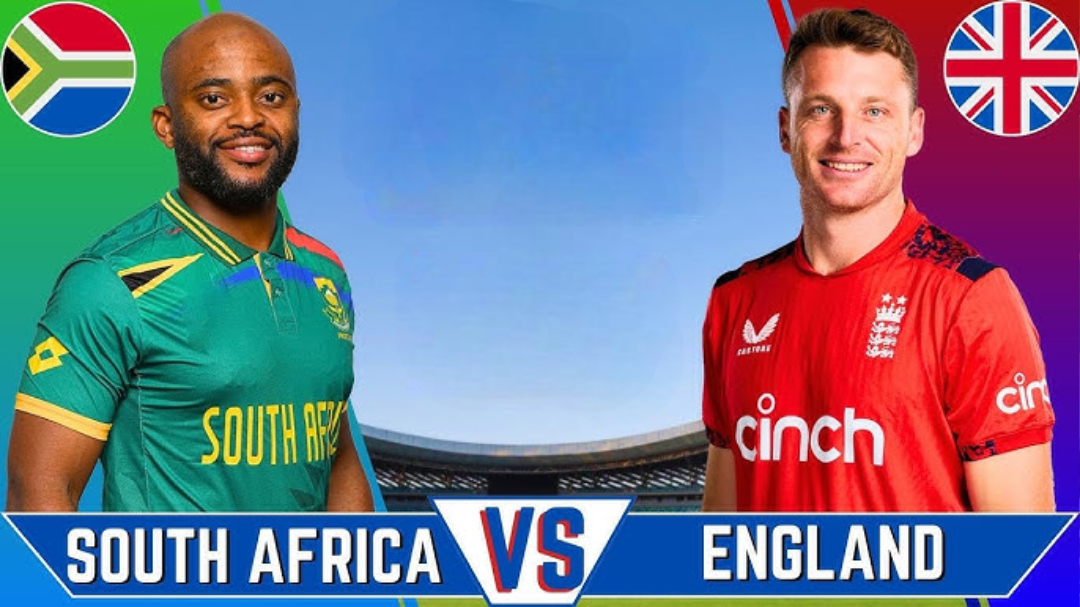
The South Africa vs England cricket rivalry is one of the sport’s most enduring and emotionally charged battles, stretching from colonial-era tours in 1889 to modern-day white-ball fireworks. What began as unequal encounters on matting wickets has evolved into fierce, high-stakes clashes across Tests, ODIs, and T20Is. From Hugh Tayfield’s marathon spells and the D’Oliveira affair that shook the world, to Quinton de Kock’s World Cup demolition and England’s record-shattering 304/6 in T20s, every series delivers drama, tactical brilliance, and raw aggression. Packed stadiums roar, fans trade barbs, and individual duels—Root vs Rabada, Stokes vs Markram—keep the fire burning. This is more than cricket; it’s a living saga of pride, revenge, and unbreakable intensity.
Recent South Africa National Cricket Team vs England Cricket Team Match
| # | Date | Format | Venue | Toss (Winner & Decision) | South Africa Score | England Score | Result (Winner & Margin) | Player of the Match | Key Drama / Highlight |
|---|---|---|---|---|---|---|---|---|---|
| 1 | Sep 12, 2025 | T20I | Manchester | England (bat) | 158 all out (16.1/20) | 304/2 (20 overs) | England won by 146 runs | Phil Salt (ENG) | Record T20 total; Salt’s explosive 141 |
| 2 | Sep 7, 2025 | ODI | Southampton | England (bat) | 72 all out (23.2/50) | 414/5 (50 overs) | England won by 342 runs (record margin) | Joe Root (ENG) | England’s highest ODI total vs SA; crushing collapse |
| 3 | Sep 4, 2025 | ODI | Lord’s | South Africa (bat) | 280/6 (50 overs) | 275/9 (50 overs) | South Africa won by 5 runs | Heinrich Klaasen (SA) | Tense finish; Klaasen’s clutch death-overs |
| 4 | Sep 2, 2025 | ODI | Headingley | England (bat) | 132/3 (20.5 overs) | 131 all out (35 overs) | South Africa won by 7 wickets | Aiden Markram (SA) | Record chase in just 20.5 overs |
| 5 | Mar 1, 2025 | ODI (Champions Trophy) | Karachi | South Africa (field) | 181/3 (29.1 overs) | 179 all out (38.2 overs) | South Africa won by 7 wickets | Marco Jansen (SA) | Clinical chase; Jansen’s all-round impact |
| 6 | Jun 27, 2024 | T20I (T20 World Cup Super 8) | Kingstown | England (field) | 163/6 (20 overs) | 156/6 (20 overs) | South Africa won by 7 runs | David Miller (SA) | Miller’s late hitting; Rabada death bowling |
| 7 | Oct 21, 2023 | ODI (World Cup) | Mumbai | South Africa (bat) | 399/7 (50 overs) | 170 all out (22 overs) | South Africa won by 229 runs | Quinton de Kock (SA) | de Kock’s 174; England’s heaviest World Cup loss |
| 8 | Sep 8-12, 2022 | Test | The Oval | England (bat) | 158 & 274 | 158 & 273 | England won by 9 wickets | Ollie Robinson (ENG) | Tense low-scorer; Robinson’s key seam movement |
| 9 | Aug 25-27, 2022 | Test | Manchester | South Africa (bat) | 149 & 73 | 388/5 dec | England won by innings & 85 runs | Ben Stokes (ENG) | Bazball declaration; dominant bowling |
| 10 | Aug 17-19, 2022 | Test | Lord’s | South Africa (bat) | 326 & 209/5 dec | 165 & 149 | South Africa won by innings & 12 runs | Marco Jansen (SA) | Jansen’s pace demolition; rare SA win at Lord’s |
| 11 | Dec 4, 2020 | T20I | Cape Town | England (field) | 189/6 (20 overs) | 191/3 (19.5 overs) | England won by 7 wickets | Jos Buttler (ENG) | Buttler’s quick-fire chase |
| 12 | Feb 7, 2020 | ODI | Cape Town | South Africa (bat) | 256/9 (50 overs) | 257/8 (49.4 overs) | England won by 2 wickets | Jason Roy (ENG) | Last-ball thriller; Roy’s aggressive century |
| 13 | Feb 4, 2020 | ODI | Johannesburg | England (field) | 256/7 (50 overs) | 257/8 (49.4 overs) | England won by 2 wickets | Jonny Bairstow (ENG) | Bairstow’s match-winning knock |
| 14 | Jan 24-27, 2020 | Test | Johannesburg | England (field) | 220 & 248 | 499/9 dec | England won by innings & 31 runs | Joe Root (ENG) | Root’s double century; massive first-innings lead |
| 15 | Jan 16-20, 2020 | Test | Port Elizabeth | South Africa (bat) | 209 & 237 | 499/9 dec | England won by innings & 53 runs | Ben Stokes (ENG) | Stokes all-round masterclass |
Big Moments, Drama & Heroics
The Timeless Test Drama (1939) Durban’s epic unfolded over ten days in 1938-39. England needed 696 to win the fifth Test after South Africa declared at 1,000+ runs across innings. Rain forced abandonment with England 42 short of victory and wickets in hand. Fans endured marathon sessions, highlighting endurance and frustration in pre-war cricket.
D’Oliveira Affair Controversy (1968) Basil D’Oliveira’s selection for England’s South Africa tour sparked apartheid backlash. Initially omitted, his Lord’s heroics (158) forced inclusion, leading Vorster to cancel the tour. It ignited global protests, isolating South Africa and reshaping cricket politics.
Centurion Forfeiture Miracle (2000) Hansie Cronje’s bizarre declaration and forfeiture set England 249 to win. They chased it by two wickets on the final day despite rain delays. Nasser Hussain’s men celebrated wildly; critics called it gimmicky, but it delivered pure drama.
Hugh Tayfield’s Epic Spell (1957) In Johannesburg, Tayfield bowled unchanged for hours, taking 9/113 including a marathon spell. His dot-ball record frustrated England, securing South Africa’s fightback in a drawn series.
Heinrich Klaasen’s World Cup Masterclass (2023) At Mumbai, Klaasen’s 109 off 67 balls powered South Africa’s 399/7. England crumbled to 170, losing by 229 runs—their heaviest World Cup defeat. de Kock’s 174 added fuel; fans erupted in joy and shock.
Ben Stokes’ Cape Town Heroics (2020) Stokes smashed 258 in a 258-run stand with Root, driving England’s 189-run win. His all-round brilliance flipped the series momentum.
Record T20 Fireworks (2022) England’s 304/6 at Southampton shattered records, with Buttler’s 162 off 70. South Africa fought back in tight finishes, showcasing modern aggression.
Key Player Stats Analysis
All-Time Head-to-Head Overview (Approximate as of early 2026)
| Format | Matches | England Wins | South Africa Wins | Draws/No Result | Notes on Balance |
|---|---|---|---|---|---|
| Tests | 156 | 66 | 35 | 55 | England dominant historically; SA stronger post-readmission at home |
| ODIs | 73-74 | 31 | 37 | 5-6 | SA slight edge; high-scoring modern clashes |
| T20Is | 25-28 | 13 | 12-14 | 0-1 | Neck-and-neck; England’s record totals vs SA fightbacks |
Top Run-Scorers in SA vs ENG (All Formats Combined, Career vs Opponent)
| Rank | Player | Team | Runs (Approx.) | Key Highlight |
|---|---|---|---|---|
| 1 | Jacques Kallis | SA | 4,500+ | All-round colossus; multiple double tons |
| 2 | Joe Root | ENG | 2,800+ | Modern mainstay; centuries in pressure series |
| 3 | Graeme Smith | SA | 2,500+ | Aggressive opener; double hundreds galore |
| 4 | AB de Villiers | SA | 2,000+ | Innovative genius; fastest fifties |
| 5 | Hashim Amla | SA | 2,000+ | Elegant accumulator; big hundreds |
| 6 | Quinton de Kock | SA | 1,500+ | Explosive keeper-batsman; World Cup 174 |
Top Wicket-Takers in SA vs ENG (All Formats Combined, Career vs Opponent)
| Rank | Player | Team | Wickets (Approx.) | Key Highlight |
|---|---|---|---|---|
| 1 | James Anderson | ENG | 130+ | Swing master; endless spells |
| 2 | Dale Steyn | SA | 100+ | Pace and fire; devastating spells |
| 3 | Shaun Pollock | SA | 90+ | Accuracy and control; economy king |
| 4 | Kagiso Rabada | SA | 80+ | Modern spearhead; bouncer barrages |
| 5 | Stuart Broad | ENG | 70+ | Reverse swing hero; big series hauls |
| 6 | Moeen Ali | ENG | 50+ (limited-overs focus) | Spin destroyer in 2017 series |
The Colonial Dawn – Birth of a Rivalry (1888–1914)
Cricket’s seeds in South Africa sprouted under British colonial influence long before international clashes began. Informal games dotted the Cape and Natal in the mid-1800s, but the real spark ignited when Major Robert Gardner Warton’s English side toured in 1888-89. They played a string of matches against local teams, but two were later granted Test status, marking South Africa’s debut on the world stage. Played on matting wickets over rudimentary three-day formats, these encounters exposed the gulf between England’s seasoned professionals and South Africa’s enthusiastic amateurs. England dominated, winning both Tests comfortably, yet the tours planted the idea that cricket could unite—or divide—along imperial lines.
The first Test unfolded at St George’s Park, Port Elizabeth, on March 12-13, 1889. South Africa batted first but crumbled to 84 all out, with Johnny Briggs claiming six wickets. England replied with 148, led by Bobby Abel’s gritty knock, then bowled South Africa out for 129. Chasing just 66, England knocked them off for the loss of two wickets. The second Test in Cape Town proved even more one-sided: England piled up 292 (Abel top-scoring again with 120), then dismissed South Africa twice cheaply to win by an innings and 202 runs. These results set a pattern—England’s superior technique and experience overwhelmed the hosts.
South Africa kept inviting tours, facing England in 1891-92, 1895-96, and beyond. Defeats piled up until the watershed 1905-06 home series. Under Percy Sherwell’s captaincy, the Proteas harnessed googly wizards like Reggie Schwarz and inspired batting from Sibley John Snooke and Gordon White. They stunned England by taking the series 4-1, including a dramatic one-wicket win in the opening Johannesburg Test. That triumph announced South Africa’s arrival as serious contenders, shifting the dynamic from colonial pupil to emerging rival.
Fan emotions ran high even then—crowds cheered every local boundary with pride, while English players faced growing pressure on foreign soil. Tactics evolved too: South Africa leaned on wrist-spin variations to counter English batting orthodoxy. By 1913-14, the last pre-war series saw England reclaim dominance in a five-Test rubber, but the groundwork for lasting tension had been laid.
| Year | Series/Tour | Tests Played | Result | Notable Highlight |
|---|---|---|---|---|
| 1888-89 | England in South Africa | 2 | England 2-0 | SA’s Test debut; England innings win in 2nd Test |
| 1891-92 | England in South Africa | 1 | England won | Single Test at Cape Town |
| 1895-96 | England in South Africa | 5 | England 3-1 (1 drawn) | Growing SA resistance |
| 1905-06 | England in South Africa | 5 | South Africa 4-1 | First series win; googly quartet magic |
| 1909-10 | England in South Africa | 5 | South Africa 3-2 | Tight contests, SA edge |
| 1913-14 | England in South Africa | 5 | England 4-0 (1 drawn) | Pre-war English resurgence |
Post-War Revival and Gritty Battles (1920s–1950s)
After the Great War disrupted cricket, South Africa and England resumed hostilities in 1922-23 when England toured. The series went to England 2-1 with two draws, but South Africa showed growing resilience. In Cape Town’s second Test, they chased 183 on a tricky pitch for a tense one-wicket win, with Herbie Taylor’s calm 91 not out proving crucial amid rising crowd excitement. England still held the upper hand in most encounters, winning series in 1924 (3-0 in England) and 1927-28 (drawn 2-2 in South Africa), where local conditions tested English technique.
The 1930s brought sterner contests. South Africa’s 1930-31 tour saw England dominate, but home advantage flipped dynamics in 1938-39. The infamous “Timeless Test” at Durban stretched ten days before abandonment due to England’s ship departure—South Africa needed 42 with wickets in hand, but rain intervened. It highlighted the era’s endurance battles and tactical patience.
Post-World War II, South Africa found their steel. The 1947 series in England went England’s way 3-0, but the real shift came in 1955 when South Africa toured England. They drew the rubber 2-2 after early losses, with Jackie McGlew and Roy McLean’s aggressive batting challenging English bowlers.
The pinnacle arrived in 1956-57 at home. Hugh Tayfield, the off-spin maestro, dominated England with 37 wickets at 17.18, including a marathon 9/113 spell in Johannesburg’s fourth Test. He bowled unchanged for hours, dismissing nearly the entire side while catching the last man. South Africa leveled the series before drawing it, their fielding athletic and relentless. Tayfield’s miserly control—once delivering 137 consecutive dot balls—frustrated English batsmen, turning pressure into aggression from both sides. Fans roared for every wicket, sensing the Proteas had truly arrived as equals.
These decades transformed the rivalry from one-sided to gritty, with South Africa’s spinners and determined batting forging a fiercer contest.
| Year | Series/Tour | Tests Played | Result | Notable Highlight |
|---|---|---|---|---|
| 1922-23 | England in South Africa | 5 | England 2-1 (2 drawn) | SA’s one-wicket chase in Cape Town |
| 1924 | South Africa in England | 5 | England 3-0 (2 drawn) | English dominance on home soil |
| 1927-28 | England in South Africa | 5 | Drawn 2-2 (1 drawn) | Competitive battles on matting wickets |
| 1929 | South Africa in England | 5 | England 2-0 (3 drawn) | Steady English edge |
| 1930-31 | England in South Africa | 5 | England 1-0 (4 drawn) | Low-scoring draws |
| 1935 | South Africa in England | 5 | South Africa 1-0 (4 drawn) | Rare SA series win away |
| 1938-39 | England in South Africa | 5 | England 1-0 (4 drawn) | Timeless Test at Durban (abandoned after 10 days) |
| 1947 | South Africa in England | 5 | England 3-0 (2 drawn) | Post-war English strength |
| 1955 | South Africa in England | 5 | Drawn 2-2 (1 drawn) | McLean and McGlew’s bold batting |
| 1956-57 | England in South Africa | 5 | Drawn 2-2 (1 drawn) | Tayfield’s 37 wickets; epic Johannesburg spell |
The Golden Era of Test Intensity (2000–2010)
The new millennium ushered in one of the fiercest chapters in the South Africa-England Test rivalry, fueled by post-apartheid confidence on one side and England’s resurgence under Nasser Hussain and Michael Vaughan on the other. Hansie Cronje’s tragic fall in 2000 cast a shadow, yet the Proteas, led by Shaun Pollock and then Graeme Smith, showed unyielding steel. England arrived in South Africa for the 1999-2000 series with high hopes, but South Africa dominated early. In Cape Town’s fourth Test, Daryll Cullinan’s 275 not out powered them to 421, bowling England out twice for an innings-and-37-run thrashing. The decider at Centurion turned legendary: South Africa declared at 248/8 and forfeited their second innings after rain delays, setting England 249. Nasser Hussain’s men chased it down by two wickets thanks to a defiant 81 from Jacques Rudolph—no, wait, it was England’s comeback with contributions from Stewart and Flintoff amid tense moments. That bizarre forfeiture remains one of cricket’s quirkiest tactical calls.
By 2004-05, England under Vaughan stormed South Africa. Andrew Strauss announced himself with centuries, while Matthew Hoggard swung devastating spells. They won 2-1 despite Jacques Kallis’s heroics, marking England’s first series triumph there in four decades. Tactical battles intensified—England’s reverse swing versus South Africa’s pace attack led by Makhaya Ntini and Pollock.
The 2008 tour to England saw South Africa strike back hard. Graeme Smith’s double hundreds crushed England, and they won 2-1, with AB de Villiers and Ashwell Prince building massive partnerships. Kevin Pietersen’s aggressive counter-punching provided fireworks.
The decade peaked in 2009-10 at Centurion. South Africa posted 418, England replied strongly, but after following on, they chased 251 on the final day in a nail-biter. Mark Boucher’s drop and Graham Onions’ late resistance sealed a dramatic draw, epitomizing the era’s pressure-cooker drama. Fan aggression boiled over—boos for controversial decisions, packed stadiums roaring for every boundary. These clashes featured record partnerships, like Kallis and de Villiers stands, and bowling masterclasses from Dale Steyn emerging. The rivalry had evolved into pure intensity, with neither side yielding easily.
| Year/Series | Venue/Host | Tests Played | Result | Notable Highlights & Key Moments |
|---|---|---|---|---|
| 1999-00 England in SA | South Africa | 5 | South Africa 2-1 (2 drawn) | Cullinan’s 275* in Cape Town (innings win); bizarre Centurion forfeiture & England’s 2-wkt chase |
| 2003 England in SA (part of triangular, but Tests separate) | Various | Various | Competitive draws/wins | Graeme Smith’s double tons in 2003 England tour aftermath influencing intensity |
| 2004-05 England in SA | South Africa | 5 | England 2-1 (2 drawn) | Strauss 656 runs; Hoggard’s swing spells; first England series win in SA since 1964-65 |
| 2008 SA in England | England | 4 | South Africa 2-1 (1 drawn) | Smith’s double centuries; de Villiers/Prince 200+ stands; Pietersen fireworks |
| 2009-10 England in SA (Basil D’Oliveira Trophy) | South Africa | 4 | Drawn 1-1 (2 drawn) | Centurion miracle draw (England chase 251 after follow-on); Steyn’s pace vs Cook/Bell; Onions heroics |
Modern Power Shifts and White-Ball Dominance (2017–2022)
The period from 2017 to 2022 marked a dramatic evolution in the South Africa-England rivalry, as Bazball’s aggressive ethos clashed with the Proteas’ traditional resilience, while white-ball formats stole the spotlight with explosive batting and tactical innovations. England’s 2017 home summer against South Africa set the tone in Tests: they won the four-match series 3-1, with Moeen Ali’s spin wizardry (25 wickets) dismantling the visitors. Highlights included Root’s 190 at Lord’s and a crushing 211-run victory there, though South Africa struck back fiercely at Trent Bridge with a 340-run thrashing led by Vernon Philander and Kagiso Rabada’s pace barrage. Fan aggression peaked with packed crowds chanting amid controversial umpiring calls.
By 2019-20, England flipped the script in South Africa, winning the Test series 3-1—their first three-Test haul there since 1913-14. Ben Stokes’ all-round brilliance shone in Cape Town (a match-winning 258-run partnership with Root), while Dom Sibley and Ollie Pope anchored innings. South Africa salvaged pride with a 107-run win in Centurion thanks to Quinton de Kock’s twin fifties.
White-ball clashes exploded in intensity. England’s 2022 home summer saw record-breaking T20 fireworks: they posted 241/3 in the first (Buttler and Bairstow blazing), then smashed 234/6 in the second before an astonishing 304/6 in Southampton—the highest T20I total ever—powered by Jos Buttler (162 off 70) and Liam Livingstone’s carnage. South Africa fought back in the decider but England leveled the series. In ODIs, series were drawn or edged narrowly, with high chases and dramatic finishes fueling fan frenzy.
Tactics shifted: England’s “Bazball” fearless approach met South Africa’s pace-led bowling in Tests, while white-ball games featured power-hitting duels and death-over mastery. Pressure moments abounded—last-ball thrillers, record chases—and the rivalry burned brighter in limited-overs, showcasing modern dominance through innovation and aggression.
| Year/Series | Format | Venue/Host | Matches Played | Result | Notable Highlights & Key Moments |
|---|---|---|---|---|---|
| 2017 South Africa in England | Tests | England | 4 | England 3-1 | Moeen Ali 25 wkts; Root 190 at Lord’s (211-run win); SA 340-run thrashing at Trent Bridge; Rabada/Philander pace dominance |
| 2017 South Africa in England | ODIs | England | 3 | England 2-1 | High-scoring encounters; England chased big totals with aggressive batting |
| 2017 South Africa in England | T20Is | England | 3 | England 2-1 | Last-ball thriller in one; explosive batting displays |
| 2019-20 England in South Africa | Tests | South Africa | 4 | England 3-1 | Stokes/Root 258-run stand in Cape Town (189-run win); Sibley/Pope resilience; de Kock twin fifties in Centurion win |
| 2019-20 England in South Africa | ODIs | South Africa | 3 | Drawn 1-1 (1 no result) | Competitive chases; shared series amid rain interruptions |
| 2019-20 England in South Africa | T20Is | South Africa | 3 | England 2-1 | High-pressure finishes; Buttler fireworks |
| 2022 South Africa in England | Tests | England | 3 | England 2-1 | Lord’s classic (SA innings win in 1st); Broad/Anderson seam mastery; Bazball aggression in later Tests |
| 2022 South Africa in England | ODIs | England | 3 | Drawn 1-1 (1 no result) | High totals; dramatic edges in reduced games |
| 2022 South Africa in England | T20Is | England | 3 | England 1-2 (SA won series) | Record 304/6 by England (Buttler 162); highest T20I total; Bairstow/Malan/Moeen six-hitting spree |
Recent Clashes and Unfinished Business (2023–2026)
The rivalry reignited fiercely in 2023 with the ODI World Cup clash in India, where South Africa delivered a brutal statement. In Mumbai, Quinton de Kock’s explosive 174 off 140 balls anchored their 399/7, while Heinrich Klaasen smashed 109 off 67 to demolish England’s chase—they collapsed to 170 all out, losing by 229 runs. This humiliation stung England fans deeply, reigniting old “chokers” debates while Proteas supporters celebrated a dominant performance amid high-stakes pressure. Tactics highlighted South Africa’s aggressive middle-order batting against England’s faltering spin and pace.
No full bilateral series occurred in 2024, but the T20 World Cup Super 8 encounter in St Lucia saw South Africa edge England by 7 runs. Proteas posted 163/6 on a tricky pitch, with David Miller’s late hitting proving key; England fell short at 156/6 despite valiant efforts from Buttler and others. Kagiso Rabada’s pace and death bowling strangled the chase, adding to fan tension with close finishes and tactical battles over power-hitting versus yorkers.
The real fireworks exploded in 2025 during South Africa’s white-ball tour to England. In the ODI series, South Africa stormed to a 2-1 win: they chased 132 in just 20.5 overs in Leeds (7 wickets), then held on by 5 runs at Lord’s despite England’s fightback, registering a historic first in decades for such dominance. England salvaged pride with a massive 342-run thrashing in the third, posting 414/5. T20Is brought record-breaking drama—England smashed 304/6 in the second at Old Trafford (Phil Salt’s explosive 141), but South Africa took the series edge in tight contests.
As of early 2026, anticipation builds for England’s upcoming tour to South Africa (late 2026/early 2027), featuring three Tests, ODIs, and T20Is. Current stars like Markram vs Root in batting duels and Rabada vs Stokes in pace battles promise unfinished business. Fan emotions run high—boos for collapses, roars for sixes—with Bazball aggression meeting Proteas resilience in evolving formats. The rivalry remains electric, with power shifts keeping every clash unpredictable.
| Year/Series | Format | Venue/Host | Matches Played | Result | Notable Highlights & Key Moments |
|---|---|---|---|---|---|
| 2023 ICC Cricket World Cup | ODI | India (Mumbai) | 1 (group) | South Africa won by 229 runs | de Kock 174, Klaasen 109; England 170 all out – humiliating collapse; South Africa’s statement win |
| 2024 ICC Men’s T20 World Cup | T20I | St Lucia | 1 (Super 8) | South Africa won by 7 runs | SA 163/6; Miller late hitting; Rabada death overs; England 156/6 – tense low-scorer |
| 2025 South Africa in England | ODIs | England | 3 | South Africa 2-1 | 1st: SA chased 132 in 20.5 overs (7 wkts); 2nd: SA won by 5 runs at Lord’s; 3rd: Eng 414/5, won by 342 runs |
| 2025 South Africa in England | T20Is | England | 3 | Competitive (SA edge noted) | 2nd T20: Eng 304/6 (Salt 141 record); highest T20I total; explosive batting, fan frenzy |
| 2025-26 Upcoming England in SA | Tests/ODIs/T20Is | South Africa | Upcoming (3 each) | Anticipated | Potential Bazball vs pace battles; Root/Markram duels; Rabada/Stokes fireworks; high anticipation |
Conclusion
The Proteas vs Three Lions rivalry stands as a testament to cricket’s power to evolve while staying fiercely competitive. England’s historical dominance has been challenged by South Africa’s post-readmission hunger, producing unforgettable moments—from timeless Tests to record chases and heartbreaking collapses. Whether it’s Bazball aggression meeting relentless pace, or middle-order explosions against disciplined seam, the clashes remain unpredictable and electric. As England prepares for the 2026/27 tour to South Africa, anticipation is sky-high for fresh battles between emerging stars and proven legends. This feud isn’t fading; it’s growing stronger, fueled by passion, skill, and the promise of more iconic drama to come.
Frequently Asked Questions (FAQs)
Who has won more matches between South Africa and England overall?
England leads in Tests (around 66 wins to South Africa’s 35), but South Africa holds a slight edge in ODIs (37 to 31). T20Is are nearly even, making the rivalry balanced across formats.
What is the biggest margin of victory in this rivalry?
England’s 342-run win in the third ODI at Southampton in September 2025 (414/5 vs 72 all out) is the largest margin, while South Africa’s 229-run World Cup victory in 2023 ranks among the heaviest in ICC events.
Which player has the most runs in SA vs ENG matches?
Jacques Kallis tops the list with over 4,500 runs across formats against England, followed closely by modern stars like Joe Root (2,800+) and Graeme Smith (2,500+).
What makes the 2023 World Cup clash so memorable?
South Africa’s 399/7, powered by Quinton de Kock’s 174 and Heinrich Klaasen’s 109 off 67, led to England’s collapse to 170 all out—a 229-run thrashing that remains England’s heaviest World Cup defeat.
When is the next big series between these teams?
England tours South Africa in late 2026/early 2027 for three Tests, three ODIs, and three T20Is, promising intense battles under lights and on seaming pitches.