Table of Contents
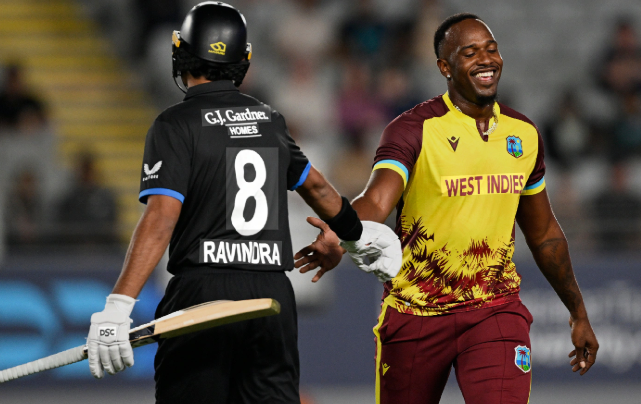
The New Zealand National Cricket Team vs West Indies Cricket Team timeline is filled with unforgettable scorecards, legendary players, emotional victories, and dramatic turning points. What began as a contest between Caribbean flair and New Zealand discipline slowly evolved into one of cricket’s most fascinating rivalries across Tests, ODIs, and T20s. From the terrifying pace dominance of the West Indies in the 1970s and 1980s to the tactical brilliance of Richard Hadlee, Kane Williamson, and Trent Boult, every era produced iconic moments. Brian Lara’s genius, Chris Gayle’s destruction, and Brendon McCullum’s fearless captaincy added further intensity. Fans from both nations witnessed matches that combined aggression, pressure, heartbreak, and unforgettable cricket drama.
Recent Match Timeline
| Date | Match Format / Venue | First Innings Score | Second Innings Score | Match Result |
|---|---|---|---|---|
| Dec 18–22, 2025 | 3rd Test (Mount Maunganui) | NZ: 575/8d & 306/2d | WI: 420 & 138 | New Zealand won by 323 runs |
| Dec 10–12, 2025 | 2nd Test (Wellington) | WI: 205 & 128 | NZ: 278/9d & 57/1 | New Zealand won by 9 wickets |
| Dec 2–6, 2025 | 1st Test (Christchurch) | NZ: 231 & 466/8d | WI: 167 & 457/6 | Match Drawn |
| Nov 22, 2025 | 3rd ODI (Hamilton) | WI: 161 (36.2 ov) | NZ: 162/6 (30.3 ov) | New Zealand won by 4 wickets |
| Nov 19, 2025 | 2nd ODI (Napier) | WI: 247/9 (34 ov) | NZ: 248/5 (33.3 ov) | New Zealand won by 5 wickets (DLS) |
| Nov 16, 2025 | 1st ODI (Christchurch) | NZ: 269/7 (50 ov) | WI: 262/6 (50 ov) | New Zealand won by 7 runs |
| Nov 13, 2025 | 5th T20I (Dunedin) | WI: 140 (18.4 ov) | NZ: 141/2 (15.4 ov) | New Zealand won by 8 wickets |
| Nov 10, 2025 | 4th T20I (Nelson) | WI: 38/1 (6.3 ov) | — | No Result (Rain) |
| Nov 9, 2025 | 3rd T20I (Nelson) | NZ: 177/9 (20 ov) | WI: 168 (19.5 ov) | New Zealand won by 9 runs |
| Nov 6, 2025 | 2nd T20I (Auckland) | NZ: 207/5 (20 ov) | WI: 204/8 (20 ov) | New Zealand won by 3 runs |
| Nov 5, 2025 | 1st T20I (Auckland) | WI: 164/6 (20 ov) | NZ: 157/9 (20 ov) | West Indies won by 7 runs |
Overall Head-to-Head Record
| Format | Total Matches | New Zealand Wins | West Indies Wins | Drawn / Tied | No Result |
|---|---|---|---|---|---|
| Test Matches | 52 | 19 | 13 | 20 | 0 |
| ODIs | 71 | 33 | 31 | 0 | 7 |
| T20Is | 27 | 15 | 8 | 2 | 2 |
| Total | 150 | 67 | 52 | 22 | 9 |
Top Performances Timeline
| Date / Era | Player (Team) | Match Format | Performance Summary | Historical Significance |
|---|---|---|---|---|
| March 1972 | Lawrence Rowe (WI) | Test Match | 214 & 100 vs New Zealand | First player in history to score a double-century and a century on Test debut. |
| Feb 1980 | Sir Richard Hadlee (NZ) | Test Match | 11 Wickets (5/34 & 6/100) | Handed the legendary 1980s West Indian team a rare, historic 1-0 series defeat in New Zealand. |
| Feb 1995 | Brian Lara (WI) | Test Match | 147 runs (Team total: 660/5d) | Led the West Indies to their highest-ever Test team score against New Zealand. |
| Dec 2013 | Ross Taylor (NZ) | Test Match | 217* runs (Team total: 609/9d) | Scored a career-best double century, helping NZ to its highest Test total vs West Indies. |
| March 2015 | Martin Guptill (NZ) | ODI (World Cup) | 237* runs from 163 balls | The highest individual score in ICC Cricket World Cup knockout history, hitting 24 fours and 11 sixes. |
| Jan 2018 | Colin Munro (NZ) | T20I | 104 runs from 53 balls | Smashed 10 sixes to power NZ to 243/5, their highest T20I total against WI. |
| June 2019 | Carlos Brathwaite (WI) | ODI (World Cup) | 101 runs from 82 balls | A dramatic nearly-won century that fell 5 runs short in a thrilling World Cup group-stage clash. |
| Nov 2025 | Jacob Duffy (NZ) | T20I Series | Series-defining bowling | Named Player of the Series after anchoring a 3-1 T20I triumph. |
| Dec 2025 | Justin Greaves (WI) | 1st Test Match | 157* runs in 2nd Innings | Defiant, career-best maiden Test century to force a dramatic draw in Christchurch. |
| Dec 2025 | Devon Conway (NZ) | 3rd Test Match | 227 runs in 1st Innings | Played a masterclass 227-run innings to secure an insurmountable team total of 575/8d and clinch the series 2-0. |
Biggest Wins & Closest Matches Timeline
| Match Date | Format / Venue | Margin Type | Match Result Summary | Historical Context |
|---|---|---|---|---|
| Feb 10, 1995 | Test (Wellington) | Biggest Win (Innings) | West Indies won by an innings and 322 runs | The West Indies team absolute peak dominance on New Zealand soil. |
| Jan 8, 2014 | ODI (Hamilton) | Biggest Win (Runs) | West Indies won by 203 runs | Led by a ferocious batting display from the West Indian top order. |
| March 21, 2015 | ODI (Wellington) | Biggest Win (World Cup) | New Zealand won by 143 runs | Martin Guptill scored his legendary 237* in this World Cup Quarter-Final. |
| Dec 23, 2017 | ODI (Christchurch) | Biggest Win (Runs) | New Zealand won by 204 runs | Trent Boult dismantled the Windies batting lineup at Hagley Park. |
| June 22, 2019 | ODI (Manchester) | Closest Match (Runs) | New Zealand won by 5 runs | Carlos Brathwaite hit a century but was caught on the boundary on the second-to-last ball. |
| Dec 3, 2020 | Test (Hamilton) | Biggest Win (Innings) | New Zealand won by an innings and 134 runs | Kane Williamson anchors the match with a towering double century. |
| Aug 13, 2022 | T20I (Kingston) | Biggest Win (T20I Runs) | New Zealand won by 90 runs | New Zealand’s largest margin of victory against the Windies in the shortest format. |
| Nov 6, 2025 | T20I (Auckland) | Closest Match (T20I Runs) | New Zealand won by 3 runs | High-scoring thriller where the Windies fell just short chasing a target of 208. |
| Nov 16, 2025 | ODI (Christchurch) | Closest Match (ODI Runs) | New Zealand won by 7 runs | A tight battle where West Indies fell short during the final over. |
| Nov 19, 2025 | ODI (Napier) | Closest Match (Balls Left) | New Zealand won by 5 wickets (with 3 balls left) | A rain-affected DLS thriller resolved in the final over of the chase. |
| Dec 18–22, 2025 | Test (Tauranga) | Biggest Win (Runs) | New Zealand won by 323 runs | Driven by Devon Conway’s first-innings double century to sweep the Test series. |
The Era When West Indies Ruled World Cricket
During the 1970s and 1980s, the West Indies transformed cricket into a display of intimidation, power, and relentless dominance. Against New Zealand, they played with unmatched confidence, using brutal pace attacks led by Michael Holding, Malcolm Marshall, Joel Garner, and Andy Roberts. New Zealand often entered these contests knowing survival itself was a challenge. Caribbean batters like Viv Richards and Gordon Greenidge attacked from the first session, forcing New Zealand bowlers onto the defensive. Many scorecards from this era reflected total West Indies superiority, with huge first-innings totals followed by devastating bowling spells. Yet New Zealand occasionally showed resistance through Glenn Turner, Jeremy Coney, and Richard Hadlee. These clashes built the emotional foundation of the rivalry, where discipline battled raw aggression and every session carried psychological pressure.
| Season | Match Score | Winning Team | Key Performance | Rivalry Impact |
|---|---|---|---|---|
| 1972 | West Indies 365 vs NZ 236 | West Indies | Garry Sobers scored a captain’s century | West Indies established early authority |
| 1976 | West Indies 391 and 271 | West Indies | Viv Richards dominated with aggressive batting | Caribbean batting fear became real |
| 1980 | NZ 249 and 145 vs WI 310 | West Indies | Malcolm Marshall destroyed NZ batting | Pace attack controlled the rivalry |
| 1985 | West Indies 400 plus total | West Indies | Joel Garner and Holding shared wickets | Peak dominance era against New Zealand |
Richard Hadlee Refused to Bow Down
When most teams feared the mighty West Indies, Richard Hadlee treated them like a challenge waiting to be conquered. The legendary New Zealand fast bowler carried his team with relentless discipline, sharp movement, and fearless aggression. Against batting giants like Viv Richards, Gordon Greenidge, and Desmond Haynes, Hadlee delivered spells that changed entire matches. He understood that New Zealand could not outmuscle the Caribbean side, so he relied on accuracy, patience, and tactical intelligence. Every wicket felt personal, especially when he removed Richards during pressure moments. Hadlee’s performances gave New Zealand belief during an era when West Indies dominated world cricket. Fans admired the courage he brought into the rivalry because he never accepted defeat mentally, even when the scorecards heavily favored the Caribbean giants.
| Season | Match Score | Winning Team | Key Performance | Rivalry Impact |
|---|---|---|---|---|
| 1976 | WI 337 vs NZ 233 | West Indies | Hadlee took crucial top-order wickets | Showed NZ could challenge powerful batting |
| 1980 | NZ 249 and 145 vs WI 310 | West Indies | Hadlee bowled long hostile spells | Rivalry became more competitive |
| 1985 | WI 418 vs NZ 217 | West Indies | Hadlee claimed five wicket haul | Individual brilliance stood against dominance |
| 1987 | NZ fought to draw Test | Draw | Hadlee controlled middle order collapse | New Zealand earned greater respect globally |
Brian Lara Versus New Zealand’s Thinking Bowlers
Brian Lara brought theatre, elegance, and danger every time he faced New Zealand. Unlike teams that attacked him only with pace, New Zealand relied on tactical bowling plans, patient field settings, and intelligent pressure. Daniel Vettori challenged Lara with flight and subtle spin changes, while Shane Bond tested him with raw pace and late movement. Chris Cairns mixed aggression with clever seam variations to stop Lara from dominating sessions completely. Still, Lara often found ways to control the scoreboard through timing and fearless strokeplay. His innings against New Zealand carried emotional weight because one hour of brilliance could destroy carefully built bowling strategies. Fans admired the contest because it felt like a chess match between genius batting and disciplined bowling intelligence under immense international pressure.
| Season | Match Score | Winning Team | Key Performance | Rivalry Impact |
|---|---|---|---|---|
| 1995 | WI 275 vs NZ 240 | West Indies | Lara scored fluent century | Lara became central figure in rivalry |
| 1999 | NZ 393 vs WI 257 | New Zealand | Vettori troubled Lara repeatedly | NZ tactical bowling gained attention |
| 2002 | WI 302 and 198 vs NZ | New Zealand | Shane Bond dismissed Lara early | Pace versus class became headline battle |
| 2006 | NZ chased 290 successfully | New Zealand | Cairns and Vettori controlled middle overs | Smart tactics defeated Caribbean flair |
ICC Tournament Clashes That Hurt the Most
New Zealand and West Indies produced several painful ICC tournament battles where one defeat changed the mood of an entire campaign. These matches carried knockout pressure, emotional tension, and enormous expectations from fans. During World Cups and Champions Trophy contests, the rivalry often became unpredictable because both teams played fearless cricket under pressure. New Zealand relied on discipline, controlled bowling, and calculated chases, while West Indies trusted explosive batting and moments of individual brilliance. Some defeats still haunt supporters because winning positions disappeared within a few overs. Nathan Astle, Chris Gayle, Kane Williamson, and Trent Boult all played defining roles in different eras. The scorecards from these ICC clashes remain memorable because they mixed tactical drama with emotional heartbreak, creating matches that supporters from both nations still discuss passionately today.
| Season | Match Score | Winning Team | Key Performance | Rivalry Impact |
|---|---|---|---|---|
| 1999 World Cup | NZ 241 vs WI 198 | New Zealand | Nathan Astle anchored chase | NZ gained major ICC confidence |
| 2004 Champions Trophy | WI 290 vs NZ 267 | West Indies | Brian Lara controlled middle overs | Caribbean comeback under pressure |
| 2012 T20 World Cup | WI 139 vs NZ 101 | West Indies | Sunil Narine dominated with spin | WI began T20 tournament dominance |
| 2019 World Cup | NZ 291 vs WI 286 | New Zealand | Kane Williamson scored match winning century | One of rivalry’s most emotional finishes |
T20 Cricket Turned the Rivalry Into Pure Chaos
T20 cricket completely changed the emotional rhythm of the New Zealand and West Indies rivalry. Test patience disappeared and every over started feeling like a turning point. The West Indies relied on explosive hitters such as Chris Gayle, Kieron Pollard, and Andre Russell, while New Zealand answered with fearless attacking cricket under Brendon McCullum and later Kane Williamson. Matches often swung wildly within a few deliveries, creating unforgettable finishes and emotional reactions from fans. Huge sixes, surprise collapses, and dramatic final overs became common features of their T20 contests. New Zealand usually depended on tactical bowling and smart field placements, but West Indies trusted raw power and momentum. These scorecards became memorable because no target ever felt safe once the game entered the final overs.
| Season | Match Score | Winning Team | Key Performance | Rivalry Impact |
|---|---|---|---|---|
| 2007 T20 WC | NZ 190 vs WI 164 | New Zealand | McCullum attacked in powerplay | NZ adapted faster to T20 cricket |
| 2012 T20 WC | WI 139 vs NZ 101 | West Indies | Sunil Narine controlled middle overs | Caribbean spin changed tournament momentum |
| 2017 T20I Series | NZ 243 vs WI 124 | New Zealand | Colin Munro smashed rapid century | One of rivalry’s biggest T20 totals |
| 2020 T20I Series | NZ 179 vs WI 165 | New Zealand | Tim Seifert dominated chase | Tactical batting defeated Caribbean power |
Kane Williamson and the Art of Silent Control
Kane Williamson brought a completely different energy into the New Zealand versus West Indies rivalry. While Caribbean cricket thrived on aggression and emotional momentum, Williamson controlled matches through patience, timing, and tactical calmness. His batting rarely looked rushed, yet he quietly dismantled bowling attacks with precise placement and intelligent strike rotation. Against dangerous players like Andre Russell, Sheldon Cottrell, and Jason Holder, Williamson relied on composure rather than confrontation. As captain, he trusted disciplined bowling plans from Trent Boult and Tim Southee to limit West Indies power hitters during crucial overs. Many scorecards from this era reflected Williamson’s ability to stabilize innings during pressure moments. Fans respected how he absorbed chaos around him and still guided New Zealand toward victories with silent authority and remarkable consistency.
| Season | Match Score | Winning Team | Key Performance | Rivalry Impact |
|---|---|---|---|---|
| 2015 World Cup | NZ 393 vs WI 250 | New Zealand | Williamson controlled middle overs | NZ dominated knockout pressure |
| 2017 ODI Series | NZ 325 vs WI 248 | New Zealand | Williamson scored captain’s century | Tactical batting exposed WI bowling |
| 2019 World Cup | NZ 291 vs WI 286 | New Zealand | Williamson match winning hundred | One of rivalry’s greatest ODI finishes |
| 2020 T20I Series | NZ 179 vs WI 165 | New Zealand | Calm chase management by Williamson | Leadership defined modern rivalry |
Players Who Became Permanent Villains for Opposing Fans
Every long rivalry creates heroes for one side and villains for the other, and New Zealand versus West Indies produced several unforgettable tormentors. Viv Richards terrified New Zealand fans with fearless batting that destroyed bowling attacks within sessions. Later, Brian Lara continued that tradition with elegant centuries that shifted entire series. For West Indies supporters, Richard Hadlee became the bowler who constantly disrupted Caribbean dominance through relentless accuracy and aggression. In the modern era, Kane Williamson frustrated West Indies fans with calm match-winning innings under pressure, while Trent Boult repeatedly damaged explosive batting lineups with early swing. These players were respected deeply, but also feared emotionally because they delivered during the biggest moments. Their performances became painful memories for opposing supporters and lasting symbols of the rivalry’s intensity.
| Season | Match Score | Winning Team | Key Performance | Rivalry Impact |
|---|---|---|---|---|
| 1976 | WI 391 vs NZ 210 | West Indies | Viv Richards destructive century | Richards became nightmare for NZ fans |
| 1985 | WI 418 vs NZ 217 | West Indies | Richard Hadlee five wicket haul | WI fans respected Hadlee’s fight |
| 1995 | WI 275 vs NZ 240 | West Indies | Brian Lara match defining century | Lara dominated key rivalry contests |
| 2019 World Cup | NZ 291 vs WI 286 | New Zealand | Williamson unbeaten hundred | Silent control broke WI hopes |
Conclusion
The New Zealand National Cricket Team vs West Indies Cricket Team rivalry remains special because it has constantly changed with cricket’s evolution while preserving its emotional intensity. West Indies once dominated through fearsome fast bowling and explosive batting, while New Zealand responded with discipline, resilience, and tactical intelligence. Across decades, legends like Viv Richards, Richard Hadlee, Brian Lara, Chris Gayle, Kane Williamson, and Shane Bond shaped scorecards that fans still remember vividly. ICC tournaments, thrilling T20 finishes, and classic Test battles kept the rivalry alive across generations. Even today, every meeting carries historical weight because supporters know these teams rarely produce ordinary cricket. Their timeline is not just about victories and defeats but about character, pressure, and unforgettable sporting moments.