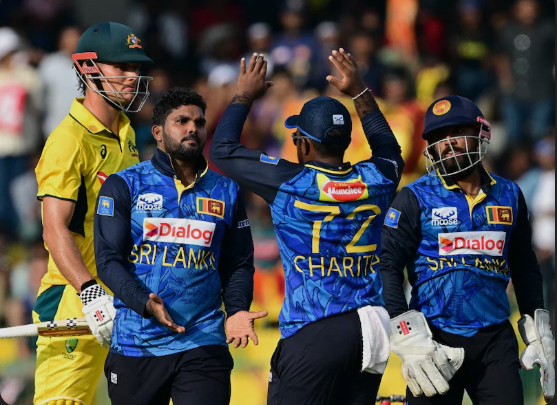
The Sri Lanka National Cricket Team vs Australian Men’s Cricket Team timeline is filled with unforgettable matches, emotional victories, fierce rivalries, and legendary cricket moments. From Sri Lanka’s early struggles against Australia’s dominant squads to historic World Cup triumphs and thrilling T20 clashes, this rivalry has produced some of cricket’s most iconic scorecards. Australian aggression, tactical brilliance, and world class fast bowling constantly tested Sri Lanka’s resilience and creativity. In return, Sri Lanka answered with fearless batting, magical spin bowling, and passionate home support. Across Tests, ODIs, and T20Is, both nations created memorable battles featuring record breaking performances, dramatic finishes, and players who became legends of the modern cricket era.
Recent Matches Timeline
Date
Tournament / Series
Format
Venue
Result
16 Feb 2026
ICC Men’s T20 World Cup
T20I
Pallekele Stadium, Kandy
Sri Lanka won by 8 wickets
14 Feb 2025
Australia tour of Sri Lanka
ODI
R. Premadasa Stadium, Colombo
Sri Lanka won by 174 runs
12 Feb 2025
Australia tour of Sri Lanka
ODI
R. Premadasa Stadium, Colombo
Sri Lanka won by 49 runs
06–09 Feb 2025
Australia tour of Sri Lanka
Test
Galle International Stadium
Australia won by 9 wickets
29 Jan–01 Feb 2025
Australia tour of Sri Lanka
Test
Galle International Stadium
Australia won by an innings & 242 runs
16 Oct 2023
ICC Cricket World Cup
ODI
Ekana Stadium, Lucknow
Australia won by 5 wickets
25 Oct 2022
ICC Men’s T20 World Cup
T20I
Optus Stadium, Perth
Australia won by 7 wickets
08–12 Jul 2022
Australia tour of Sri Lanka
Test
Galle International Stadium
Sri Lanka won by an innings & 39 runs
Overall Head-to-Head Record
Format
Total Matches Played
Australia Wins
Sri Lanka Wins
Draws / No Result
Test
35
22
5
8
ODI
106
64
38
4
T20I
27
16
11
0
Total
168
102
54
12
Chronological Era Evolution
Era
Dominant Team
Major Evolutionary Milestones
Early Grounding (1983–1995)
Australia
Australia dominated initial Test matches, but Sri Lanka secured early home ODI series wins (1983, 1992).
Golden Age Shifts (1996–2007)
Balanced
Sri Lanka beat Australia to win the 1996 Wills World Cup. Australia avenged this by defeating Sri Lanka in the 2007 World Cup Final.
Bilateral Rebalancing (2008–2021)
Australia
Australia took control of traveling Test series. Sri Lanka stayed resilient in T20Is and won a historic 3-0 Test series at home in 2016.
Modern Era (2022–2026)
Balanced
Sri Lanka registered consecutive home ODI series victories (2022, 2025) and soundly defeated Australia by 8 wickets in the 2026 T20 World Cup.
Top Performances Timeline
Match Date
Format
Player
Team
Top Performance Stats
Match Outcome
16 Feb 2026
T20I
Pathum Nissanka
Sri Lanka
100* (52 balls)
Sri Lanka won by 8 wickets
T20I
Travis Head
Australia
56 (29 balls)
T20I
Mitchell Marsh
Australia
54 (27 balls)
T20I
Dushan Hemantha
Sri Lanka
3/37 (4 overs)
14 Feb 2025
ODI
Kusal Mendis
Sri Lanka
101 (115 balls)
Sri Lanka won by 174 runs
ODI
Charith Asalanka
Sri Lanka
78* (66 balls)
ODI
Dunith Wellalage
Sri Lanka
4/35 (10 overs)
ODI
Wanindu Hasaranga
Sri Lanka
3/23 (5 overs)
12 Feb 2025
ODI
Charith Asalanka
Sri Lanka
127 (126 balls)
Sri Lanka won by 49 runs
ODI
Maheesh Theekshana
Sri Lanka
4/40 (10 overs)
06 Feb 2025
Test
Alex Carey
Australia
156 (188 balls)
Australia won by 9 wickets
Test
Steve Smith
Australia
131 (254 balls)
Test
Kusal Mendis
Sri Lanka
85 (139 balls)
29 Jan 2025
Test
Usman Khawaja
Australia
232 (352 balls)
Australia won by an innings & 242 runs
Test
Steve Smith
Australia
141 (251 balls)
16 Oct 2023
ODI
Adam Zampa
Australia
4/47 (8 overs)
Australia won by 5 wickets
08 Jul 2022
Test
Dinesh Chandimal
Sri Lanka
206* (326 balls)
Sri Lanka won by an innings & 39 runs
Test
Prabath Jayasuriya
Sri Lanka
6/118 & 6/59
Biggest Wins (By Runs, Wickets, & Innings)
Format
Winning Team
Margin
Venue
Match Date
Test
Australia
Innings & 242 runs
Galle International Stadium
01 Feb 2025
Test
Australia
367 runs
Melbourne Cricket Ground
30 Dec 1995
Test
Sri Lanka
Innings & 39 runs
Galle International Stadium
11 Jul 2022
ODI
Sri Lanka
174 runs
R. Premadasa Stadium, Colombo
14 Feb 2025
ODI
Australia
168 runs
SCG, Sydney
13 Feb 2013
ODI
Sri Lanka
8 wickets (with 118 balls left)
R. Premadasa Stadium, Colombo
22 Aug 1992
T20I
Australia
134 runs
Adelaide Oval, Adelaide
27 Oct 2019
T20I
Sri Lanka
8 wickets (with 25 balls left)
Pallekele Stadium, Kandy
16 Feb 2026
Closest Matches (By Runs & Wickets)
Format
Winning Team
Margin
Venue
Match Date
Test
Australia
16 runs
Sinhalese Sports Club, Colombo
11 Sep 1992
Test
Sri Lanka
3 wickets
Asgiriya Stadium, Kandy
15 Sep 1999
ODI
Sri Lanka
1 wicket
MCG, Melbourne
03 Nov 2010
ODI
Australia
1 run
MCG, Melbourne
21 Jan 1985
ODI
Sri Lanka
4 runs
R. Premadasa Stadium, Colombo
21 Jun 2022
T20I
Australia
Super Over (Scores tied)
SCG, Sydney
13 Feb 2022
T20I
Sri Lanka
1 wicket
MCG, Melbourne
28 Jan 2013
T20I
Sri Lanka
2 wickets
Geelong Stadium, Victoria
19 Feb 2017
The First Collision That Changed Asian Cricket Forever
Sri Lanka’s early meetings with Australia were filled with pressure, learning, and moments of fearless cricket. Australia entered the rivalry as an experienced powerhouse led by disciplined captains and world class bowlers. Sri Lanka, meanwhile, were trying to earn respect in international cricket. The first ODI and Test clashes showed a huge gap in experience, but Sri Lanka’s fighting spirit impressed fans in Colombo and around the cricket world. Allan Border’s calm leadership and Australia’s aggressive fast bowling often controlled the games, yet Sri Lankan players kept producing brave performances under pressure. These opening contests slowly built the emotional foundation of a rivalry that later became one of cricket’s most respected battles across Tests, ODIs, and ICC tournaments.
Season
Score
Winning Team
Performance
Key Moment
1983 ODI
AUS 313/5 vs SL 218
Australia
Border dominated batting
Early rivalry statement
1985 Test
AUS 381 vs SL 215
Australia
Pace attack destroyed Sri Lanka
Sri Lanka struggled overseas
1987 ODI WC
AUS 267 vs SL 186
Australia
Strong all round effort
World Cup pressure game
1989 ODI
SL 239 vs AUS 235
Sri Lanka
Historic close victory
Sri Lanka gained confidence
When Sri Lanka Stopped Being Underdogs Against Australia
The rivalry changed completely during the 1990s when Sri Lanka began attacking Australia without fear. Arjuna Ranatunga built a side that believed in aggressive batting and smart tactics. Sanath Jayasuriya and Romesh Kaluwitharana transformed ODI cricket with explosive starts that shocked Australian bowlers. Suddenly Australia were forced to rethink field placements and bowling strategies. Sri Lanka were no longer satisfied with competing closely; they wanted victories against the world’s toughest side. Shane Warne faced intense pressure from fearless Sri Lankan strokeplay while Aravinda de Silva became a dependable match winner. Bilateral series during this era carried emotion, crowd noise, and tactical brilliance. Sri Lanka’s rise against Australia became one of cricket’s greatest underdog stories and changed ODI cricket forever.
Season
Score
Winning Team
Performance
Key Moment
1992 ODI
SL 220 vs AUS 189
Sri Lanka
Jayasuriya attacked early
Confidence boost
1994 ODI
AUS 245 vs SL 248
Sri Lanka
Ranatunga guided chase
Tactical masterclass
1995 Test
AUS 531 vs SL 251
Australia
Warne dominated spin battle
Australian comeback
1996 ODI
SL 256 vs AUS 241
Sri Lanka
Aggressive opening partnership
Sri Lanka rise begins
The 1996 World Cup Clash That Sparked Real Rivalry
The 1996 Cricket World Cup transformed the Sri Lanka versus Australia rivalry into an emotional global storyline. Australia’s refusal to tour Sri Lanka because of security concerns created political tension and anger among Sri Lankan supporters. Sri Lanka received walkover points, but critics questioned whether they could truly beat top teams under pressure. Everything changed in the World Cup final at Lahore. Australia started strongly, but Aravinda de Silva produced one of the greatest all round performances in ODI history. His calm batting, clever bowling, and brilliant fielding crushed Australian hopes. Arjuna Ranatunga finished the chase with fearless composure as Sri Lanka lifted their first World Cup trophy. That victory permanently changed the balance and respect between the two nations.
Season
Score
Winning Team
Performance
Key Moment
WC 1996 Final
AUS 241/7 vs SL 245/3
Sri Lanka
Aravinda unbeaten century
Historic World Cup win
WC 1996 Group
Walkover
Sri Lanka
Political tension affected event
Rivalry intensified
1996 ODI
SL 237 vs AUS 204
Sri Lanka
Balanced team effort
Momentum continued
1997 Test
SL 952/6d vs AUS 403
Draw
Massive batting dominance
Record breaking innings
Warne vs Murali and the Battle for Spin Supremacy
Few cricket rivalries produced a spin contest as legendary as Shane Warne versus Muttiah Muralitharan. Warne relied on drift, sharp turn, and mental pressure, while Murali confused batters with mystery spin and relentless accuracy. Every Australia versus Sri Lanka Test series became a personal duel between two bowling geniuses. Steve Waugh’s Australians often attacked Murali aggressively using footwork and sweep shots, while Sri Lanka built entire strategies around Murali’s wicket taking magic. Galle and Kandy became spinning nightmares for visiting Australian batters. Crowds treated every Warne delivery and Murali spell like theatre. These matches were not only about runs and wickets but also about pride, legacy, and proving who truly ruled spin bowling during cricket’s golden era.
Season
Score
Winning Team
Performance
Key Moment
1999 Test
AUS 460 vs SL 261
Australia
Warne took crucial wickets
Spin domination
2000 Test
SL 306 vs AUS 302
Sri Lanka
Murali destroyed middle order
Home advantage
2004 Test
AUS 514 vs SL 325
Australia
Strong Australian batting
Warne tactical brilliance
2007 Test
SL 212 vs AUS 107
Sri Lanka
Murali match winning spell
Spin ruled contest
The Ruthless Australian Era and Sri Lanka’s Resistance
During the early 2000s Australia became cricket’s most dominant team, but Sri Lanka still managed to challenge them with courage and skill. Ricky Ponting’s aggressive captaincy, Adam Gilchrist’s explosive batting, and Glenn McGrath’s relentless bowling created enormous pressure on opponents. Sri Lanka responded through Kumar Sangakkara, Mahela Jayawardene, and Chaminda Vaas, who consistently fought back in difficult situations. The 2003 World Cup semi final was especially painful for Sri Lankan fans as Australia completely controlled the contest. Yet several bilateral matches remained intensely competitive, proving Sri Lanka could still threaten the world champions. Australia’s superior fielding and tactical discipline often made the difference, but Sri Lanka’s resilience kept the rivalry alive and emotionally charged across every format.
Season
Score
Winning Team
Performance
Key Moment
WC 2003 SF
AUS 212 vs SL 123
Australia
McGrath bowling masterclass
Semi final heartbreak
2004 ODI
SL 257 vs AUS 258
Australia
Tight final over finish
Gilchrist impact
2006 Test
AUS 551 vs SL 197
Australia
Ponting double century
Ruthless dominance
2006 ODI
SL 286 vs AUS 288
Australia
Close high scoring thriller
Australian finishing power
Sangakkara and Jayawardene Bring Sri Lanka Back Into the Fight
Kumar Sangakkara and Mahela Jayawardene gave Sri Lanka new belief against Australia through intelligence, patience, and elegant batting. Sangakkara handled Australian pace attacks with fearless strokeplay while Jayawardene controlled Test matches through calm leadership and tactical awareness. Together they built partnerships that frustrated bowlers like Brett Lee and Mitchell Johnson. Sri Lanka started competing more consistently at home, especially on turning pitches where their spinners controlled long sessions. Fans admired the composure of these senior batters under pressure against one of cricket’s toughest teams. Several dramatic matches featured batting recoveries, tense fourth innings chases, and emotional celebrations. This period proved Sri Lanka could challenge Australia not only with aggression but also with discipline and strategic cricket intelligence.
Season
Score
Winning Team
Performance
Key Moment
2008 Test
SL 499 vs AUS 254
Sri Lanka
Jayawardene century
Strong home control
2010 ODI
AUS 239 vs SL 243
Sri Lanka
Sangakkara guided chase
Calm finishing
2011 WC
SL 260 vs AUS 231
Sri Lanka
Balanced bowling effort
Knockout pressure
2012 Test
SL 472 vs AUS 210
Sri Lanka
Spin attack dominated
Tactical brilliance
T20 Cricket Adds Fire, Pressure, and New Heroes
T20 cricket brought even more excitement into the Australia versus Sri Lanka rivalry. Fast scoring, pressure chases, and dramatic endings created unforgettable moments for fans worldwide. Tillakaratne Dilshan introduced innovative batting shots while Lasith Malinga terrified Australian hitters with deadly yorkers. Australia answered through players like Michael Hussey, David Warner, and Shane Watson, who thrived in tense run chases. The 2010 T20 World Cup clash became legendary after Hussey produced a miracle innings against Malinga in the final overs. Sri Lanka also enjoyed emotional victories in ICC tournaments where disciplined bowling and sharp fielding changed matches quickly. T20 cricket added unpredictability and intensity, making every Australia versus Sri Lanka contest feel explosive and emotionally exhausting for supporters.
Season
Score
Winning Team
Performance
Key Moment
WT20 2010
AUS 168 vs SL 87
Australia
Hussey explosive finish
Miracle chase
WT20 2012
SL 139 vs AUS 133
Sri Lanka
Malinga death bowling
Crowd eruption
2013 T20I
SL 198 vs AUS 184
Sri Lanka
Dilshan attacking knock
High scoring thriller
2016 T20I
AUS 263 vs SL 178
Australia
Warner brutal century
Batting domination
Conclusion
The Sri Lanka National Cricket Team vs Australian Men’s Cricket Team rivalry remains one of international cricket’s most respected and entertaining contests. Over the decades, the rivalry evolved from one sided encounters into emotionally charged battles filled with tactical depth and unforgettable performances. Australia brought relentless intensity, discipline, and championship mentality, while Sri Lanka added flair, spin mastery, and fearless cricket under pressure. Legendary players like Shane Warne, Muttiah Muralitharan, Ricky Ponting, Kumar Sangakkara, and Sanath Jayasuriya turned ordinary matches into historic events. Even today, every Australia versus Sri Lanka clash carries excitement, pressure, and pride, proving that this rivalry continues to hold a special place in world cricket history.