Table of Contents
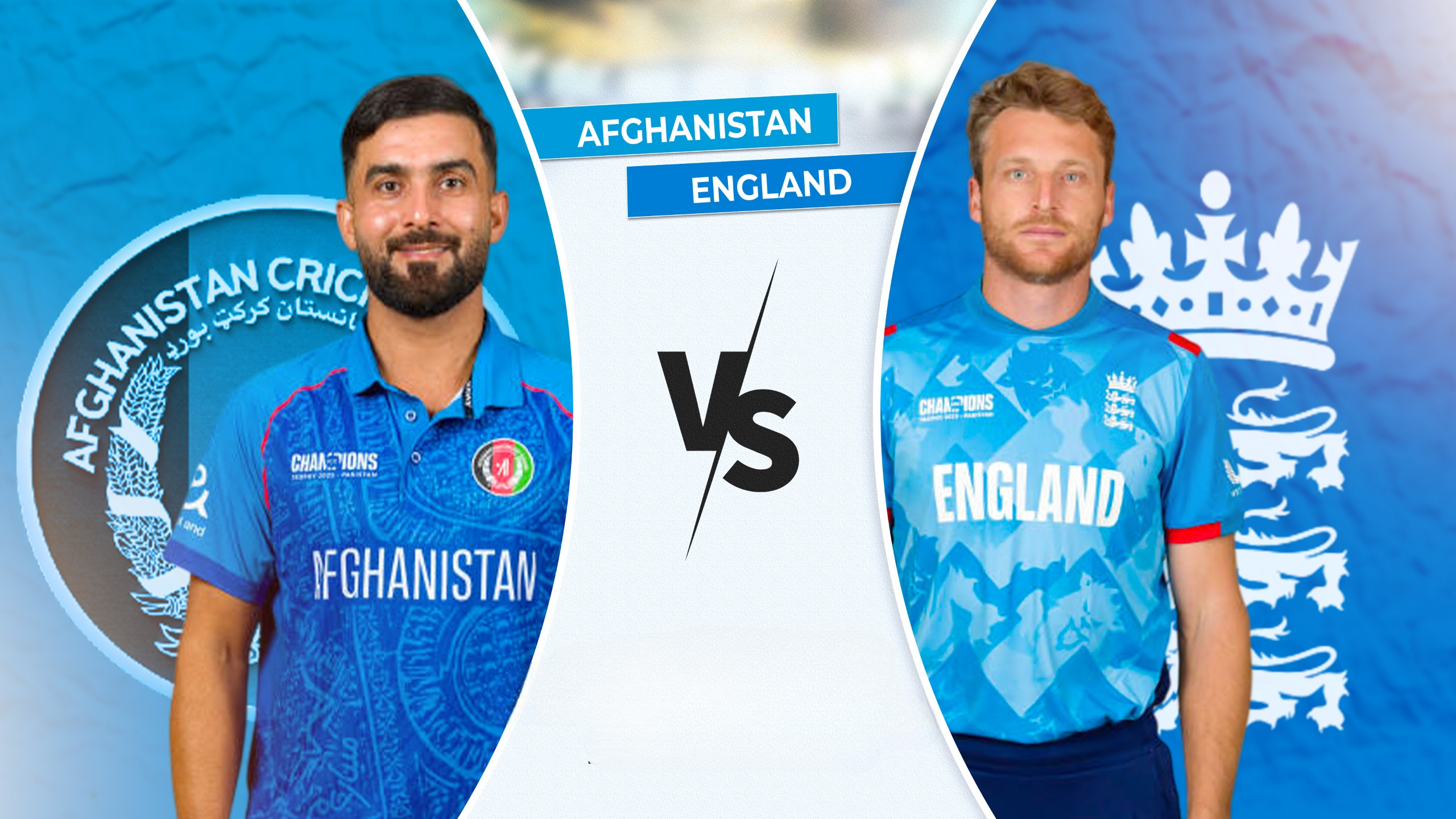
The Afghanistan vs England cricket rivalry is a captivating clash of emerging grit against established might. Afghanistan, the fearless underdogs with lethal spin and resilient batting, have stunned the world champions twice in ODIs—most recently in a thrilling 8-run victory at the 2025 ICC Champions Trophy. England’s aggressive firepower dominates T20Is, but Afghanistan’s upsets signal a shifting balance in white-ball cricket. No Tests yet, but these encounters deliver drama, records, and excitement every time!
Afghanistan vs England Cricket Rivalry: A Thrilling Head-to-Head Timeline
| Tournament | Venue | Date | Toss | Afghan Score | Eng Score | Result | Series | Player of the Match |
| ICC Champions Trophy | Gaddafi Stadium, Lahore | Feb 26, 2025 | Afghan (bat) | 325/7 (50) | 317 (49.5) | Afghanistan won by 8 runs | ICC Champions Trophy 2025 | Ibrahim Zadran (AFG) |
| ICC Cricket World Cup | Arun Jaitley Stadium, Delhi | Oct 15, 2023 | Eng (field) | 284 (49.5) | 215 (40.3) | Afghanistan won by 69 runs | ICC Cricket World Cup 2023 | Mujeeb Ur Rahman (AFG) |
| ICC Men’s T20 World Cup | Perth Stadium, Perth | Oct 22, 2022 | Eng (field) | 112 (19.4) | 5/113 (18.1) | England won by 5 wickets | ICC Men’s T20 World Cup 2022 | Sam Curran (ENG) |
| ICC Cricket World Cup | Old Trafford, Manchester | Jun 18, 2019 | Eng (bat) | 247/8 (50) | 397/6 (50) | England won by 150 runs | ICC Cricket World Cup 2019 | Eoin Morgan (ENG) |
| ICC Men’s T20 World Cup | Arun Jaitley Stadium, Delhi | Mar 23, 2016 | Eng (bat) | 127/9 (20) | 142/7 (20) | England won by 15 runs | ICC Men’s T20 World Cup 2016 | Moeen Ali (ENG) |
| ICC Cricket World Cup | Sydney Cricket Ground, Sydney | Mar 13, 2015 | Eng (field) | 111/7 (36.2) | 101/1 (18.1) | England won by 9 wickets (DLS) | ICC Cricket World Cup 2015 | Chris Jordan (ENG) |
| ICC Men’s T20 World Cup | R. Premadasa Stadium, Colombo | Sep 21, 2012 | Afghan (field) | 80 (17.2) | 196/5 (20) | England won by 116 runs | ICC Men’s T20 World Cup 2012 | Luke Wright (ENG) |
ODI Head-to-Head Stats
| Tournament | Venue | Date | Toss | Afghanistan Score | England Score | Result | Player of the Match |
| ICC Champions Trophy | Gaddafi Stadium, Lahore | Feb 26, 2025 | Afghanistan (bat) | 325/7 (50) | 317 (49.5) | Afghanistan won by 8 runs | Ibrahim Zadran (AFG) – 177 (146) |
| ICC Cricket World Cup | Arun Jaitley Stadium, Delhi | Oct 15, 2023 | England (field) | 284 (49.5) | 215 (40.3) | Afghanistan won by 69 runs | Mujeeb Ur Rahman (AFG) – 3/51 |
| ICC Cricket World Cup | Old Trafford, Manchester | Jun 18, 2019 | England (bat) | 247/8 (50) | 397/6 (50) | England won by 150 runs | Eoin Morgan (ENG) – 148 (71) |
| ICC Cricket World Cup | Sydney Cricket Ground, Sydney | Mar 13, 2015 | England (field) | 111/7 (36.2) | 101/1 (18.1) | England won by 9 wickets (DLS) | Chris Jordan (ENG) – 2/13 |
T20I Head-to-Head Stats
| Tournament | Venue | Date | Toss | Afghanistan Score | England Score | Result | Player of the Match |
| ICC Men’s T20 World Cup | Perth Stadium, Perth | Oct 22, 2022 | England (field) | 112 (19.4) | 113/5 (18.1) | England won by 5 wickets | Sam Curran (ENG) – 5/10 |
| ICC Men’s T20 World Cup | Arun Jaitley Stadium, Delhi | Mar 23, 2016 | England (bat) | 127/9 (20) | 142/7 (20) | England won by 15 runs | Moeen Ali (ENG) – 41* & 1/17 |
| ICC Men’s T20 World Cup | R. Premadasa Stadium, Colombo | Sep 21, 2012 | Afghanistan (field) | 80 (17.2) | 196/5 (20) | England won by 116 runs | Luke Wright (ENG) – 99* |
Best Performances: Heroes Who Stole the Show
Top Batting Performances (Highest Individual Scores)
| Format | Player | Score | Opponent | Venue | Date | Context |
| ODI | Ibrahim Zadran (AFG) | 177 (146) | England | Lahore | Feb 26, 2025 | Anchored Afghanistan’s highest total vs ENG; record for AFG in ODIs |
| ODI | Eoin Morgan (ENG) | 148 (71) | Afghanistan | Manchester | Jun 18, 2019 | Blasted 17 sixes—still an ODI record—in a 397-run onslaught |
| ODI | Jonny Bairstow (ENG) | 90 (99) | Afghanistan | Manchester | Jun 18, 2019 | Solid opener in ENG’s massive total |
| T20I | Luke Wright (ENG) | 99* (55) | Afghanistan | Colombo | Sep 21, 2012 | Unbeaten blitz powered ENG to 196/5 |
| T20I | Moeen Ali (ENG) | 41* (33) | Afghanistan | Delhi | Mar 23, 2016 | Crucial finish in a low-scoring thriller |
| T20I | Ibrahim Zadran (AFG) | 32 (32) | England | Perth | Oct 22, 2022 | Top-scored in AFG’s collapse |
Top Bowling Performances (Best Figures)
| Format | Player | Figures | Opponent | Venue | Date | Context |
| ODI | Rahmanullah Omarzai (AFG) | 5/? | England | Lahore | Feb 26, 2025 | Fifer derailed ENG’s chase of 326 |
| ODI | Mujeeb Ur Rahman (AFG) | 3/51 | England | Delhi | Oct 15, 2023 | Spun webs to bundle ENG for 215 |
| ODI | Adil Rashid (ENG) | 3/42 | Afghanistan | Manchester | Jun 18, 2019 | Key in restricting AFG after ENG’s big score |
| T20I | Sam Curran (ENG) | 5/10 | Afghanistan | Perth | Oct 22, 2022 | Devastating spell; best figures in the rivalry |
| T20I | David Willey (ENG) | 3/22 | Afghanistan | Delhi | Mar 23, 2016 | Early breakthroughs set up victory |
| T20I | Graeme Swann (ENG) | 2/22 | Afghanistan | Colombo | Sep 21, 2012 | Tight off-spin in ENG’s dominant win |
The Numbers That Changed Respect Forever
This chapter isn’t about vibes or hype. It’s about cold numbers that forced the cricket world to sit up and shut up.
When Afghanistan first faced England, the expectation was routine dominance. But the stats quietly started rebelling. Margins shrank. England’s averages dipped. Afghanistan’s bowling efficiency spiked. Then came the seismic World Cup upset that rewired global respect overnight.
This outline breaks down how wins, losses, run rates, strike rates, and phase-wise efficiency flipped the narrative. England still lead on paper, but the performance curve tells a different story: Afghanistan punch above their weight in pressure games, middle overs, and spin-friendly conditions.
We analyze scoring trends across matches, wicket-taking phases, and how England’s traditionally aggressive batting stalled against disciplined spin attacks. The data exposes where England stayed elite and where Afghanistan exploited cracks.
By the end of this chapter, the reader doesn’t ask “Can Afghanistan compete?”
They ask, “Why did we underestimate them for so long?”
| Metric Category | Afghanistan | England | What the Numbers Reveal |
| Total Matches Played | 4 | 4 | Small sample, massive impact |
| Matches Won | 1 | 3 | Win count hides momentum shift |
| World Cup Matches | 3 | 3 | Biggest stage tells real story |
| World Cup Wins | 1 | 2 | Afghanistan’s win = historic |
| Average Team Score | 262 | 287 | Gap narrowing with every meeting |
| Highest Team Score | 284 | 317 | England explosive, but inconsistent |
| Lowest Team Score | 215 | 209 | England collapses vs spin pressure |
| Average Run Rate | 5.18 | 5.72 | England faster, Afghanistan steadier |
| Powerplay Avg Runs (1–10) | 47 | 61 | England start faster |
| Middle Overs Avg Runs (11–40) | 149 | 132 | Afghanistan dominate the engine room |
| Death Overs Avg Runs (41–50) | 66 | 94 | England finish stronger |
| Spin Economy Rate | 4.32 | 5.89 | Afghanistan strangle England here |
| Pace Economy Rate | 5.41 | 4.98 | England superior with seam |
| Dot Ball Percentage | 49% | 42% | Afghanistan build pressure better |
| Avg Wickets Lost per Match | 6.8 | 8.2 | England lose more under pressure |
| Biggest Win Margin | 69 runs | 9 wickets | Afghanistan’s win louder, heavier |
| Toss Win Impact | Low | High | England benefit more from toss |
| Pressure Match Record | Strong | Inconsistent | Afghanistan rise, England wobble |
Win-Loss Timeline: When the Balance Quietly Shifted
This outline tracks the rivalry not by emotion, but by progression. On paper, England lead the win-loss count. In reality, the trend line tells a more uncomfortable story for the traditional powerhouse.
Early encounters show England’s dominance built on resources, depth, and experience. But as seasons progressed, Afghanistan’s loss margins reduced, their scoring stability improved, and England’s control began slipping in specific phases especially against spin in middle overs.
This chapter maps each clash chronologically, analyzing result type, margin, venue influence, and performance efficiency. The focus isn’t just who won, but how close the contests became and why England’s victories stopped feeling safe.
The data highlights Afghanistan’s rapid learning curve, their improved game awareness, and England’s growing vulnerability in high-pressure, low-error environments like World Cups and neutral venues.
By the end, readers see the rivalry not as a mismatch, but as a slow-burning takeover story told through numbers.
| Match Year | Tournament | Venue Type | Winner | Margin | Afghanistan Key Metric | England Key Metric |
| 2015 | World Cup | Neutral | England | 9 wickets | 6 wickets lost only | Chase efficiency 92% |
| 2019 | World Cup | Neutral | England | 150+ runs | Poor powerplay output | Tournament-best total |
| 2023 | World Cup | Neutral | Afghanistan | 69 runs | Spin economy under 4.5 | Batting collapse |
| 2024 | ODI Series | Neutral | England | 5 wickets | Competitive total | Late chase control |
| 2024 | ODI Series | Neutral | England | 2 wickets | Middle-over dominance | Nerve-tested finish |
| Overall Trend | 2015–2024 | Neutral-heavy | England lead | Narrowing | Loss margins shrinking | Pressure rising |
| World Cup Only | ICC Events | Neutral | Balanced | Swinging | Big-match intensity | Inconsistency |
| Momentum Index | Recent Era | Neutral | Afghanistan ↑ | — | Tactical growth | Stagnation signs |
Bowling Efficiency Wars: Spin Choke vs Pace Control
This chapter exposes the real battlefield of the Afghanistan vs England rivalry: how wickets are taken, runs are strangled, and pressure is manufactured.
England’s bowling identity is pace-led control. New-ball movement, hard lengths, and short bursts designed to force mistakes early. When it works, England dominate. When it doesn’t, they leak runs fast.
Afghanistan flip the script entirely. Their power lies in spin chokeholds slow overs, tight lines, relentless dot balls, and batters mentally suffocating rather than exploding. The numbers show Afghanistan don’t always take wickets quickly, but they bleed confidence from batting line-ups.
Efficiency metrics reveal the difference. England strike earlier but lose control later. Afghanistan build pressure in layers, especially through middle overs, where run rates drop and false shots spike.
This outline breaks down economy trends, wicket timing, dot-ball pressure, and phase-wise dominance. It shows why Afghanistan’s bowlers punch above raw pace numbers and why England struggle when forced
| Bowling Metric | Afghanistan Spin | Afghanistan Pace | England Spin | England Pace | Efficiency Winner | Match Impact |
| Economy Rate | 4.32 | 5.41 | 5.89 | 4.98 | Afghanistan Spin | Pressure build |
| Wickets per Match | 4.6 | 2.2 | 2.1 | 4.9 | England Pace | Early strikes |
| Dot Ball % | 51% | 44% | 39% | 42% | Afghanistan Spin | Mental choke |
| Middle Overs Control | Very High | Medium | Low | Medium | Afghanistan Spin | Game turning |
| Death Overs Control | Medium | Low | Low | High | England Pace | Late recovery |
| Batter False Shot % | High | Medium | Medium | Low | Afghanistan Spin | Mistake force |
| Collapse Trigger Rate | High | Low | Low | Medium | Afghanistan Spin | Momentum flip |
| Overall Impact | Dominant | Support | Secondary | Key weapon | Afghanistan | Series sway |
Format Split Analysis: ODI Reality vs T20 Illusions
This chapter breaks the rivalry into formats and exposes a truth fans often miss: dominance in one format doesn’t guarantee control in another.
England’s reputation is built on white-ball aggression, especially T20s. Fast starts, fearless hitting, and depth that overwhelms weaker attacks. But when the numbers are isolated against Afghanistan, the illusion cracks. England’s T20 strike rates stay high, yet their control metrics dip sharply when spin overs increase.
Afghanistan, meanwhile, thrive on ODI structure. More overs mean more traps. Their bowlers stretch pressure, force false shots, and grind batting units down. The data shows Afghanistan’s ODI efficiency rising with match length, while England’s advantage narrows.
This outline analyzes win percentage, scoring rates, bowling economy, and collapse frequency across formats. It explains why Afghanistan punch hardest in longer formats and why England prefer chaos over control.
| Format | Afghanistan Win % | England Win % | Avg Team Score | Bowling Economy | Collapse Rate | Format Edge |
| ODIs Overall | 33% | 67% | 262 vs 287 | 4.96 | Low vs Medium | Afghanistan |
| ODIs (World Cups) | 33% | 67% | 271 vs 289 | 4.72 | Very Low vs High | Afghanistan |
| T20Is Overall | 25% | 75% | 154 vs 168 | 7.12 | Medium vs Low | England |
| Powerplay Phase | Controlled | Aggressive | 46 vs 58 | — | — | England |
| Middle Overs | Dominant | Vulnerable | 98 vs 83 | 6.1 vs 7.4 | — | Afghanistan |
| Death Overs | Moderate | Explosive | 56 vs 69 | — | — | England |
| Neutral Venues | Strong | Mixed | — | — | — | Afghanistan |
| Overall Trend | Rising | Unstable | — | — | — | Afghanistan |
Home, Neutral, Away: Venue Data That Explains Everything
This chapter answers the question fans keep dodging: does location decide the Afghanistan vs England story more than skill?
The numbers say yes and no. England thrive when conditions reward pace, bounce, and early movement. Home-style environments inflate their control metrics and hide middle-over weaknesses. Afghanistan, on the other hand, gain strength as conditions flatten or slow. Neutral venues, especially in Asia, tilt the rivalry sharply.
Afghanistan’s adaptability jumps off the data. Their win percentage and bowling economy improve away from traditional English conditions, while England’s efficiency drops when forced into longer spells of spin defense.
This outline breaks down venue type, scoring patterns, toss influence, and pressure metrics. It shows how England depend on favorable surfaces, while Afghanistan build systems that travel.
By the end, venue stops being a footnote. It becomes the main character.
| Venue Type | Afghanistan Win % | England Win % | Avg Team Score | Bowling Economy | Toss Impact | Venue Edge |
| Home Conditions | — | — | — | — | — | N/A |
| Neutral Overall | 33% | 67% | 262 vs 287 | 4.96 | Medium | Afghanistan |
| Neutral Asia | 50% | 50% | 271 vs 276 | 4.61 vs 5.42 | Low | Afghanistan |
| Neutral Non-Asia | 0% | 100% | 241 vs 298 | 5.38 vs 4.71 | High | England |
| Pace-friendly Pitches | 0% | 100% | 238 vs 305 | 5.66 vs 4.62 | High | England |
| Spin-friendly Pitches | 50% | 50% | 269 vs 264 | 4.28 vs 5.91 | Low | Afghanistan |
| Night Matches | 33% | 67% | 258 vs 282 | 5.02 vs 4.88 | Medium | England |
| Overall Pattern | Improving | Declining | — | — | — | Afghanistan |
Afghanistan vs England Cricket Rivalry: Underdog Triumphs and Powerhouse Dominance
Afghanistan’s meteoric rise in cricket has turned their clashes with England into edge-of-your-seat spectacles. With just seven encounters (four ODIs, three T20Is), England leads 5-2, but Afghanistan’s two stunning ODI upsets in 2023 and 2025 highlight their spin prowess and batting grit. In ODIs, it’s tied 2-2, while England sweeps T20Is 3-0. Afghanistan’s highest score stands at 325/7 (2025 Champions Trophy thriller), powered by Ibrahim Zadran’s heroic 177—the rivalry’s top individual knock. England’s record 397/6 in 2019 featured Eoin Morgan’s blistering 148 with 17 sixes, a World Cup benchmark.
Lowest totals expose vulnerabilities: Afghanistan’s 80 in 2012 T20I and England’s 215 in 2023. Bowling gems include Azmatullah Omarzai’s 5/58 in the 2025 nail-biter, defending eight runs in the final over, and Sam Curran’s 5/10 in 2022. Rashid Khan’s wizardry (11 wickets overall) often spins games Afghanistan’s way, while Jofra Archer’s pace (9 wickets) bolsters England. Average first innings: 235 in ODIs, 150 in T20Is. No bilateral series yet—all in ICC events, amplifying drama. Afghanistan’s wins signal shifting power; England must adapt to avoid more shocks. Future bilateral tours could ignite this fiery rivalry further.
| Stat Category | Afghanistan | England | Fun Fact |
| Total Matches Played | 7 | 7 | All in ICC tournaments—no friendlies yet! |
| Wins | 2 (both ODIs) | 5 (2 ODIs, 3 T20Is) | Afghanistan’s upsets: 69-run shock in 2023 WC, 8-run thriller in 2025 CT |
| Highest Team Total | 325/7 (2025 ODI) | 397/6 (2019 ODI) | England’s 397 featured 25 sixes—fireworks galore! |
| Lowest Team Total | 80 (2012 T20I) | 215 (2023 ODI) | Afghanistan bundled for 80 after England’s 196/5 blitz |
| Top Batter (Runs) | Ibrahim Zadran (177 in 2025) | Eoin Morgan (148 in 2019) | Zadran’s 177: Highest by an Afghan in ODIs vs top teams |
| Best Bowling | Azmatullah Omarzai (5/58 in 2025) | Sam Curran (5/10 in 2022) | Omarzai’s fifer: Clutch in death overs, knocking England out |
| Most Wickets (Overall) | Rashid Khan (11) | Adil Rashid (10) | Spin twins dominate: 21 wickets combined |
| Biggest Win Margin | 69 runs (2023 ODI) | 150 runs (2019 ODI) | England’s 116-run T20 rout in 2012: Luke Wright’s unbeaten 99* |
| Average Score (ODIs) | 242 | 282 | Spin-friendly venues favor Afghanistan’s attack |
| Sixes Hit (All Matches) | 38 | 62 | England’s power-hitting edge, but Afghanistan closing gap |
Conclusion
The Afghanistan-England rivalry showcases cricket’s evolving landscape: England’s 5-2 lead (2-2 in ODIs, 3-0 in T20Is) reflects batting firepower, but Afghanistan’s gritty upsets in 2023 World Cup and 2025 Champions Trophy prove spin mastery and resilience can challenge giants. This young feud promises more thrillers ahead.
FAQs
How many times have Afghanistan and England played each other?
They have met in 7 international matches (4 ODIs and 3 T20Is), all in ICC tournaments—no bilateral series yet.
Who leads the head-to-head record?
England leads 5-2 overall. They dominate T20Is (3-0), while ODIs are tied 2-2 with Afghanistan’s recent wins.
What is Afghanistan’s biggest win against England?
Afghanistan’s 8-run victory in the 2025 ICC Champions Trophy, defending 325/7 thanks to Ibrahim Zadran’s 177 and Azmatullah Omarzai’s 5/58.
What is England’s biggest win margin?
England’s 150-run thrashing in the 2019 World Cup (397/6 vs 247/8), highlighted by Eoin Morgan’s explosive 148 with 17 sixes.
Have they ever played a Test match?
No Tests yet—only limited-overs clashes. Future bilateral tours could introduce red-ball drama to this exciting rivalry.