Table of Contents
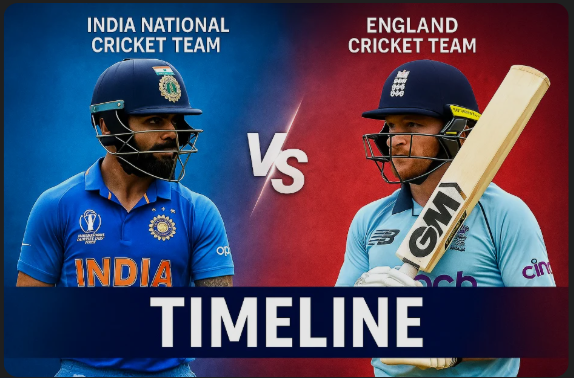
The England vs India cricket rivalry is not just a contest of bat and ball. It is a journey of history, pride, pressure, and evolution. From the first Test in 1932 to modern-era battles, every match adds a new chapter shaped by emotion, aggression, and unforgettable performances.
Latest Matches: England Cricket Team Vs India National Cricket Team Timeline
| Format | Venue | Date | Toss | Score | Result | Series | Player of the Match | Highlights |
|---|---|---|---|---|---|---|---|---|
| Test | Kennington Oval, London | Jul 31 – Aug 4, 2025 | N/A | IND 224 & 396; ENG 247 & 367 (target 374) | India won by 6 runs | India in England Test Series 2025 | N/A | A heart-pounding finish as India snatched victory from the jaws of defeat in the series finale, defending a tough target with brilliant bowling. |
| Test | Old Trafford, Manchester | Jul 23-27, 2025 | N/A | IND 358 & 425/4; ENG 669 | Match drawn | India in England Test Series 2025 | N/A | England piled on a massive first innings total, but India’s resilient batting ensured a stalemate in this high-scoring affair. |
| Test | Lord’s, London | Jul 10-14, 2025 | N/A | ENG 387 & 192; IND 387 & 170 (target 193) | England won by 22 runs | India in England Test Series 2025 | N/A | England turned the tables at the home of cricket, collapsing India’s chase in a dramatic twist after a tied first innings. |
| Test | Edgbaston, Birmingham | Jul 2-6, 2025 | N/A | IND 587 & 427/6d; ENG 407 & 271 (target 608) | India won by 336 runs | India in England Test Series 2025 | N/A | India’s batting dominance set an impossible target, leading to a crushing victory and shifting momentum in the series. |
| Test | Headingley, Leeds | Jun 20-24, 2025 | N/A | IND 471 & 364; ENG 465 & 373/5 (target 371) | England won by 5 wickets | India in England Test Series 2025 | N/A | England chased down a big total with ease, kicking off the series with aggressive batting that set the tone. |
| Test | HPCA Stadium, Dharamsala | Mar 7-9, 2025 | N/A | ENG 218 & 195; IND 477 | India won by an innings and 64 runs | England in India Test Series 2025 | N/A | India’s bowlers dismantled England twice, wrapping up the series with a dominant all-round display in the mountains. |
| Test | JSCA, Ranchi | Feb 23-26, 2025 | N/A | ENG 353 & 145; IND 307 & 192/5 | India won by 5 wickets | England in India Test Series 2025 | N/A | A gritty chase by India after England’s collapse in the second innings kept their home fortress intact. |
| Test | Saurashtra Cricket Association Stadium, Rajkot | Feb 15-18, 2025 | N/A | IND 445 & 430/4d; ENG 319 & 122 | India won by 434 runs | England in India Test Series 2025 | N/A | One of the biggest margins in Test history, with India’s batsmen and spinners overwhelming England completely. |
| ODI | Narendra Modi Stadium, Ahmedabad | Feb 12, 2025 | N/A | N/A | India won by 142 runs | England in India ODI Series 2025 | N/A | India posted a mammoth total and bowled out England cheaply, asserting dominance in the limited-overs leg. |
| Test | ACA-VDCA Cricket Stadium, Visakhapatnam | Feb 2-5, 2025 | N/A | IND 396 & 255; ENG 253 & 292 | India won by 106 runs | England in India Test Series 2025 | N/A | India bounced back strongly, setting a challenging target that England’s batsmen couldn’t reach. |
| T20I | Wankhede Stadium, Mumbai | Feb 2, 2025 | N/A | N/A | India won by 150 runs | England in India T20I Series 2025 | N/A | A one-sided thrashing where India’s all-round firepower left England reeling in a high-octane encounter. |
| Test | Rajiv Gandhi International Stadium, Hyderabad | Jan 25-28, 2025 | N/A | ENG 246 & 420; IND 436 & 202 | England won by 28 runs | England in India Test Series 2025 | N/A | England’s spinners shocked India on home soil, pulling off an upset in the series opener. |
| Test | Edgbaston, Birmingham | Jul 1-5, 2022 | N/A | IND 416 & 245; ENG 284 & 378/3 | England won by 7 wickets | India in England Test Match 2022 | N/A | England’s aggressive ‘Bazball’ approach chased down a stiff target effortlessly in this rescheduled Test. |
| Test | Kennington Oval, London | Sep 2-6, 2021 | N/A | IND 191 & 466; ENG 290 & 210 | India won by 157 runs | India in England Test Series 2021 | N/A | India’s comeback after a low first innings, with bowlers sealing a famous victory at The Oval. |
| Test | Headingley, Leeds | Aug 25-28, 2021 | N/A | IND 78 & 278; ENG 432 | England won by an innings and 76 runs | India in England Test Series 2021 | N/A | England bounced back ruthlessly after Lord’s, skittling India cheaply in both innings. |
1932 – The First Collision That Started It All
When India National Cricket Team walked out at Lord’s in 1932, it was more than just a cricket match. It was India’s first-ever Test, played against the very nation that had taught the game to the subcontinent. Across them stood the mighty England Cricket Team, confident, experienced, and fully aware of their authority in world cricket.
India arrived with limited exposure but unlimited pride. The batsmen faced swing they had rarely seen, bowlers worked without fear despite knowing the odds, and the captain led with quiet courage. England controlled most sessions, yet something subtle happened across those five days. India did not crumble. They competed. They absorbed pressure. They earned respect.
The crowd at Lord’s sensed it too. This was not a ceremonial appearance. It was the first spark of a rivalry that would stretch across generations. No sledging, no aggression, just raw tension shaped by history, class, and ambition. England won the match, but India won belief. From this point on, every England vs India contest carried more weight, more emotion, and more meaning than a simple scoreline could ever show.
| Match Detail | Information |
|---|---|
| Year | 1932 |
| Format | Test Match |
| Venue | Lord’s, London |
| Occasion | India’s first-ever Test match |
| England 1st Innings | Strong batting foundation |
| India 1st Innings | Brave resistance under pressure |
| England Bowling Theme | Swing, discipline, patience |
| India Bowling Theme | Courage, long spells, control |
| Match Result | England won |
| Crowd Mood | Respectful, curious, attentive |
| Aggression Level | Low but mentally intense |
| Historical Importance | Birth of the England vs India rivalry |
| Long-Term Impact | Set the emotional and competitive tone for decades |
1961–1971 – India Finally Hits Back
By the early 1960s, the England cricket team vs India national cricket team timeline entered a decisive phase. This was no longer a one-sided lesson. India had learned, adapted, and most importantly, believed. The 1961 home series showed England that touring India was no longer comfortable. Spin ruled, patience was tested, and pressure crept in session by session. India’s bowlers strangled England’s batting, while the crowd played its role like a sixth fielder.
But the real statement arrived in 1971 on English soil. Conditions that once haunted India now witnessed calm defiance. Indian batters refused to panic, bowlers stayed disciplined, and every small victory within sessions mattered. England felt something new frustration. The balance of power was shifting.
There was no loud aggression, no wild celebrations. The intensity lived in long spells, tight chases, and quiet confidence. Indian fans sensed history. English players sensed resistance. This decade didn’t just produce wins. It reshaped the rivalry’s psychology. From here on, England vs India was no longer about dominance. It became about nerve, adaptability, and handling pressure when the game slowed down and stared back at you.
| Year | Venue | Matches | Series Result | India Key Performers | England Key Performers | Dominant Skill | Crowd Impact | Rivalry Significance |
|---|---|---|---|---|---|---|---|---|
| 1961 | India | 5 Tests | India won | Spinners controlling middle overs | Batters struggling vs spin | Spin mastery | Loud, emotional | First real dominance |
| 1967 | England | 3 Tests | Drawn | Patient batting efforts | Seam pressure | Survival cricket | Respectful tension | Growing belief |
| 1971 | England | 3 Tests | India won | Match-winning all-round efforts | Missed key moments | Calm under pressure | Historic excitement | Turning point era |
1990–1999 – Stars Take Over the Rivalry
The 1990s changed the England vs India rivalry forever. This decade was no longer just about teams. It was about stars carrying nations on their shoulders. Every series felt personal. Every innings felt watched. Cricket moved into living rooms, newspapers exploded with headlines, and fans picked sides not just by flag, but by player.
India arrived with flair and belief. England responded with discipline and structure. Matches swung on individual brilliance. One great innings could silence a crowd. One spell could flip an entire Test. Pressure moments became theatre. Batters soaked in applause. Bowlers celebrated with clenched fists. Fielders pushed limits, diving, staring, refusing to back down.
Aggression stayed controlled but intense. No chaos, just pride. England relied on systems. India relied on moments of magic. Fans sensed that a single player could now decide history. This era elevated the rivalry from competitive to iconic. It was the decade when England vs India stopped being a contest of styles and became a battle of reputations. By the end of the 1990s, this rivalry had global pull. Every clash promised drama because stars don’t hide. They perform or they fall, and the world watches.
| Series Year | Venue | Matches | Team | Star Player Role | Key Performance | Pressure Moment | Match Impact | Fan Emotion |
|---|---|---|---|---|---|---|---|---|
| 1990 | England | Tests | India | Lead batter | Match-saving innings | Final-day resistance | Series-defining draw | Explosive pride |
| 1993 | India | Tests | England | Senior bowler | Long attacking spells | Breaking partnerships | Kept series alive | Tense respect |
| 1996 | England | Tests | India | All-round control | Bat and ball impact | Middle-session dominance | Momentum shift | Rising confidence |
| 1999 | England | Tests | England | Structured batting | Session-by-session grind | Wearing down attack | Narrow victories | Relieved roar |
2008–2013 – Power Shift and Dominance Cycles
The period between 2008 and 2013 marked a sharp power shift in the England vs India rivalry. This was the era where home dominance became ruthless and touring turned into a survival test. India were nearly unbeatable on their own pitches, squeezing teams with spin, patience, and relentless pressure. England, meanwhile, evolved into a disciplined unit at home, using seam movement, tight fields, and long sessions to break resistance.
What made this phase special was how quickly control changed hands depending on location. In India, England’s batters looked rushed and uncertain. In England, Indian batters struggled to settle under moving conditions. Confidence was no longer shared. It belonged to whoever controlled conditions better.
Fans felt the shift instantly. Indian crowds expected wins, not hope. English supporters trusted systems, not miracles. Aggression was subtle but sharp. Close-in fielders stayed chirpy. Bowlers celebrated every small breakthrough. This cycle of dominance raised the rivalry’s quality. There were fewer fluke results and more tactical victories. By the end of this phase, England vs India had become a battle of preparation, discipline, and mental strength, where reputation alone meant nothing without execution.
| Series Year | Venue | Matches | Dominant Team | Key Player Performances | Team Strength Shown | Pressure Phase | Result Pattern | Rivalry Impact |
|---|---|---|---|---|---|---|---|---|
| 2008–09 | India | Tests | India | Spinners controlling long spells, batters building big totals | Spin dominance | Middle sessions | Home series wins | India fortress established |
| 2011 | England | Tests | England | Seam bowlers exploiting conditions, top order discipline | Swing mastery | Opening spells | Away whitewash | Power shift shock |
| 2012–13 | India | Tests | England | Patient batting, tactical bowling changes | Adaptability | Fourth-innings chases | Rare away success | England’s peak phase |
| 2008–2013 | Both | Multiple | Home teams | Star players delivering under pressure | Preparation advantage | Key sessions | Home dominance | Rivalry maturity |
2014–2018 – Modern Cricket, New Heroes, New Fire
Between 2014 and 2018, the England vs India rivalry stepped into a new age. This was modern cricket at full volume. Confidence was loud. Intent was clear from the first over. Players no longer waited for the game to come to them. They took it on. Captains attacked fields. Bowlers celebrated inches. Batters responded with counterpunches instead of survival.
The 2014 tour of England exposed India’s weaknesses in swinging conditions, but it also planted the seed of a fearless mindset. Four years later, in 2018, that seed grew into defiance. Indian batters fought harder. Bowlers hunted in packs. England still held the edge at home, but every session felt contested. No easy dominance anymore.
This era created new heroes. Performances were not just about numbers. They were about attitude. Players stared down pressure. Fans fed off the energy. Crowds roared louder. Social media turned every moment into debate. Aggression was expressive but controlled. Celebrations meant statements. By 2018, this rivalry had fully entered the modern era fast, intense, and emotionally charged, where skill and mindset mattered equally.
| Series Year | Venue | Matches | Team | Key Player Performance | Batting Impact | Bowling Impact | Field Intensity | Defining Rivalry Moment |
|---|---|---|---|---|---|---|---|---|
| 2014 | England | Tests | England | Top-order centuries under pressure | Strong starts | Swing exploitation | Sharp slips | Early dominance |
| 2014 | England | Tests | India | Lone resistance innings | Damage control | Short bursts | Fighting spirit | Learning phase |
| 2016 | India | Tests | India | Massive home totals | Batting depth | Spin chokehold | Relentless | Home authority |
| 2018 | England | Tests | India | Series-long batting resilience | Counterattacks | Elite fast bowling spells | Aggressive body language | Narrow margins |
| 2018 | England | Tests | England | Session control | Timely runs | Clinical use of conditions | Calm intensity | Hard-earned series win |
2021–2022 – Pandemic Cricket and Raw Emotions
The 2021–2022 phase of the England vs India rivalry felt different from anything before it. Stadiums were quiet. Bio-bubbles were tight. Yet the pressure was louder than ever. With fans missing from the stands, players carried emotion inside them, and it showed in every stare, every celebration, every tense silence between overs.
India arrived in England hardened by adversity. England relied on structure and home discipline. Matches swung not just on skill, but on mental endurance. Long days, interrupted schedules, and uncertainty tested both sides. When the series paused and resumed later, it added another layer of drama. Momentum was fragile. Confidence shifted quickly. One session could change everything.
Aggression surfaced in subtle ways. Bowlers held eye contact longer. Batters celebrated with clenched fists instead of raised bats. Fielders stayed vocal even without crowds. Fans followed from screens, reacting online with the same intensity they once brought to stadiums. This era proved something important. Even without packed stands, this rivalry did not lose its soul. It became raw, personal, and mentally demanding. England vs India during the pandemic was cricket stripped to its core skill, nerve, and resilience.
| Match Phase | Venue | Matches | Team | Key Player Contributions | Batting Challenge | Bowling Pressure | Mental Test | Rivalry Impact |
|---|---|---|---|---|---|---|---|---|
| 2021 Series Start | England | Tests | India | Top-order resistance and fast-bowling bursts | Moving ball | Long spells | Bio-bubble fatigue | India gains edge |
| Mid-Series Pause | England | Tests | Both | Interrupted momentum | Rhythm loss | Planning reset | Uncertainty | Tension peaks |
| 2022 Resumption | England | Test | England | Aggressive batting response | Chasing pressure | Counterattack bowling | Comeback mindset | Series balance restored |
| Overall Phase | England | Multiple | Both | Leaders stepping up under stress | Consistency | Discipline | Extreme mental load | Rivalry deepened |
Records, Rivalries, and Lasting Impact Till 2026
By the time this rivalry reaches 2026, the England vs India timeline stands as one of cricket’s richest long-form stories. What began as a learning contest has evolved into a battle of equals shaped by eras, personalities, and changing styles of play. Records here are not just numbers. They reflect shifts in confidence, preparation, and mindset.
England’s early dominance gave way to India’s growing strength at home. The modern era brought balance, where series outcomes depended on adaptability rather than reputation. Players didn’t just perform. They defined phases of the rivalry. Some matches were remembered for runs and wickets. Others lived on because of pressure moments, body language, and the way teams responded when pushed into corners.
Fans grew with the rivalry. Older generations remember survival and respect. Newer fans expect aggression and intent. Through Tests, limited-overs matches, and changing formats, this contest kept its seriousness. Even as cricket became faster, England vs India never lost its weight. Till 2026, the rivalry remains a benchmark. Not because one side always wins, but because every match feels earned, examined, and remembered long after the scorecard fades.
| Category | Matches Played | India Contribution | England Contribution | Defining Feature | Rivalry Meaning |
|---|---|---|---|---|---|
| Overall Encounters | High volume | Strong home dominance | Strong home dominance | Location-based control | Tactical rivalry |
| Test Matches | Long format | Spin mastery, resilience | Seam control, discipline | Mental endurance | Purest contest |
| Iconic Player Performances | Multiple eras | Match-saving and match-winning innings | Series-defining spells | Individual brilliance | Star-driven moments |
| High-Pressure Wins | Key series | Calm chases, late dominance | Counterattacks, recoveries | Nerve handling | Psychological edge |
| Fan Impact | Global | Emotional, passionate | Loyal, tradition-rich | Cultural intensity | Everlasting appeal |
Key Performances
| Player | Team | Match Date | Performance |
|---|---|---|---|
| Shubman Gill | IND | Jul 2, 2025 | 269 off 387 balls |
| Joe Root | ENG | Jul 23, 2025 | 150 (century in a massive innings) |
| Mohammed Siraj | IND | Jul 2, 2025 | 6/70 (six-wicket haul) |
| Ben Stokes | ENG | Jul 23, 2025 | 5/72 (five-wicket haul plus century in match) |
| Yashasvi Jaiswal | IND | Feb 15, 2025 | 214 off 236 balls (double century) |
Conclusion
Till 2026, England vs India remains one of cricket’s most intense rivalries. Eras have changed, players have come and gone, but the competitive fire has stayed constant. This rivalry survives because it tests skill, mindset, and character, ensuring every series leaves a lasting mark on cricket history.
Frequently Asked Questions (FAQs)
When did the England vs India cricket rivalry begin?
The rivalry began in 1932 when India played its first-ever Test match against England at Lord’s.
Which era changed the rivalry the most?
The 1960s and early 1970s marked the biggest shift, when India started winning key series and competing as equals.
Why is England vs India considered a special rivalry?
It combines history, contrasting conditions, passionate fans, and repeated high-pressure series across generations.
Which factor defines most England vs India series outcomes?
Home conditions play a major role, with both teams traditionally dominating on their own pitches.
Has the rivalry remained competitive in modern cricket?
Yes. Modern cricket has made the rivalry faster and more aggressive, but the intensity and quality remain just as strong.