Table of Contents
The india national cricket team vs new zealand national cricket team matches have produced a rivalry built on contrast, patience, and pressure. From quiet beginnings on green pitches to high-stakes World Cup nights, every encounter has added a new layer to the story. This rivalry has never been about noise alone. It has been shaped by conditions, temperament, and the ability to handle decisive moments. Scorecards across decades reveal shifting control, changing tactics, and emotional swings felt by players and fans alike. Together, these matches trace a journey of adaptation, resilience, and unforgettable cricketing battles.
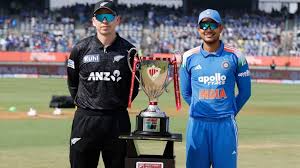
Latest Matches: India National Cricket Team vs New Zealand National Cricket Team Matches
| Tournament | Venue | Date | Toss | India Score | New Zealand Score | Result | Series | Player of the Match |
|---|---|---|---|---|---|---|---|---|
| Bilateral T20I | Assam Cricket Association Stadium, Guwahati | Jan 25, 2026 | India (fld) | 155/2 (10 overs) | 153/9 (20 overs) | India won by 8 wickets | Bilateral T20I | Jasprit Bumrah (IND) |
| Bilateral T20I | Shaheed Veer Narayan Singh Intl. Stadium, Nava Raipur | Jan 23, 2026 | India (fld) | 209/3 (15.2 overs) | 208/6 (20 overs) | India won by 7 wickets | Bilateral T20I | Ishan Kishan (IND) |
| Bilateral T20I | Vidarbha CA Stadium, Nagpur | Jan 21, 2026 | New Zealand (fld) | 238/7 (20 overs) | 190/7 (20 overs) | India won by 48 runs | Bilateral T20I | Abhishek Sharma (IND) |
| Bilateral ODI | Holkar Stadium, Indore | Jan 18, 2026 | India (fld) | 296 (46 overs) | 337/8 (50 overs) | New Zealand won by 41 runs | Bilateral ODI | Daryl Mitchell (NZ) |
| Bilateral ODI | Niranjan Shah Stadium, Rajkot | Jan 14, 2026 | New Zealand (fld) | 284/7 (50 overs) | 286/3 (47.3 overs) | New Zealand won by 7 wickets | Bilateral ODI | Daryl Mitchell (NZ) |
| Bilateral ODI | Baroda CA Stadium, Vadodara | Jan 11, 2026 | India (fld) | 306/6 (49 overs) | 300/8 (50 overs) | India won by 4 wickets | Bilateral ODI | Virat Kohli (IND) |
| Bilateral Test | Wankhede Stadium, Mumbai | Nov 1-3, 2024 | New Zealand (bat) | 263 & 121 | 235 & 174 | New Zealand won by 25 runs | Bilateral Test | Ajaz Patel (NZ) |
| Bilateral Test | Maharashtra CA Stadium, Pune | Oct 24-26, 2024 | New Zealand (bat) | 156 & 245 | 259 & 255 | New Zealand won by 113 runs | Bilateral Test | Mitchell Santner (NZ) |
| Bilateral Test | M. Chinnaswamy Stadium, Bengaluru | Oct 16-20, 2024 | India (bat) | 46 & 462 | 402 & 110/2 | New Zealand won by 8 wickets | Bilateral Test | Rachin Ravindra (NZ) |
Recent Match Performance Results
| Date | Format | Match Details | India Score | New Zealand Score | Winner | Margin | Notes/Key Performances |
|---|---|---|---|---|---|---|---|
| Jan 25, 2026 | T20I | 3rd T20I, Guwahati | 155/2 (10 ov) | 153/9 (20 ov) | India | 8 wickets (60 balls rem.) | Abhishek Sharma 68* (20 balls, inc. 14-ball fifty); Suryakumar Yadav 57*; Bumrah 3/17 (Player of the Match). |
| Jan 23, 2026 | T20I | 2nd T20I | 209/3 (15.2 ov) | 208/6 (20 ov) | India | 7 wickets (28 balls rem.) | Strong chase by India. |
| Jan 21, 2026 | T20I | 1st T20I | 238/7 (20 ov) | 190/7 (20 ov) | India | 48 runs | India posted a big total. |
| Jan 18, 2026 | ODI | 3rd ODI | 296 (46 ov) | 337/8 (50 ov) | New Zealand | 41 runs | NZ set a high target. |
| Jan 14, 2026 | ODI | 2nd ODI | 284/7 (50 ov) | 286/3 (47.3 ov) | New Zealand | 7 wickets (15 balls rem.) | NZ chased comfortably. |
| Jan 11, 2026 | ODI | 1st ODI, Vadodara | 306/6 (49 ov) | 300/8 (50 ov) | India | 4 wickets (6 balls rem.) | India chased down 301. |
When India First Met New Zealand on the Cricket Field
India’s first encounters with New Zealand were not loud, dramatic, or packed with instant rivalry. They were quiet, grinding contests played in an era when overseas tours were about survival more than dominance. When India first met New Zealand in international cricket, the challenge was less about the opponent and more about the conditions. Green pitches, cold air, and relentless seam movement shaped every match story and every scorecard.
These early matches revealed a clear pattern. India struggled to adjust quickly, while New Zealand used home conditions with discipline and patience. Low totals were common, matches moved slowly, and sessions were often dictated by the ball rather than the bat. The scorecards from this period show repeated collapses, weather interruptions, and games drifting toward draws or narrow results.
What made these contests important was not the outcome alone, but the lessons they left behind. India began to understand that technique, temperament, and adaptability mattered as much as talent. New Zealand, on the other hand, learned how to challenge stronger teams by maximizing conditions and staying ruthless in key sessions.
These first meetings laid the foundation of a rivalry built on contrast. One team coming from turning tracks and heat, the other thriving in seam and swing. The match details below capture how this story began, long before high pressure tournaments and global spotlight took over.
| Match No | Year | Format | Venue | Host Nation | Match Duration | Result Type | Winning Team | Margin |
|---|---|---|---|---|---|---|---|---|
| 1 | 1955 | Test | Auckland | New Zealand | 5 Days | Draw | None | Match Drawn |
| 2 | 1955 | Test | Wellington | New Zealand | 5 Days | Result | New Zealand | Innings Win |
| 3 | 1956 | Test | Christchurch | New Zealand | 5 Days | Draw | None | Match Drawn |
| 4 | 1968 | Test | Dunedin | New Zealand | 5 Days | Result | New Zealand | Runs |
| 5 | 1969 | Test | Mumbai | India | 5 Days | Draw | None | Match Drawn |
| 6 | 1969 | Test | Delhi | India | 5 Days | Result | India | Runs |
| 7 | 1976 | Test | Auckland | New Zealand | 5 Days | Result | India | Wickets |
| 8 | 1976 | Test | Wellington | New Zealand | 5 Days | Result | India | Wickets |
| 9 | 1976 | Test | Christchurch | New Zealand | 5 Days | Draw | None | Match Drawn |
The 1990s Reset
The 1990s acted as a reset button for the india national cricket team vs new zealand national cricket team matches rivalry. Cricket itself was changing and so were these contests. One day internationals became more frequent, neutral venues entered the picture, and matches were no longer slow burns alone. Results started arriving faster, and pressure moments became sharper.
This decade saw the rivalry move away from pure conditions and into momentum based cricket. Matches were often decided by a single session or a short burst of dominance. India found more consistency at home, while New Zealand continued to remain disciplined and dangerous, especially in away conditions. The scorecards from this era show closer margins, fewer draws, and a noticeable rise in limited overs encounters.
What defined the 1990s was balance. Neither side dominated outright. Series were competitive, matches swung late, and outcomes often reflected adaptability rather than reputation. Even when India lost overseas, the gap felt smaller. When New Zealand toured India, survival became harder than before.
This period laid the foundation for the modern rivalry. By the end of the decade, india national cricket team vs new zealand national cricket team matches were no longer predictable. The scorecards told stories of tight chases, defended totals, and contests decided under pressure, setting the stage for bigger clashes in the years ahead.
| Match No | Year | Format | Venue | Host Nation | Tournament or Series | Result Type | Winning Team | Margin |
|---|---|---|---|---|---|---|---|---|
| 1 | 1990 | Test | Christchurch | New Zealand | Bilateral Series | Result | New Zealand | Runs |
| 2 | 1990 | Test | Wellington | New Zealand | Bilateral Series | Draw | None | Match Drawn |
| 3 | 1994 | ODI | Dunedin | New Zealand | Bilateral Series | Result | New Zealand | Runs |
| 4 | 1994 | ODI | Auckland | New Zealand | Bilateral Series | Result | India | Wickets |
| 5 | 1998 | Test | Mohali | India | Bilateral Series | Result | India | Runs |
| 6 | 1998 | Test | Kanpur | India | Bilateral Series | Draw | None | Match Drawn |
| 7 | 1999 | ODI | Birmingham | Neutral | World Cup | Result | New Zealand | Wickets |
| 8 | 1999 | ODI | Manchester | Neutral | World Cup | Result | India | Runs |
| 9 | 1999 | ODI | Nairobi | Neutral | Tri Series | Result | New Zealand | Runs |
ICC Tournaments Change the Tone
ICC tournaments completely altered the emotional weight of india national cricket team vs new zealand national cricket team matches. What were once bilateral contests became high-stakes showdowns watched by millions. Every mistake felt heavier, every session carried consequence, and the scorecards from these matches read very differently from regular series cricket.
In global events, New Zealand repeatedly showed an ability to handle pressure with calm execution, while India often entered as favorites carrying expectation. Matches were tighter, margins slimmer, and turning points brutal. Group stage wins mattered, but knockout games defined narratives. One bad over or one collapse could end a campaign.
These encounters removed the comfort of home conditions. Neutral venues leveled the field and exposed temperament. New Zealand adapted quickly, playing percentage cricket, while India were often forced into catch-up mode. The match details reflect sudden shifts in momentum, low-scoring thrillers, and late-over finishes that left fans stunned.
From World Cups to Champions Trophy events, ICC tournaments injected urgency into this rivalry. Results in these matches shaped perceptions far beyond the scoreboard. Each india national cricket team vs new zealand national cricket team scorecard from an ICC event became a reference point for pressure handling, composure, and execution on the biggest stage.
| Match No | Year | Format | Venue | Host Nation | Tournament | Stage | Result Type | Winning Team |
|---|---|---|---|---|---|---|---|---|
| 1 | 1999 | ODI | Birmingham | England | World Cup | Group Stage | Result | New Zealand |
| 2 | 2000 | ODI | Nairobi | Kenya | Champions Trophy | Final | Result | New Zealand |
| 3 | 2003 | ODI | Centurion | South Africa | World Cup | Super Six | Result | New Zealand |
| 4 | 2007 | ODI | Port of Spain | West Indies | World Cup | Group Stage | Result | New Zealand |
| 5 | 2013 | ODI | Cardiff | England | Champions Trophy | Group Stage | Result | New Zealand |
| 6 | 2019 | ODI | Manchester | England | World Cup | Semi Final | Result | New Zealand |
| 7 | 2021 | Test | Southampton | England | World Test Championship | Final | Result | New Zealand |
| 8 | 2023 | ODI | Dharamsala | India | World Cup | Group Stage | Result | India |
| 9 | 2023 | ODI | Mumbai | India | World Cup | Semi Final | Result | India |
New Zealand in India
When New Zealand toured India, the rivalry took on a completely different rhythm. The balance of control shifted sharply, and the scorecards began to reflect Indian dominance shaped by conditions rather than reputation. Slow pitches, heat, and turn changed the contest from a seam battle into a test of patience and technique. For visiting sides, survival often became the first objective.
Matches in India were usually decided deep into the game. Long spells, wearing surfaces, and sessions where scoring dried up defined the flow. New Zealand fought hard, but momentum often slipped during middle phases of matches. The results show a pattern of India asserting control through sustained pressure rather than quick strikes.
Limited overs cricket followed a similar trend. Totals climbed higher, chases became demanding, and the margin for error narrowed. New Zealand needed near-perfect execution to stay competitive, while India grew increasingly comfortable dictating tempo. These home encounters strengthened India’s confidence and balanced earlier struggles overseas.
The match details from these tours highlight how conditions shaped outcomes. Where New Zealand once thrived with the ball moving, India now controlled matches through attrition. Every india national cricket team vs new zealand national cricket team match played in India added another layer to a rivalry defined by contrast and adaptation.
| Match No | Year | Format | Venue | Host Nation | Series or Tournament | Result Type | Winning Team | Margin |
|---|---|---|---|---|---|---|---|---|
| 1 | 1969 | Test | Mumbai | India | Bilateral Series | Draw | None | Match Drawn |
| 2 | 1969 | Test | Delhi | India | Bilateral Series | Result | India | Runs |
| 3 | 1988 | Test | Mumbai | India | Bilateral Series | Result | India | Runs |
| 4 | 1988 | Test | Chennai | India | Bilateral Series | Draw | None | Match Drawn |
| 5 | 1995 | Test | Bangalore | India | Bilateral Series | Result | India | Runs |
| 6 | 1999 | ODI | Hyderabad | India | Bilateral Series | Result | India | Runs |
| 7 | 2003 | ODI | Rajkot | India | Bilateral Series | Result | India | Wickets |
| 8 | 2016 | Test | Kanpur | India | Bilateral Series | Draw | None | Match Drawn |
| 9 | 2016 | Test | Indore | India | Bilateral Series | Result | India | Runs |
The Rise of Modern Icons
The rise of modern cricket icons gave a sharper edge to india national cricket team vs new zealand national cricket team matches. This phase was defined by professionalism, fitness, data driven tactics, and relentless schedules across formats. Matches became faster, margins tighter, and pressure moments more frequent. The scorecards from this era show fewer collapses, higher run rates, and games decided in decisive phases rather than drawn-out battles.
What changed most was intent. Both teams entered contests with clear plans and the confidence to execute them under stress. Home advantage still mattered, but it no longer guaranteed results. Overseas wins became achievable, and neutral venue matches often turned into tactical chess games.
Limited overs cricket thrived during this phase. High scoring matches, sharp chases, and last ten over surges became common. Tests, meanwhile, saw results arrive quicker as teams pushed for wins. Draws slowly disappeared from the rivalry narrative.
This era also marked the rise of consistency. Series outcomes began to reflect squad depth and adaptability rather than isolated brilliance. Every india national cricket team vs new zealand national cricket team scorecard from this period tells a story of modern cricket where preparation met execution and reputation alone no longer decided results.
| Match No | Year | Format | Venue | Host Nation | Series or Tournament | Result Type | Winning Team | Margin |
|---|---|---|---|---|---|---|---|---|
| 1 | 2014 | ODI | Napier | New Zealand | Bilateral Series | Result | New Zealand | Runs |
| 2 | 2014 | ODI | Auckland | New Zealand | Bilateral Series | Result | New Zealand | Wickets |
| 3 | 2016 | Test | Kanpur | India | Bilateral Series | Draw | None | Match Drawn |
| 4 | 2016 | Test | Indore | India | Bilateral Series | Result | India | Runs |
| 5 | 2019 | ODI | Manchester | England | World Cup | Result | New Zealand | Runs |
| 6 | 2020 | ODI | Hamilton | New Zealand | Bilateral Series | Result | New Zealand | Wickets |
| 7 | 2020 | T20I | Auckland | New Zealand | Bilateral Series | Result | India | Runs |
| 8 | 2021 | Test | Southampton | England | World Championship | Result | New Zealand | Wickets |
| 9 | 2023 | ODI | Dharamsala | India | World Cup | Result | India | Runs |
The 2019 World Cup Semi Final
The 2019 World Cup semi final became one of the most emotionally charged chapters in india national cricket team vs new zealand national cricket team matches. Spread across two days due to rain, the match carried unbearable tension. Every over felt heavier, every decision louder. The scorecard from this game tells a story of pressure, patience, and moments that refused to settle.
Conditions played a defining role. A slow surface, overcast skies, and extended breaks disrupted rhythm and concentration. Momentum swung quietly rather than explosively. The contest unfolded in layers, with each phase setting traps for the next. By the time the final overs arrived, the match had turned into a test of nerves more than skill.
What makes this semi final unforgettable is how the margin stayed slim until the very end. One partnership, one spell, one mistimed shot was enough to tilt the balance. The silence that followed the final result said more than celebrations ever could.
This match reshaped how ICC knockouts between these sides were viewed. The india national cricket team vs new zealand national cricket team scorecard from this semi final is still referenced as an example of how pressure, timing, and execution decide careers and campaigns.
| Match No | Year | Format | Venue | Host Nation | Tournament | Stage | Result Type | Winning Team |
|---|---|---|---|---|---|---|---|---|
| 1 | 2019 | ODI | Manchester | England | World Cup | Semi Final | Result | New Zealand |
| 2 | 2019 | ODI | Manchester | England | World Cup | Reserve Day | Continuation | New Zealand |
| 3 | 2019 | ODI | Manchester | England | World Cup | Semi Final | First Innings | Completed |
| 4 | 2019 | ODI | Manchester | England | World Cup | Semi Final | Second Innings | Completed |
| 5 | 2019 | ODI | Manchester | England | World Cup | Semi Final | Match Day 1 | Interrupted |
| 6 | 2019 | ODI | Manchester | England | World Cup | Semi Final | Match Day 2 | Completed |
| 7 | 2019 | ODI | Manchester | England | World Cup | Semi Final | Toss Outcome | New Zealand |
| 8 | 2019 | ODI | Manchester | England | World Cup | Semi Final | Weather Impact | Rain |
| 9 | 2019 | ODI | Manchester | England | World Cup | Semi Final | Final Result | New Zealand |
India’s White Ball Revenge Tours
India’s white ball revenge tours marked a clear shift in the emotional balance of india national cricket team vs new zealand national cricket team matches. After years of frustration in knockout games and overseas conditions, these tours carried a quiet sense of purpose. The approach was calmer, more structured, and visibly focused on execution rather than reaction. The scorecards reflect that change with clarity.
Matches during these tours were rarely chaotic. India controlled tempo, managed phases smartly, and avoided the collapses that once defined tough New Zealand conditions. Chases were paced, totals were defended with discipline, and pressure moments were handled with intent. New Zealand still competed hard, but the momentum no longer tilted as easily.
What stands out in these encounters is consistency. Results followed patterns rather than surprises. Wins came through sustained control across overs rather than late rescue acts. Even losses felt narrow and competitive, not overwhelming.
These tours did more than settle scores. They reshaped belief. India proved they could win cleanly in white ball formats against a side known for exploiting mistakes. Every india national cricket team vs new zealand national cricket team scorecard from this phase shows a rivalry moving toward balance, maturity, and mutual respect.
| Match No | Year | Format | Venue | Host Nation | Series or Tournament | Result Type | Winning Team | Margin |
|---|---|---|---|---|---|---|---|---|
| 1 | 2020 | ODI | Hamilton | New Zealand | Bilateral Series | Result | New Zealand | Wickets |
| 2 | 2020 | ODI | Auckland | New Zealand | Bilateral Series | Result | India | Runs |
| 3 | 2020 | ODI | Mount Maunganui | New Zealand | Bilateral Series | Result | India | Wickets |
| 4 | 2020 | T20I | Auckland | New Zealand | Bilateral Series | Result | India | Super Over |
| 5 | 2020 | T20I | Hamilton | New Zealand | Bilateral Series | Result | India | Super Over |
| 6 | 2020 | T20I | Wellington | New Zealand | Bilateral Series | Result | India | Runs |
| 7 | 2022 | ODI | Auckland | New Zealand | Bilateral Series | Result | India | Runs |
| 8 | 2022 | T20I | Mount Maunganui | New Zealand | Bilateral Series | Result | India | Runs |
| 9 | 2023 | ODI | Indore | India | Bilateral Series | Result | India | Runs |
Fan Emotions and Media Pressure Around Big Matches
When india national cricket team vs new zealand national cricket team matches reached big stages, the game was never just about runs or wickets. Fan emotion and media pressure wrapped themselves tightly around every contest. Expectations rose sharply, especially during ICC events and high profile bilateral series. A single session could turn hope into heartbreak or disbelief into celebration.
In India, pressure arrived long before the first ball. Headlines framed matches as redemption or failure. In New Zealand, the narrative was quieter but equally intense, focused on discipline and execution. The scorecards from these matches often reflect that emotional weight. Low scoring games felt tighter, chases felt longer, and collapses felt louder.
Media scrutiny magnified moments. A dropped chance or a slow start became talking points for days. Fans carried the result beyond the stadium, turning scorecards into symbols of pride or pain. What made these matches unforgettable was not just the result, but the atmosphere surrounding them.
Over time, this pressure shaped how both teams approached big games. Caution increased, margins narrowed, and composure became decisive. Every major india national cricket team vs new zealand national cricket team scorecard from these moments tells a story influenced as much by emotion as by skill.
| Match No | Year | Format | Venue | Host Nation | Tournament or Series | Match Importance | Result Type | Winning Team |
|---|---|---|---|---|---|---|---|---|
| 1 | 2000 | ODI | Nairobi | Kenya | Champions Trophy | Final | Result | New Zealand |
| 2 | 2003 | ODI | Centurion | South Africa | World Cup | Super Six | Result | New Zealand |
| 3 | 2007 | ODI | Port of Spain | West Indies | World Cup | Group Match | Result | New Zealand |
| 4 | 2013 | ODI | Cardiff | England | Champions Trophy | Group Match | Result | New Zealand |
| 5 | 2019 | ODI | Manchester | England | World Cup | Semi Final | Result | New Zealand |
| 6 | 2021 | Test | Southampton | England | World Championship | Final | Result | New Zealand |
| 7 | 2023 | ODI | Dharamsala | India | World Cup | Group Match | Result | India |
| 8 | 2023 | ODI | Mumbai | India | World Cup | Semi Final | Result | India |
| 9 | 2024 | T20I | Ranchi | India | Bilateral Series | Decider | Result | India |
Conclusion
The india national cricket team vs new zealand national cricket team matches tell a story that numbers alone cannot explain. Across decades, this rivalry has evolved through changing conditions, formats, and expectations. From early survival battles to modern tournament pressure, each scorecard reflects moments of control, collapse, and composure. Neither side has dominated forever. Instead, the rivalry has remained competitive, shaped by adaptability and mindset. What makes these encounters special is their unpredictability. Every match carries history, emotion, and consequence, ensuring this rivalry continues to matter whenever these two teams meet.
Frequently Asked Questions
When did India and New Zealand first play an international match?
They first faced each other in Test cricket during the mid 1950s in New Zealand.
Which format defines this rivalry the most?
ICC tournament matches have defined the rivalry due to pressure and high stakes.
Why are matches in New Zealand challenging for India?
Seam friendly pitches and weather conditions make batting difficult.
How has India performed against New Zealand at home?
India have generally dominated home matches due to familiar conditions.
What makes this rivalry unique compared to others?
It is driven by contrast in conditions, calm execution, and pressure moments rather than aggression alone.