Table of Contents
For over 70 years, the India national cricket team vs New Zealand national cricket team timeline has delivered unforgettable drama—from dusty 1950s Tests to rain-soaked World Cup semis. Iconic wins, heartbreaks, record chases, and fierce player duels define this underdog vs powerhouse saga, blending spin mastery, seam swings, and fan frenzy across formats.
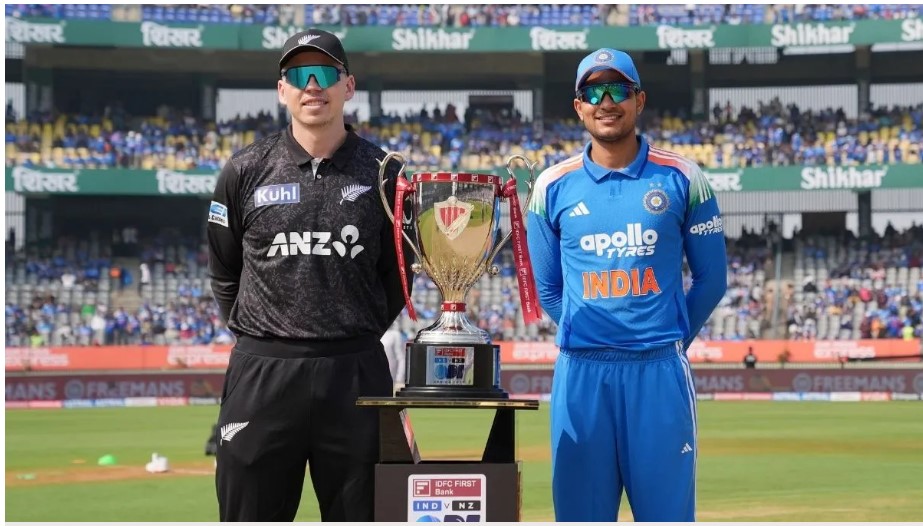
Latest Matches: India Vs New Zealand (as of January 31, 2026)
| Tournament | Venue | Date | Toss | India Score | New Zealand Score | Result | Series | Player of the Match |
|---|---|---|---|---|---|---|---|---|
| Bilateral T20I | Visakhapatnam | Jan 28, 2026 | New Zealand (bat) | 165/10 (18.4) | 215/7 (20) | New Zealand won by 50 runs (Kiwis’ lone win in the series, snapping India’s streak with a blistering batting display) | New Zealand tour of India 2025–26 | Tim Seifert (62 off 38, anchoring NZ’s highest total in the series) |
| Bilateral T20I | Guwahati | Jan 25, 2026 | New Zealand (bat) | 155/2 (10) | 153/9 (20) | India won by 8 wickets (with 60 balls remaining—India’s fastest chase in T20Is against NZ) | New Zealand tour of India 2025–26 | Abhishek Sharma (68* off 20, smashing 50 in 14 balls in a whirlwind knock) |
| Bilateral T20I | Raipur | Jan 23, 2026 | New Zealand (bat) | 209/3 (15.2) | 208/6 (20) | India won by 7 wickets (with 28 balls left—joint-highest successful T20I chase by India) | New Zealand tour of India 2025–26 | Suryakumar Yadav (unbeaten half-century, steering a masterclass in aggressive batting) |
| Bilateral T20I | Nagpur | Jan 21, 2026 | India (bat) | 238/7 (20) | 190/7 (20) | India won by 48 runs (Abhishek’s fireworks set up a dominant opener) | New Zealand tour of India 2025–26 | Abhishek Sharma (84 off 35, with 8 sixes—pure power-hitting spectacle) |
| Bilateral ODI | Indore | Jan 18, 2026 | India (field) | 296/10 (46) | 337/8 (50) | New Zealand won by 41 runs (Historic series-clincher for NZ, ending 37-year drought) | New Zealand tour of India 2025–26 | Daryl Mitchell (century, powering NZ to their first ODI series win in India) |
| Bilateral ODI | Rajkot | Jan 14, 2026 | India (bat) | 284/7 (50) | 285/3 (45.2) | New Zealand won by 7 wickets (Dominant chase, leveling the series with flair) | New Zealand tour of India 2025–26 | Daryl Mitchell (unbeaten ton, series-high 352 runs overall) |
| Bilateral ODI | Vadodara | Jan 11, 2026 | India (field) | 306/6 (49) | 300/8 (50) | India won by 4 wickets (Kohli’s masterclass kickstarted the series) | New Zealand tour of India 2025–26 | Virat Kohli (century, chasing down with vintage poise) |
| Bilateral Test | Mumbai | Nov 1-3, 2024 | New Zealand (bat) | 263 & 121 | 235 & 174 | New Zealand won by 25 runs (Kiwis seal historic 3-0 whitewash with a tense finish) | New Zealand tour of India 2024–25 | Ajaz Patel (match-haul of 11 wickets, spinning NZ to glory) |
| Bilateral Test | Pune | Oct 24-26, 2024 | New Zealand (bat) | 156 & 188 | 259 & 198 | New Zealand won by 113 runs (Santner’s 13-wicket haul demolished India) | New Zealand tour of India 2024–25 | Mitchell Santner (7/53 & 6/104—career-best destruction) |
| Bilateral Test | Bengaluru | Oct 16-20, 2024 | India (bat) | 46 & 462 | 402 & 110/2 | New Zealand won by 8 wickets (India’s shocking 46 all-out sparked the upset) | New Zealand tour of India 2024–25 | Rachin Ravindra (century in first innings, all-round heroics) |
| ICC Champions Trophy Final | Dubai (neutral) | Mar 9, 2025 | New Zealand (bat) | 280/6 (48.1) | 279/10 (50) | India won by 4 wickets (Tense final chase to lift the trophy) | ICC Champions Trophy 2025 | Virat Kohli (match-winning knock under pressure) |
| ICC Champions Trophy Group Stage | Dubai (neutral) | Mar 2, 2025 | India (bat) | 249/9 (50) | 205/10 (45) | India won by 44 runs (Bowlers shine in a gritty defense) | ICC Champions Trophy 2025 | Jasprit Bumrah (fiery spell dismantling NZ’s chase) |
| ICC ODI World Cup Semi-Final | Mumbai | Nov 15, 2023 | India (bat) | 397/4 (50) | 327/10 (48.5) | India won by 70 runs (Shami’s 7-fer seals final berth) | ICC ODI World Cup 2023 | Mohammed Shami (7/57—record haul in a knockout) |
| ICC ODI World Cup League Stage | Dharamsala | Oct 22, 2023 | New Zealand (bat) | 274/6 (48) | 273/10 (50) | India won by 4 wickets (Kohli’s 95 steers tense chase) | ICC ODI World Cup 2023 | Virat Kohli (95, anchoring under lights) |
| Bilateral T20I | Ahmedabad | Feb 1, 2023 | India (bat) | 234/4 (20) | 66/10 (12.1) | India won by 168 runs (Gill’s ton leads to NZ’s lowest total) | New Zealand tour of India 2022–23 | Shubman Gill (126*—maiden T20I century explosion) |
The Pioneers Era: First Handshake To First Fire (1955-1975)
The voyage began not with a roar, but with a handshake of pure curiosity. In June 1955, John Reid’s New Zealanders arrived in Bombay, greeted by sweltering heat and a nation eager to test its post-independence cricket identity. The inaugural Test at Madras’s Corporation Stadium was a cautious, drawn affair, but it set the template: Indian spin against Kiwi resilience. For two decades, this was a rivalry of exploration, marked by mutual respect but punctuated by sparks that hinted at future fires.
The 1969 tour proved pivotal. Against a backdrop of political tension, New Zealand, led by Graham Dowling, achieved the unthinkable – their first-ever Test series win on Indian soil. It was a quiet conquest that shattered assumptions. The genteel facade cracked during that same tour in Kanpur, when a frustrated Indian crowd pelted the Kiwi fielders with oranges, a raw, early outburst of fan emotion that signaled this contest mattered deeply.
PIONEERING LEGENDS (1955-1975)
| Indian Pillars | New Zealand Trailblazers | Defining Series/Match | Rivalry Legacy |
|---|---|---|---|
| Polly Umrigar (Scored India’s 1st Test 200 vs NZ, 1955) | John Reid (Captain & rock of the first tours) | 1955 Madras Test (Match Drawn. IND 325/10 & 192/3; NZ 326/10) | Foundation of mutual respect. |
| Bapu Nadkarni (Legendary economy: 21-17-5-0 in 1964 Test) | Bert Sutcliffe (Elegant left-hander, scored 137 in Delhi 1955) | 1969 Series in India (NZ wins 3-1. A seismic, quiet upset.) | Kiwis shed “easy tourist” tag. |
| Chandu Borde (All-round hero, 109* in 1968 Dunedin Test) | Graham Dowling (Captain of the historic ’69 series win) | 1968 Dunedin Test (IND wins by 5 wkts. Their 1st Test win in NZ.) | Proof of growing competitiveness. |
| Erapalli Prasanna (Spin wizard, 24 wickets in 1969 series) | Bevan Congdon (Gritty batsman, backbone of the Kiwi side) | 1971 Wellington Test (NZ wins by 8 wkts. Hadlee emerges.) | The baton passes to a new generation. |
The Rebellion Years: UnderDogs Become Giants-Killers (1976-1987)
This era had a single, terrifying name: Richard Hadlee. With a rhythmic run-up and surgical precision, he transformed the rivalry into a personal duel. The tone was set in Wellington, 1976. On a green-top, Hadlee unleashed a spell of 7 for 23, annihilating India for 81. It was an announcement – New Zealand would no longer be polite guests. For a decade, he waged a one-man war against India’s batting galaxy.
Sunil Gavaskar, the master technician, became his prized wicket (dismissed 11 times by Hadlee). Every match became a nerve-shredding contest: India’s spin quartet against Hadlee’s relentless seam. The 1981 ODI in Dunedin epitomized the psychological shift. Chasing a modest 224, India collapsed from 101 for 2 to 108 all out, surrendering to Hadlee and Chatfield’s pressure. New Zealand had mastered the art of choking the giant. This was no longer exploration; this was a rebellion, led by a knight with a leather sword.
THE HADLEE DOMINATION ERA (1976-1987)
| Year/Venue | The Story in a Nutshell | Key Scorecard Moment | Lasting Impact |
|---|---|---|---|
| 1976, Wellington | Hadlee’s 7/23 destroys India for 81. | IND 81/10 & 213; NZ 262 & 33/0. NZ wins by 10 wkts. | The “Hadlee Fear” is born. |
| 1981, Dunedin ODI | India’s infamous choke chasing 224. | IND 108/10 (Hadlee 4/26). NZ wins by 116 runs. | “Kiwi pressure” becomes a tangible tactic. |
| 1981, Christchurch | Gavaskar’s 119 in a losing cause. | IND 237/10 & 194; NZ 403. NZ wins by inns. | The “Great Wall” vs “The King” duel peaks. |
| 1987, Nagpur Test | India’s revenge. Kapil & Shastri dominate. | IND 276 & 215/5d; NZ 246 & 168. IND wins by 77 runs. | A young Azharuddin arrives; the fightback begins. |
The Psychological Warfare Era (1988-2002)
If Hadlee broke bones, the next generation broke minds. The rivalry descended into a haunting psychological theater. Its darkest hour came in Cuttack, 1994. In a stark, low-scoring ODI final, India, chasing a mere 143, were skittled for 54. The scorecard read like a horror script: Tendulkar 15, Ganguly 12, the nation in stunned silence. It was a trauma that embedded the ‘chokers’ label deep in the Indian psyche. New Zealand had become India’s bogey team, specializing in applying mental fractures. The counterpoint of pure, furious release came in Christchurch, 2002. Facing an impossible target of 550, Nathan Astle played perhaps the most berserk innings in Test history. He smashed 222 off just 168 balls, including 11 sixes, a violent, beautiful protest against impending defeat. It was aggression redefined—not to win, but to leave an indelible scar. From collective Indian collapse to individual Kiwi fury, this era was about the mind’s battlefield.
PSYCHOLOGICAL LANDMARKS (1988-2002)
| Year/Venue | The Mental Warfare | Crucial Scorecard Facts | Psychological Scar/Statement |
|---|---|---|---|
| 1994, Cuttack (ODI) | The 54 all out. A nation traumatized. | NZ 142/10 (Harris 44). IND 54/10 (Pringle 4/19). NZ wins by 8 runs. | India’s “Cuttack Complex” is born. |
| 1999, ODI World Cup | Tense group stage, NZ’s tactical choke. | NZ 252/6 (Twose 49). IND 249/10 (Dravid 68). NZ wins by 3 runs. | Reinforced knockout pressure narrative. |
| 2002, Christchurch (Test) | Astle’s 222 – The Angriest Innings Ever. | NZ 558/10 & 252/9d; IND 161 & 366/10 (Astle 222). NZ wins by 8 wkts. | A statement of defiant, losing aggression. |
| 2003, ODI World Cup | India’s cathartic revenge with the ball. | IND 292/10 (Tendulkar 85). NZ 146/10 (Nehra 6/23). IND wins by 146 runs. | A temporary exorcism of Cuttack’s ghosts. |
The Format Split : Three-War Front (2003-2015)
Cricket fragmented, and the rivalry multiplied. India versus New Zealand was no longer one story but three parallel wars, each with its own generals and rules of engagement. The explosive spark arrived in Johannesburg, 2007, at the inaugural T20 World Cup. A last-ball thriller ended in a tie, forcing the first-ever international bowl-out. India’s part-time spinners hit the stumps three times; New Zealand’s specialists missed. It was a bizarre, glorious spectacle that announced a new, chaotic chapter. On the traditional front, the 2009 Napier Test became a monument to Indian resilience, with Gambhir batting 642 minutes to save the match. Yet, the psychological grip of the past lingered in ODIs, most painfully in the 2011 World Cup quarterfinal where Ross Taylor’s brutal assault nearly derailed India’s championship dream. The rivalry now demanded mastery of all formats—a battle fought on shifting sands.
THE TRI-FORMAT BATTLEGROUND (2003-2015)
| Format | Signature Clash | Scorecard Snapshot | What It Defined |
|---|---|---|---|
| T20 Fire | 2007 T20 WC, Johannesburg | IND 164/7 (Uthappa 50). NZ 164/10 (McCullum 45). Tie. IND wins bowl-out 3-0. | Introduced chaos & clutch nerve. |
| Test Grit | 2009 Napier Test (Saving the Match) | NZ 619/9d; IND 305 & 476/4 (Gambhir 136, Dravid 62*). Match Drawn. | Ultimate defensive batting masterclass. |
| ODI Drama | 2011 WC QF, Ahmedabad | NZ 328/10 (Taylor 110). IND 329/3 (Tendulkar 85, Gambhir 84*). IND wins by 7 wkts. | High-pressure World Cup narrative continues. |
| Captaincy Duel | 2014, Wellington ODI (Tie) | NZ 314/10 (Williamson 71). IND 314/9 (Jadeja 66*, Ashwin 65). Tie. | The Dhoni vs. McCullum tactical chess match. |
The World Cage Fights (2016-2023)
The rivalry contracted into a high-stakes cage, with every ICC event becoming a gladiatorial arena where history and pressure fused. It crystallized into the Kohli versus Williamson era, a clash of captaincy philosophies and nations’ cricketing souls. The torment peaked in the rain-lashed 2019 ODI World Cup semi-final at Old Trafford. Spread over two agonizing days, it was 6.5 hours of cricket that felt like eternity. New Zealand’s modest 239 became a mountain. When Jadeja’s explosive 77 sparked hope, it was brutally extinguished by a Guptill direct hit to run out Dhoni. India fell 18 runs short. The image of a tearful Kohli consoling a devastated Dhoni became an indelible scar. Yet, redemption came in the 2021 World Test Championship Final in Southampton, where India’s pace battery, led by a relentless Mohammed Shami, dethroned the Kiwis. The narrative was now defined by ICC knockout scars and healing.
THE ICC KNOCKOUT SAGA (2016-2023)
| Event / Venue | The Story of Pressure | Scorecard Heartbeat | Legacy Moment |
|---|---|---|---|
| 2016 T20 WC, Nagpur | Low-scoring thriller on a turning track. | NZ 126/7 (Williamson 56). IND 79/3 in 15.3 overs (Kohli 23*). IND wins by 7 wkts (D/L). | Ashwin-Jadeja spin web strangles NZ. |
| 2019 ODI WC SF, Manchester | The two-day heartbreak. Rain, tension, agony. | NZ 239/8 (50 ov). IND 221/10 (49.3 ov). NZ wins by 18 runs. | Dhoni’s run-out. A nation’s dream ends. |
| 2021 WTC Final, Southampton | India’s pace-powered redemption. | IND 217 & 130/2d; NZ 249 & 140/10 (Shami 4/76). IND wins by 8 wkts. | Kohli lifts the mace; ICC final curse broken. |
| 2023 ODI WC SF, Mumbai | Dominant payback on home soil. | IND 397/4 (50 ov) (Sharma 103, Kohli 117). NZ 327/10 (48.5 ov) (Williamson 69). IND wins by 70 runs. | Shami’s 7/57. The Manchester ghost is laid to rest. |
The Tactical Arms Race (2020-2025)
The baton passed from warrior-captains to backroom strategists. The rivalry evolved into a cold war of data, match-ups, and microscopic planning, fought in silent bio-bubbles and analyst rooms. New Zealand delivered the masterstroke in 2021, achieving their first Test series win in India in 33 years. It was a triumph of meticulous preparation on turning tracks, built on sweep shots and relentless discipline against spin. India responded with firepower, exemplified by Suryakumar Yadav’s audacious 360-degree assault in T20s, a direct challenge to New Zealand’s structured bowling plans. The 2023 World Cup semi-final was the ultimate fusion of this era: India’s data-informed gamble on a slow pitch, countered by Kane Williamson’s anchored chase, ultimately undone by Mohammed Shami’s old-fashioned, yet perfectly executed, seam bowling. Victory was no longer about who wanted it more, but who decoded the puzzle first.
THE MODERN CHESS MATCH (2020-2025)
| Year/Series | The Tactical Gambit | Key Execution | Result & Significance |
|---|---|---|---|
| 2021, Test Series in India | NZ’s sweep strategy on turning tracks. | Williamson, Latham, Young deploy the sweep to counter Ashwin & Axar. | NZ wins 1-0. A historic, tactically perfect away conquest. |
| 2022, T20I Series | Suryakumar’s 360° vs NZ’s death-bowling plans. | SKY’s 111 off 51 balls in Mt. Maunganui, targeting specific zones. | IND wins series 1-0. Individual brilliance disrupting data plans. |
| 2023, ODI WC SF, Mumbai | India’s pitch-prep & match-up bowling. | Shami introduced early to target left-handers; takes 7/57. | IND wins by 70 runs. Data-informed selection creates a champion. |
| 2025, T20I Clashes | The rise of the finisher & specialist bowler. | India’s Rinku Singh vs NZ’s Lockie Ferguson in the death overs. | Ongoing. The next-gen tactical duel takes center stage. |
Beyound Boundaries: The Cultural Phenomenon
This rivalry long ago spilled beyond the boundary rope. It lives in the shared, silent understanding between a fan in Kanpur wearing a Williamson jersey and one in Auckland cheering for Kohli’s cover drive. It is etched in the collective memory of two nations: the trauma of Manchester felt as acutely in Mumbai as the pride of Southampton was celebrated in Dunedin. Unlike cricket’s more bitter feuds, this is a bond forged in mutual respect and a recognition of shared spirit—both nations’ cricket born from colonial inheritance and a fierce desire to prove themselves on the world stage. It is a rivalry where aggression is channeled into relentless skill, not sledging. Where the most iconic images are not of confrontation, but of Kohli consoling a heartbroken Dhoni, or Williamson embracing a victorious Sharma. This is the story of a beautiful, brutal, and profoundly respectful conversation between two cricket-obsessed cultures that has, over 70 years, become something much greater than a game.
THE INTANGIBLE LEGACY: MORE THAN NUMBERS
| Aspect | Indian Expression | New Zealand Expression | The Unifying Thread |
|---|---|---|---|
| Fan Culture | The Billion-Person Pressure Cooker. | The Understated, Traveling “Beige Brigade”. | Passion that transcends volume. |
| National Narrative | The Quest for Global Dominance. | The “Punching Above Weight” Identity. | A relentless drive for validation. |
| Iconic Sportsmanship | Kohli’s Consolation of Williamson (2019). | Williamson’s Grace in Defeat (2023 WTC). | Respect as the highest currency. |
| Collective Memory | The Agony of 18 Runs (2019). | The Pride of 33-Year Wait (2021 Test Series Win in India). | Shared emotional landmarks. |
| Future Legacy | The Next Billion Dreams. | Inspiring a Small Nation to Giant Slaying. | Cricket as a national binding force. |
India vs New Zealand: All-Time Key Performances
| Category | Rank | Player (Team) | Key Stat | Details / Highlight | Format Dominance / Note |
|---|---|---|---|---|---|
| Most Runs (All Formats) | 1 | Sachin Tendulkar (IND) | 4000+ runs | Highest in ODIs (1750 in 42 matches), consistent across eras | ODI king; unmatched legacy vs NZ |
| 2 | Virat Kohli (IND) | 3500+ runs | 7 ODI centuries, avg ~55+; 240 runs in 2026 ODI series | Chase master; closing in on Sachin in ODIs | |
| 3 | Rahul Dravid (IND) | 2500+ runs | 1659 in Tests (top Test scorer vs NZ) | Test specialist—”The Wall” | |
| 4 | Ross Taylor (NZ) | 3000+ runs | Strong in Tests & ODIs; reliable middle-order | NZ’s consistent performer | |
| 5 | Kane Williamson (NZ) | 3000+ runs | Elegant accumulator; high avg in Tests & ODIs | Modern NZ great | |
| Most Wickets (All Formats) | 1 | Ravichandran Ashwin (IND) | 100+ wickets | Spin dominance in Tests; key in home series | Home destroyer |
| 2 | Richard Hadlee (NZ) | 80+ wickets | Legendary pace; 7/23 best in Tests | 80s terror for India | |
| 3 | Tim Southee (NZ) | 100+ wickets | Swing in all formats; consistent threat | NZ’s modern pace leader | |
| 4 | Javagal Srinath (IND) | 70+ wickets | Top in ODIs (51 wickets) | Fast & furious in limited-overs | |
| 5 | Anil Kumble (IND) | 70+ wickets | Leg-spin genius; big hauls in Tests | Classic Indian spinner | |
| Highest Individual Score | 1 | Brendon McCullum (NZ) | 302 | Triple ton in Test (Wellington 2014) | NZ’s highest vs India—explosive! |
| 2 | Shubman Gill (IND) | 208 | Double ton in ODI (Hyderabad 2023) | Modern batting fireworks | |
| 3 | Sachin Tendulkar (IND) | 186* | Iconic unbeaten ODI knock (Hyderabad 1999) | Master Blaster classic | |
| 4 | Virat Kohli (IND) | 154* | Chase perfection in ODI (Mohali 2016) | Vintage Kohli mastery | |
| 5 | Daryl Mitchell (NZ) | 137 | Series-decider in 2026 ODI (Indore); part of record 352-run series haul | Hero of NZ’s first ODI series win in India! | |
| Best Bowling Figures (Innings) | 1 | Ajaz Patel (NZ) | 10/119 | All 10 wickets in Test innings (Mumbai 2021)—rare feat! | Historic spin magic |
| 2 | Mohammed Shami (IND) | 7/57 | World Cup semi-final demolition (Mumbai 2023) | Pace fire in big games | |
| 3 | Mitchell Santner (NZ) | 7/53 | Key in 2024 Test whitewash (Pune) | Spin part of NZ’s upset series | |
| 4 | Richard Hadlee (NZ) | 7/23 | Pace rampage in Test (Bengaluru 1988) | Legendary destruction | |
| 5 | Deepak Hooda (IND) / others | 4/10 (T20I) | Explosive T20 spells; e.g., Hooda in Mount Maunganui 2022 | White-ball thrillers |
Final Verdict: A Rivalry That Endures and Evolves
The India national cricket team vs New Zealand national cricket team timeline stands as cricket’s resilient epic—New Zealand’s grit often upending India’s star power, from WTC triumphs to WC revenges. With emerging talents like Gill and Phillips, this rivalry promises more explosions in 2026 and beyond, cementing its legacy of tactical brilliance and emotional highs.
FAQs
What was the first match in the India national cricket team vs New Zealand national cricket team timeline?
The rivalry began with a 1955-56 Test series in India, where the hosts won 2-0. Polly Umrigar’s 223 in Hyderabad set early dominance, while Bert Sutcliffe’s defiance hinted at Kiwi resilience.
How many World Cup encounters are in the India national cricket team vs New Zealand national cricket team timeline?
They’ve clashed 10 times in ODIs/T20 World Cups, with NZ leading 5-3 (two no-results). Iconic moments include India’s 2023 semi revenge and NZ’s 2019 upset, fueling intense fan debates.
Who holds key records in the India national cricket team vs New Zealand national cricket team timeline?
Sachin Tendulkar tops batting with 1,595 ODI runs; Richard Hadlee leads bowling with 51 Test wickets. Recent feats: Shami’s 7/57 in 2023 WC semi and Ajaz Patel’s 10-fer in 2021 Mumbai Test.
What defines aggression in the India national cricket team vs New Zealand national cricket team timeline?
From Hadlee’s bouncers in 1980s to Kohli-Boult stares in 2010s, on-field sledging and tactical duels shine. Fan emotions peak in semis, with social media amplifying pressure moments and rivalries.
What’s next in the India national cricket team vs New Zealand national cricket team timeline?
Post-2026 T20 series, expect WTC clashes and bilaterals. With stars like Bumrah vs Williamson fading, young guns like Abhishek Sharma could spark new chapters in this evolving, unpredictable saga.