Table of Contents
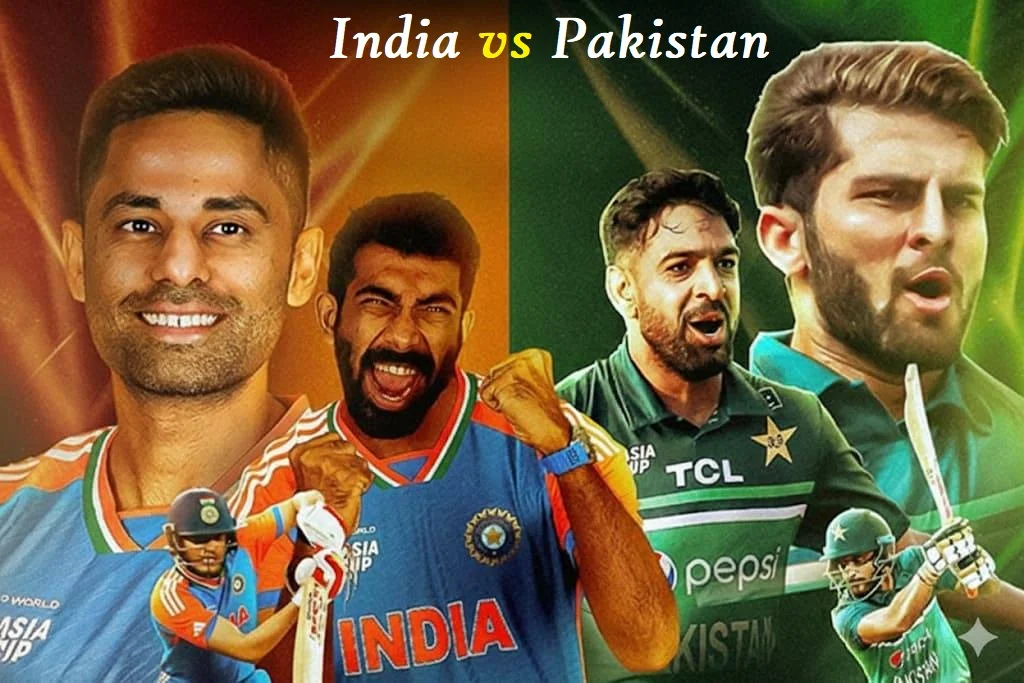
The India vs Pakistan cricket rivalry is more than a sporting contest—it’s a cultural phenomenon that unites and divides two nations like no other. Since their first Test in 1952, these encounters have delivered drama, brilliance, heartbreak, and sheer intensity across 211 matches. From Sachin Tendulkar’s defiant knocks against Wasim Akram’s swing to Virat Kohli’s chase masterclasses and recent T20 dominance, the stats tell a story of shifting power: Pakistan’s historical edge in Tests and ODIs, India’s overwhelming supremacy in T20Is (13-3), and unforgettable moments that stop entire countries. With every clash in neutral venues carrying World Cup-level stakes, the rivalry remains cricket’s greatest emotional rollercoaster.
Recent India National Cricket Team vs Pakistan National Cricket Team Encounters
| Tournament | Venue | Date | Toss | India Score | Pakistan Score | Result | Series | Player of the Match |
|---|---|---|---|---|---|---|---|---|
| Asia Cup Final | Dubai International Stadium | 28 Sep 2025 | Pakistan bat | 150/5 (19.4 ov) | 146 (19.1 ov) | India won by 5 wickets | 2025 Asia Cup (T20I) | Tilak Varma (IND) |
| Asia Cup Super Four | Dubai International Stadium | 21 Sep 2025 | Pakistan bat | 174/4 (18.5 ov) | 171/5 (20 ov) | India won by 6 wickets | 2025 Asia Cup (T20I) | Abhishek Sharma (IND) |
| Asia Cup Group A | Dubai International Stadium | 14 Sep 2025 | Pakistan bat | 131/3 (15.5 ov) | 127/9 (20 ov) | India won by 7 wickets | 2025 Asia Cup (T20I) | Kuldeep Yadav (IND) |
| Champions Trophy | Dubai International Stadium | 23 Feb 2025 | India bat | 284/4 (48.2 ov) | 280/8 (50 ov) | India won by 6 wickets | 2025 ICC Champions Trophy (ODI) | Virat Kohli (IND) |
| T20 World Cup | Nassau County Stadium, New York | 9 Jun 2024 | India bat | 119 (19 ov) | 113/7 (20 ov) | India won by 6 runs | 2024 T20 World Cup | Jasprit Bumrah (IND) |
| Asia Cup Super Four | R. Premadasa Stadium, Colombo | 14 Oct 2023 | India bat | 356/2 (50 ov) | 128 (32 ov) | India won by 228 runs | 2023 Asia Cup (ODI) | Virat Kohli (IND) |
| Asia Cup Group | Pallekele International Stadium | 2 Sep 2023 | India bat | 266/10 (48.5 ov) | – | No Result (rain) | 2023 Asia Cup (ODI) | – |
| Asia Cup Super Four | Dubai International Stadium | 4 Sep 2022 | India bat | 181/7 (20 ov) | 182/5 (19.5 ov) | Pakistan won by 5 wickets | 2022 Asia Cup (T20I) | Mohammad Nawaz (PAK) |
| Asia Cup Group | Dubai International Stadium | 28 Aug 2022 | Pakistan bat | 148/5 (19.4 ov) | 147 (19.5 ov) | India won by 5 wickets | 2022 Asia Cup (T20I) | Hardik Pandya (IND) |
| T20 World Cup | Dubai International Stadium | 24 Oct 2021 | India bat | 151/7 (20 ov) | 152/0 (17.5 ov) | Pakistan won by 10 wickets | 2021 T20 World Cup | Babar Azam (PAK) |
| Cricket World Cup | Old Trafford, Manchester | 19 Jun 2019 | India bat | 336/5 (50 ov) | 212/6 (40 ov, D/L) | India won by 89 runs (D/L) | 2019 Cricket World Cup | Rohit Sharma (IND) |
| Champions Trophy Final | The Oval, London | 18 Jun 2017 | Pakistan bat | 158 (30.3 ov) | 338/4 (50 ov) | Pakistan won by 180 runs | 2017 Champions Trophy | Fakhar Zaman (PAK) |
| T20 World Cup | Eden Gardens, Kolkata | 27 Mar 2016 | Pakistan bat | 119/4 (15.5/18 ov) | 118/5 (18 ov) | India won by 6 wickets (D/L) | 2016 T20 World Cup | Virat Kohli (IND) |
| Asia Cup | Sher-e-Bangla Stadium, Dhaka | 27 Feb 2016 | Pakistan bat | 130/5 (18.1 ov) | 129/3 (20 ov) | India won by 5 wickets | 2016 Asia Cup (T20I) | Virat Kohli (IND) |
| Asia Cup | Sher-e-Bangla Stadium, Dhaka | 25 Feb 2014 | Pakistan bat | 166/6 (20 ov) | 160/7 (20 ov) | India won by 6 runs | 2014 Asia Cup (T20I) | Ravindra Jadeja (IND) |
Key Players Performers by Stats & Impact
| Rank/Category | Player (Country) | Format Focus | Key Stats (vs Opp) | Iconic Moments & Impact | Why They Defined the Rivalry |
|---|---|---|---|---|---|
| Highest Run-Scorer Overall | Sachin Tendulkar (IND) | ODIs + Tests | 2526 runs (ODIs), ~4000+ combined | 141* in ODIs; defiant knocks vs Wasim/Waqar | Mastered Pakistan pace in 90s-2000s; symbol of Indian resilience |
| Highest Run-Scorer in Tests | Javed Miandad (PAK) | Tests | 2228 runs @ 67.51 avg | Multiple centuries; gritty marathon innings | Pakistan’s rock in early draws; mental toughness personified |
| Highest Run-Scorer in ODIs | Sachin Tendulkar (IND) | ODIs | 2526 runs in 69 matches | Centuries & rescues vs Pakistan attack | Dominated neutral venues; set benchmark for consistency |
| Highest Run-Scorer in T20Is | Virat Kohli (IND) | T20Is | 492 runs @ 70.28 avg (incl. 82*) | 55* chase in 2016 WT20; multiple fifties | Chase king under lights; turned pressure into poetry |
| Leading Wicket-Taker Overall (ODIs) | Wasim Akram (PAK) | ODIs | 60 wickets | Swing & reverse mastery; death-over yorkers | Dismantled Indian top order; “Sultan of Swing” legacy |
| Leading Wicket-Taker in Tests | Kapil Dev (IND) | Tests | 99 wickets @ 28.50 | All-round heroics in early series | India’s pace pioneer; aggressive spells vs Pakistan |
| Leading Wicket-Taker in T20Is | Hardik Pandya (IND) | T20Is | 13-15 wickets @ ~12-14 avg (best 3/8) | All-round hero in 2016 & 2022 Asia Cup | Death bowling & finishing; modern match-winner |
| Key Spinner Rivalry | Anil Kumble (IND) vs Saqlain Mushtaq (PAK) | Tests/ODIs | Kumble ~54 wkts; Saqlain high impact | Kumble’s 10/74 in 1999 Test | Spin duels on subcontinent tracks; tactical chess |
| Modern Batting Stars | Babar Azam (PAK) & Rohit Sharma (IND) | ODIs/T20Is | Babar strong in recent; Rohit tons in Asia Cup | Rohit 140 in 2019 WC; Babar partnerships | Current gen torchbearers; high-stakes chases |
| All-Round Impact | Imran Khan (PAK) & Kapil Dev (IND) | Tests/ODIs | Imran 94 wkts + runs; Kapil all-round | Captaincy & big performances | Leadership in early era; set tone for aggression |
India vs Pakistan Head-to-Head Stats Overview
| Category | Details |
|---|---|
| Total Matches Played | 211+ |
| India Wins | Higher in T20Is; Competitive overall |
| Pakistan Wins | Higher overall & in Tests/ODIs |
| Highest Team Total | Pakistan 699/5 (Test, 1989 Lahore) |
| Lowest Team Total | India 79 (ODI, 1978 Sialkot) |
| Super Over / Bowl-Out Matches | Multiple (incl. 2007 T20 WC bowl-out win for India) |
| First Match | Test: October 16, 1952 (Delhi) – India won by innings & 70 runs |
1952–1965: The Polite Beginning – When Cricket Was Bigger Than Politics
The early years of the India vs Pakistan rivalry, spanning 1952 to 1965, unfolded in an era when cricket truly felt bigger than politics. Fresh from the scars of Partition in 1947, the two nations approached their first bilateral encounters with caution, respect, and a quiet determination to prove themselves on the field. No fiery sledging, no roaring crowds baying for blood—just two young Test teams figuring out international cricket while rebuilding national pride.
Pakistan, having gained Test status only in 1952, toured India for a five-match series that winter. The inaugural Test at Delhi’s Feroz Shah Kotla (October 16-19, 1952) set a tone of sportsmanship. India, led by Lala Amarnath, batted first and posted 372, thanks to Vijay Hazare’s 76 and Hemu Adhikari’s unbeaten 81. Vinoo Mankad then spun magic, claiming 8/52 to bowl Pakistan out for 150, followed by 152 in the follow-on. India won by an innings and 70 runs—a dream start for the hosts.
Pakistan struck back fiercely in Lucknow. Fazal Mahmood’s lethal swing (12 wickets across both innings) and Nazar Mohammad’s unbeaten 124 helped bundle India out twice for low scores, sealing an innings-and-43-run victory. India reclaimed momentum in Bombay with a 10-wicket win, then drew the last two Tests amid rain and solid defense. India took the series 2-1 (two draws).
The 1954-55 return tour to Pakistan ended in a complete stalemate—all five Tests drawn, with defensive batting and slow scoring dominating. Hanif Mohammad’s marathon knocks and Polly Umrigar’s consistency stood out.
By 1960-61, Pakistan toured India again. Under Nari Contractor and Fazal Mahmood, another five-Test deadlock ensued. Polly Umrigar (380 runs) and Chandu Borde shone for India, while Hanif Mohammad (410) and Saeed Ahmed (460) anchored Pakistan. Subhash Gupte and Haseeb Ahsan spun webs, but no side risked defeat.
No matches occurred in 1965 due to the war, but these early contests remained gentlemanly. Players like Mankad, Hazare, Umrigar, Hanif, Kardar, and Fazal Mahmood built foundations with skill over aggression. Fans watched with admiration rather than animosity—cricket offered rare unity in divided times.
| Series | Year | Venue | Matches | India Wins | Pakistan Wins | Draws | Series Result | Notable Performances |
|---|---|---|---|---|---|---|---|---|
| Pakistan in India | 1952/53 | India | 5 Tests | 2 | 1 | 2 | India 2-1 | Mankad 13 wickets in 1st Test; Fazal Mahmood 12 wickets in 2nd; Nazar Mohammad 124* |
| India in Pakistan | 1954/55 | Pakistan | 5 Tests | 0 | 0 | 5 | Drawn 0-0 | Hanif Mohammad big hundreds; Umrigar consistent; defensive cricket |
| Pakistan in India | 1960/61 | India | 5 Tests | 0 | 0 | 5 | Drawn 0-0 | Umrigar 380 runs; Hanif 410; Saeed Ahmed 460; Gupte & Haseeb spin duels |
1989–1999: The Golden Decade of Individual Brilliance
The 1989–1999 period marked the golden decade of individual brilliance in the India vs Pakistan rivalry, when legends turned matches into personal duels and crowds erupted over every boundary or wicket. This era saw Sachin Tendulkar’s rise against Pakistan’s fearsome pace trio of Wasim Akram, Waqar Younis, and the crafty Saqlain Mushtaq, creating some of cricket’s most riveting battles.
It kicked off with Sachin’s debut tour to Pakistan in 1989/90—a 16-year-old facing Imran Khan, Wasim, Waqar, and Abdul Qadir. The four-Test series ended 0-0, with marathon draws and high scores (Pakistan’s 699/5 in Lahore remains a record). Sachin struggled initially but showed glimpses of genius.
ODIs exploded in neutral venues like Sharjah, where reverse swing and death bowling defined games. Waqar Younis terrorized India’s top order with toe-crushing yorkers, while Wasim’s swing dismantled lineups. Sachin countered with audacious drives, often rescuing India from collapses.
World Cups added drama: In 1992, Sachin’s unbeaten 54 guided India to a 43-run win. The 1996 Bangalore quarter-final saw Navjot Sidhu’s 93 and Venkatesh Prasad’s 3 wickets restrict Pakistan despite Aamir Sohail’s aggression—India won by 39 runs amid frenzied home support. In 1999, India edged Pakistan by 47 runs in Manchester, thanks to Srinath and Prasad’s seam movement.
Tests returned in 1999 with Pakistan touring India. Chennai’s first Test saw Wasim and Waqar skittle India, but Sachin’s defiant 136 in the second innings nearly snatched victory—Pakistan won by 12 runs. Anil Kumble’s 10/74 in the Delhi Test (a historic feat) sealed India’s revenge.
This decade shifted from draws to decisive, high-pressure clashes fueled by individual mastery. Fans lived for Sachin vs the Ws, aggression simmered, and every contest felt like a war of talents.
| Year | Format | Venue | Result | Key Scorecard Highlights | Standout Performances | Notes |
|---|---|---|---|---|---|---|
| 1989/90 | Test (4 matches) | Pakistan | Drawn 0-0 | Pak 699/5 Lahore; Ind 509 Lahore; High draws | Sanjay Manjrekar 569 runs; Wasim Akram 18 wickets series | Sachin debut; Record Pak total |
| 1989/90 | ODI Series | Pakistan | Pak won 2-0 (1 NR) | Low-scoring thrillers; Waqar swing | Waqar Younis lethal spells | Early reverse swing dominance |
| 1990 | ODI (Austral-Asia Cup) | Sharjah | Pak won by 26 runs | Pak 235/9; Ind 209 | Waqar Younis Player of Match | Sachin early struggles vs pace |
| 1992 | World Cup | Sydney | Ind won by 43 runs | Ind 216/7; Pak 173 | Sachin 54*; Navjot Sidhu support | Sachin’s first WC fifty vs Pak |
| 1996 | World Cup QF | Bangalore | Ind won by 39 runs | Ind 287/8; Pak 248/9 | Navjot Sidhu 93; Venkatesh Prasad 3 wkts | Electric atmosphere; Aamir Sohail send-off |
| 1996-99 | Various ODIs (Sharjah/Toronto) | Neutral | Mixed; Pak edge in many | High chases & collapses | Wasim/Waqar death overs; Sachin rescues | Neutral venue boom |
| 1999 | World Cup | Manchester | Ind won by 47 runs | Ind 227/6; Pak 180 | Srinath/Prasad seam; Saeed Anwar fight | Emotional Indian win |
| 1999 | Test Series (2 matches) | India | Drawn 1-1 | Chennai: Pak won by 12 runs; Delhi: Ind won by 212 runs | Sachin 136 Chennai; Kumble 10/74 Delhi | Historic 10-wkt haul; Tense finishes |
2016–2019: T20 Theatre & Champions Trophy Glory
The 2016–2019 stretch transformed the India vs Pakistan rivalry into pure T20 theatre, laced with Champions Trophy glory and high-octane drama in neutral venues. Bilateral series had long vanished due to politics, so every clash—whether in World T20, Asia Cup, or Champions Trophy—carried World Cup-level intensity. Crowds roared, social media exploded, and pressure moments felt magnified.
The era opened with fireworks in the 2016 World T20 at Eden Gardens. Pakistan posted a modest 118/5 in a rain-reduced 18-over game, thanks to Shoaib Malik’s 26. India chased it down comfortably, with Virat Kohli’s masterful unbeaten 55 (37 balls) steering them home by 6 wickets. Kohli’s calm under lights amid deafening noise became iconic—fans chanted his name long after.
Then came the 2017 Champions Trophy final at The Oval, one of the rivalry’s most lopsided yet memorable blowouts. Pakistan, under Sarfaraz Ahmed, amassed 338/4, powered by Fakhar Zaman’s breathtaking maiden ODI ton (114 off 106) and Azhar Ali’s 59. India’s chase collapsed spectacularly to 158 all out—Hardik Pandya’s 76 offered brief resistance, but Mohammad Amir (3/16) and Hasan Ali dismantled them. Pakistan won by 180 runs, a humiliation that stung Indian fans deeply.
Asia Cup 2018 in Dubai delivered two dominant Indian wins. First, Bhuvneshwar Kumar’s swing ripped Pakistan out for 162; India chased in 29 overs (Rohit 47*). Then, in the Super Four, Rohit Sharma’s 111 anchored a clinical 9-wicket victory chasing 238. Shikhar Dhawan and Rohit formed unbreakable partnerships, showcasing India’s batting depth.
The 2019 World Cup at Manchester saw Rohit Sharma smash 140, powering India to 336/5. Pakistan managed 212/6 in a rain-affected chase—India won by 89 runs (D/L). Kohli’s captaincy and Rohit’s form highlighted India’s ODI supremacy.
This period showcased T20 aggression (Kohli’s chases), one-off brilliance (Fakhar’s ton), and India’s overall edge in limited-overs formats. Fan emotions peaked—celebrations in streets, despair in defeat—turning every game into a cultural event.
| Year | Format | Venue | Result | Key Scorecard Highlights | Standout Performances | Notes |
|---|---|---|---|---|---|---|
| 2016 | T20 World Cup | Eden Gardens, Kolkata | India won by 6 wickets (D/L) | Pak 118/5 (18 ov); Ind 119/4 (15.5/18 ov) | Virat Kohli 55* (37); Hardik Pandya bowling support | Rain-reduced thriller; Kohli masterclass under pressure |
| 2016 | T20 Asia Cup | Dhaka | India won by 5 wickets | Pak 129/3 (20 ov); Ind 130/5 (18.1 ov) | Kohli 49; Mohammad Amir 3/18 | Low-scoring; Dhoni finished chase calmly |
| 2017 | Champions Trophy Final | The Oval, London | Pakistan won by 180 runs | Pak 338/4 (50 ov); Ind 158 (30.3 ov) | Fakhar Zaman 114 (106); Azhar Ali 59; Mohammad Amir 3/16 | Fakhar’s maiden ton; India’s collapse stunned fans |
| 2018 | Asia Cup Group | Dubai | India won by 8 wickets | Pak 162 (44.1 ov); Ind 164/2 (29 ov) | Bhuvneshwar Kumar 3/15; Rohit Sharma 47* | Swing bowling dominance; easy chase |
| 2018 | Asia Cup Super Four | Dubai | India won by 9 wickets | Pak 237/7 (50 ov); Ind 238/1 (39.3 ov) | Rohit Sharma 111 (119); Shikhar Dhawan 68 | Rohit masterclass; clinical batting display |
| 2019 | World Cup | Manchester | India won by 89 runs (D/L) | Ind 336/5 (50 ov); Pak 212/6 (40/40 ov, target 302) | Rohit Sharma 140 (113); Hardik Pandya 2/31 | Rohit’s ton; rain-affected; dominant Indian win |
2021–2025: The T20I Dominance Era & Asia Cup Epics
The 2021–2025 era cemented the India vs Pakistan rivalry as T20I dominance for India, with high-stakes Asia Cup epics delivering thrillers amid political constraints—no bilateral series, only tournament clashes in neutral venues. Every match carried massive emotional weight: streets hushed in both countries, social media ablaze, and pressure so intense it felt like a final even in group stages.
It began with heartbreak for India in the 2021 T20 World Cup at Dubai. India posted 151/7 (Rohit 30, Kohli 57), but Pakistan chased effortlessly—Babar Azam 68* and Mohammad Rizwan 79* sealing a 10-wicket win with balls to spare. Shaheen Afridi’s 3/31 wrecked India’s top order; fans in Pakistan erupted, while Indian supporters absorbed the rare humiliation.
India bounced back strongly. In 2022 Asia Cup (Dubai), they edged Pakistan twice: first by 5 wickets (Hardik Pandya’s unbeaten 33* and 3/25 turned a 148 chase), then lost the Super Four by 5 wickets in a last-ball thriller (Mohammad Nawaz’s heroics). The split showed Pakistan’s fightback capability.
The 2023 Asia Cup (ODI format) saw India crush Pakistan twice: rain-affected group match no result, then a Super Four demolition—India 356/2 (Kohli 122*, Gill 58), Pakistan collapsed to 128. A 228-run win underlined India’s white-ball supremacy.
2024 T20 World Cup in New York brought low-scoring drama. India defended 119 (Bumrah 3/14, Arshdeep yorkers) as Pakistan fell short at 113/7—India won by 6 runs in a nail-biter.
By 2025 Asia Cup (T20) in Dubai, India swept the series: group stage 7-wicket win chasing 128 (Kuldeep 3/18), Super Four 6-wicket victory chasing 172 (Abhishek Sharma fireworks), and the final—Pakistan 146, India 150/5 in 19.4 overs (Tilak Varma 69). India won by 5 wickets, clinching the title.
This period highlighted India’s chase mastery (perfect record vs Pakistan), spin control, and death bowling, while Pakistan showed flashes of brilliance but struggled for consistency. Fan aggression peaked—celebrations, memes, and heartbreaks—turning neutrals into battlegrounds of pride.
| Year | Format | Venue | Result | Key Scorecard Highlights | Standout Performances | Notes |
|---|---|---|---|---|---|---|
| 2021 | T20 World Cup | Dubai | Pakistan won by 10 wickets | Ind 151/7 (20 ov); Pak 152/0 (17.5 ov) | Babar Azam 68*, Rizwan 79*; Shaheen Afridi 3/31 | Pakistan’s famous chase; ended India’s WC streak vs Pak |
| 2022 | Asia Cup Group | Dubai | India won by 5 wickets | Pak 147 (19.5 ov); Ind 148/5 (19.4 ov) | Hardik Pandya 33* & 3/25; Kohli 60 | Last-ball drama avoided; Hardik’s all-round heroics |
| 2022 | Asia Cup Super Four | Dubai | Pakistan won by 5 wickets | Ind 181/7 (20 ov); Pak 182/5 (19.5 ov) | Mohammad Nawaz all-round; Asif Ali late cameo | Thriller; Pakistan’s last T20 win vs India to date |
| 2023 | Asia Cup Group | Pallekele | No Result (rain) | Ind 266/10 (48.5 ov); Pak did not bat | – | Washout; points shared |
| 2023 | Asia Cup Super Four | Colombo | India won by 228 runs | Ind 356/2 (50 ov); Pak 128 (32 ov) | Kohli 122*, Gill 58; Bumrah/Hardik bowling | Massive margin; India’s ODI dominance |
| 2024 | T20 World Cup | New York | India won by 6 runs | Ind 119 (19 ov); Pak 113/7 (20 ov) | Bumrah 3/14; Arshdeep death yorkers | Low-scorer; tense defense on tricky pitch |
| 2025 | Asia Cup Group | Dubai | India won by 7 wickets | Pak 127/9 (20 ov); Ind 131/3 (15.5 ov) | Kuldeep Yadav 3/18; Suryakumar 47* | Clinical chase; spin choked Pakistan |
| 2025 | Asia Cup Super Four | Dubai | India won by 6 wickets | Pak 171/5 (20 ov); Ind 174/4 (18.5 ov) | Abhishek Sharma explosive fifty; Tilak support | High-powerplay; India’s chase record intact |
| 2025 | Asia Cup Final | Dubai | India won by 5 wickets | Pak 146 (19.1 ov); Ind 150/5 (19.4 ov) | Tilak Varma 69; Bumrah/others 2 wkts each | Title clincher; nerve-wracking finish |
Head-to-Head Numbers That Tell the Real Story
The head-to-head numbers between India and Pakistan reveal a rivalry that’s fiercely competitive yet tilted by format. Across 211 international matches from 1952 to late 2025, Pakistan edges overall with 88 wins to India’s 80, plus 43 no-results/draws/ties. Pakistan’s advantage stems from historical dominance in Tests and ODIs, while India’s supremacy in T20Is has shifted momentum dramatically in the modern era.
In Tests (59 matches), Pakistan leads 12-9 with 38 draws—reflecting the defensive, attritional cricket of early decades when series often ended stalemated. No Tests since 2007, so the record remains frozen.
ODIs tell a similar story (136 matches): Pakistan 73 wins, India 58, with 5 no-results. Pakistan’s edge came from pace mastery in the 1980s-90s and consistent performances in neutral venues. India has narrowed the gap in recent years, especially in World Cups (undefeated 8-0 vs Pakistan across editions).
T20Is flip the script completely (16 matches): India dominates 13-3, with no ties/no-results in most counts. Since 2012, India has won almost every high-pressure encounter, showcasing superior chase records, death bowling, and composure under lights.
These stats highlight evolution: Pakistan’s early and middle-era strength vs India’s limited-overs mastery post-2010. Win percentages? Pakistan ~42% overall, India ~38%, but T20 skews modern perception toward India. The numbers don’t lie—this rivalry remains one of cricket’s closest, where pride often overrides pure dominance.
| Format | Matches Played | India Wins | Pakistan Wins | Draws / Ties / NR | India Win % | Pakistan Win % | Notable Records & Trends |
|---|---|---|---|---|---|---|---|
| Tests | 59 | 9 | 12 | 38 Draws | 15.3% | 20.3% | No Tests since 2007; Pakistan’s last series win 1989/90; Highest team total: Pak 699/5 (1989) |
| ODIs | 136 | 58 | 73 | 5 NR | 42.6% | 53.7% | Pak strong historically; India unbeaten in WC meetings (8-0); Recent Asia Cup/Champions Trophy India edge |
| T20Is | 16 | 13 | 3 | 0 | 81.3% | 18.8% | India dominant since 2012; Perfect chase record in many; Key wins: 2016 WT20, 2024 WT20, 2025 Asia Cup Final |
| Overall | 211 | 80 | 88 | 43 (Draws/NR/Ties) | 38.0% | 41.7% | Pakistan slight overall lead; T20 shift favors India; Total matches reflect political interruptions |
The Fans, the Noise & the Aggression
The fans, the noise, and the aggression have always been the heartbeat of the India vs Pakistan cricket rivalry, turning every match into a cultural earthquake that ripples far beyond the boundary ropes. From the polite claps of 1950s stadiums to the deafening roars in modern neutral venues like Dubai, the atmosphere has evolved into something primal—part celebration, part battle cry.
In the early days, crowds were respectful, almost reverent, as Partition scars lingered and cricket offered rare unity. But by the 1990s, Sharjah nights crackled with tension; segregated stands, heavy security, and passionate chants created volatile energy. Eden Gardens in Kolkata became notorious for its raw emotion—bottles thrown in frustration, deafening silence after collapses, or explosive joy in victories.
The 2000s and beyond amplified everything. Social media wars exploded: memes, trolls, street debates, and viral videos of fans switching jerseys in defeat or smashing TVs in rage. Indian streets erupted in firecrackers after wins; Pakistani neighborhoods echoed with despair or wild celebrations. Neutral venues like Dubai saw packed houses roaring with every boundary—fans from both sides trading chants, taunts, and occasional heated exchanges spilling onto social platforms.
Aggression peaked in high-stakes games: Kohli’s glare drawing thunderous cheers, Haris Rauf’s provocative gestures fined amid uproar, or players’ stare-downs igniting crowd frenzy. Yet amid the noise, moments of sportsmanship shone—fans applauding rival brilliance or sharing heartbreak online.
This rivalry isn’t just cricket; it’s emotion weaponized. The noise drowns logic, aggression fuels drama, and fans live every ball as if national honor hangs on it.
| Year/Period | Match/Venue | Atmosphere Description | Key Fan Behavior/Aggression | Impact/Notes |
|---|---|---|---|---|
| 1950s-1960s | Early Tests (India/Pakistan) | Polite, respectful crowds; low-key chants | Minimal aggression; admiration for players | Cricket as bridge post-Partition; quiet unity |
| Mid-1990s | Sharjah ODIs | Overcrowded, tense stands; heavy security | Unsegregated crowds led to dangerous scenes; vocal taunts | Described as volatile; heightened emotions |
| 1996 | World Cup QF, Bangalore | Electric home support; frenzied noise | Aamir Sohail send-off sparked roar; bottles/threats minimal | India win celebrated wildly in streets |
| 1999 | Test, Chennai | Packed, passionate; tension from Kargil shadow | High security; vocal but controlled | Emotional Indian near-win; crowd on edge |
| 2000s | Neutral venues (Toronto/Sharjah) | Banter replaced pure aggression | Memes/social media rise; street celebrations | Shift to digital wars; less physical incidents |
| 2011 | World Cup SF, Mohali | Deafening roar; national holiday vibe | Silence on collapses; explosive joy on wickets | Massive street parties in India post-win |
| 2016-2017 | WT20 & Champions Trophy | Packed neutral stadiums; global diaspora | Roars for Kohli; heartbreak in Pakistan loss (2017 final) | Social media meltdown; TV-smashing memes |
| 2021 | T20 WC, Dubai | Intense pressure; hushed tension | Pakistani streets erupted on 10-wkt win; Indian despair | Viral celebrations; rare Pakistan dominance |
| 2022-2025 | Asia Cup/Dubai clashes | Charged crowds; chants & gestures | Haris Rauf provocative celebrations fined; Abhishek-Haris face-off | Umpire interventions; social media trolls/memes; street debates viral |
| General Modern Era | Any neutral venue | Roaring for boundaries; silence on failures | Aggressive gestures by players/players fined; fan banter to heated exchanges | Social media wars peak; celebrations or heartbreaks go viral instantly |
Conclusion
In the end, the India-Pakistan cricket rivalry transcends statistics—it’s about national pride, generational legends, and moments that echo through streets from Lahore to Mumbai. Whether it’s a tense low-scorer in New York or a high-octane chase in Dubai, every game reignites passion that no other sporting contest matches. As emerging talents rise and tournament clashes continue, this epic saga shows no signs of fading. The numbers evolve, but the emotion stays timeless: two teams, one fierce heartbeat.
Frequently Asked Questions
Who has won more matches overall between India and Pakistan?
Pakistan leads slightly with 88 wins to India’s 80 across 211 international matches (as of early 2026), with 43 draws/no-results/ties. India dominates T20Is heavily.
How many times has India beaten Pakistan in World Cups?
India is unbeaten against Pakistan in ICC World Cups (ODI & T20 combined), winning all 8 direct meetings, including the 2019 ODI World Cup and 2024 T20 World Cup.
What is the record in T20 Internationals?
India leads 13-3 in 16 T20Is. Key wins include 2016 & 2024 T20 World Cups, plus the 2025 Asia Cup final. When was the last bilateral series between India and Pakistan?
The last full bilateral series was in 2007 (Test & ODI). Since then, all matches have occurred in multi-nation tournaments due to political reasons.
What is the highest team total in India vs Pakistan matches? Pakistan’s 699/5 declared in the 1989 Lahore Test remains the highest team total in the rivalry. India’s highest is 356/2 in the 2023 Asia Cup ODI.