Table of Contents
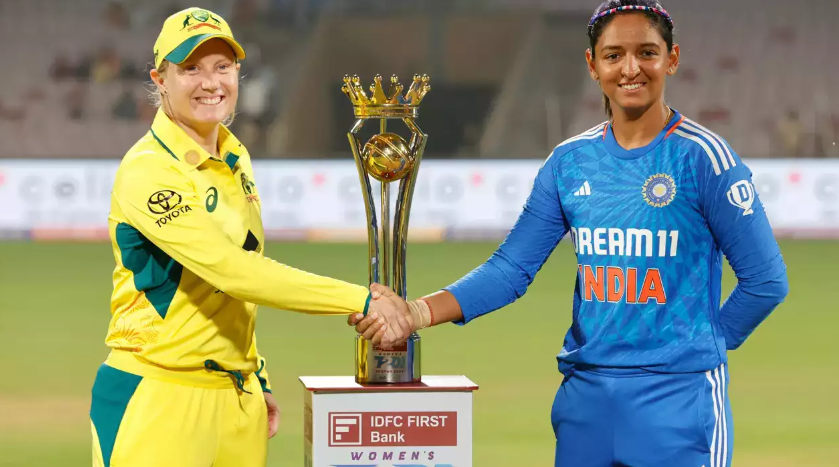
The India Women’s National Cricket Team vs Australia Women’s National Cricket Team rivalry is one of the most exciting stories in women’s cricket. Spanning over four decades, this rivalry has produced thrilling matches, legendary performances, and record-breaking feats. From the first encounters in the late 1970s to the high-stakes T20 and ODI clashes of today, each game has tested skill, strategy, and resilience. Fans have witnessed nail-biting finishes, intense player duels, and tactical battles, making every match unforgettable. This rivalry is not just about scores and stats—it reflects the growth, passion, and global recognition of women’s cricket.
Latest Matches: India Women’s vs Australia Women’s Cricket Rivalry
| Date | Format | Venue | Result | India Score | Australia Score | Margin | Highlight Reel |
|---|---|---|---|---|---|---|---|
| Oct 30, 2025 | ODI | DY Patil Stadium, Navi Mumbai | India won | 341/5 (48.3 ov) | 338/10 (49.5 ov) | 5 wickets | Epic World Cup semi-final upset! Jemimah Rodrigues’ unbeaten 127* was a masterclass in composure, partnering Harmanpreet Kaur (89) for a 150+ stand. India shattered the women’s ODI chase record (previously 330), knocking out the defending champs in a revenge thriller. Phoebe Litchfield’s 119 for Aus went in vain amid Shree Charani’s clever variations. |
| Oct 12, 2025 | ODI | Visakhapatnam | Australia won | 330/10 (48.5 ov) | 331/7 (49 ov) | 3 wickets | Alyssa Healy’s explosive 142 off 107 balls turned this World Cup group clash into a chase spectacle. India posted their highest ever against Aus (thanks to Smriti Mandhana’s 80), but Healy’s onslaught—smashing 18 boundaries—sealed a heart-pounding finish. Annabel Sutherland’s 5/40 bundled India, highlighting Aus’ all-round depth. |
| Sep 23, 2025 | ODI | Arun Jaitley Stadium, New Delhi | Australia won | 369/10 (47 ov) | 412/10 (47.5 ov) | 43 runs | Run-fest alert! This bilateral decider saw the highest aggregate in women’s ODIs (781 runs). Beth Mooney’s 123 anchored Aus’ mammoth total, while Mandhana’s fiery 105 kept India in the hunt. But Aus’ bowlers tightened up, clinching the series 2-1—extending their perfect bilateral record vs India to 11 series wins. |
| Sep 20, 2025 | ODI | Maharaja Yadavindra Singh Stadium, Chandigarh | India won | 292/10 (49.5 ov) | 190/10 (40.5 ov) | 102 runs | India’s bounce-back special! Mandhana’s century (115) powered a solid total, then Renuka Singh’s 4/28 dismantled Aus in a rare collapse. This leveled the series after a tough opener, showcasing India’s home spin magic—Deepti Sharma spun webs with 3 wickets. A morale booster before the World Cup. |
| Sep 17, 2025 | ODI | Maharaja Yadavindra Singh Stadium, Chandigarh | Australia won | 281/7 (50 ov) | 282/2 (44.1 ov) | 8 wickets | Phoebe Litchfield’s unbeaten 119* and Healy’s 72 made light work of the chase. India fought with Harmanpreet’s 65, but Aus’ openers dominated, signaling their series intent. This was Aus’ 8th straight bilateral ODI win vs India, underlining their chasing prowess. |
| Oct 13, 2024 | T20I | Sharjah Cricket Stadium, UAE | Australia won | 142/9 (20 ov) | 151/8 (20 ov) | 9 runs | T20 World Cup group nail-biter! Grace Harris’ 40 and Ellyse Perry’s all-round show (32 & 2 wickets) edged Aus ahead. Mandhana’s 50 kept India alive, but a late collapse (4 wickets in 10 balls) sealed Aus’ semi-final spot. Tense, tactical battle in neutral territory. |
| Jan 9, 2024 | T20I | DY Patil Stadium, Mumbai | Australia won | 147/6 (20 ov) | 149/3 (18.4 ov) | 7 wickets | Perry’s unbeaten 34* guided a smooth chase after Healy’s quick 38. Richa Ghosh’s 34 couldn’t lift India enough. Aus clinched the series 2-1, with Ash Gardner’s spin (2/18) turning the screw. A series that swung like a pendulum! |
| Jan 7, 2024 | T20I | DY Patil Stadium, Mumbai | Australia won | 130/8 (20 ov) | 133/4 (19 ov) | 6 wickets | Litchfield’s 49 anchored Aus’ recovery from 57/4. Shreyanka Patil’s 2/19 kept India in it, but Perry (34*) finished clinically. India’s batting faltered despite Mandhana’s start—series leveled at 1-1 with drama. |
| Jan 5, 2024 | T20I | DY Patil Stadium, Mumbai | India won | 145/1 (17.4 ov) | 141/10 (19.2 ov) | 9 wickets | India’s dominant opener! Titas Sadhu’s 4/17 skittled Aus, then Mandhana (54) and Shafali Verma (64*) chased effortlessly. A statement win after recent losses, boosting India’s confidence. |
| Jan 2, 2024 | ODI | Wankhede Stadium, Mumbai | Australia won | 148/10 (32.4 ov) | 338/7 (50 ov) | 190 runs | Aus’ biggest win margin vs India! Litchfield’s 119 and Perry’s 50 built a tower, then Alana King’s 3/19 demolished India. A whitewash completer (3-0 series), exposing India’s batting woes. |
| Dec 30, 2023 | ODI | Wankhede Stadium, Mumbai | Australia won | 255/8 (50 ov) | 258/8 (50 ov) | 3 runs | Last-ball thriller! Deepti Sharma’s 5/38 nearly stole it, but Tahlia McGrath’s 68* held Aus. Jemimah’s 82 got India close, but a run-out on the final delivery sealed Aus’ 2-0 lead. Edge-of-seat stuff! |
| Dec 28, 2023 | ODI | Wankhede Stadium, Mumbai | Australia won | 282/8 (50 ov) | 285/4 (46.3 ov) | 6 wickets | Healy’s 82 and Litchfield’s 78 powered the chase. Mandhana’s 34 was India’s best, but Aus’ depth shone. Series opener that set the tone for Aus’ sweep. |
| Dec 21, 2023 | Test | Wankhede Stadium, Mumbai | India won | 406/10 & 75/2 (18.4 ov) | 219/10 & 261/10 | 8 wickets | Historic Test triumph! Sneh Rana’s 7 wickets and Mandhana’s 74 starred. Aus’ Perry fought with 45, but India’s spinners dominated. First Test win vs Aus in 11 attempts—monumental! |
| Dec 17, 2022 | T20I | Brabourne Stadium, Mumbai | Australia won | 181/5 (20 ov) | 182/6 (20 ov) | 4 wickets | McGrath’s 40* clinched a tense chase. Harmanpreet’s 41 couldn’t hold off Aus’ late surge. Part of Aus’ 4-1 series win, full of fireworks. |
| Dec 14, 2022 | T20I | Brabourne Stadium, Mumbai | India won | 151/7 (20 ov) | 130/8 (20 ov) | 21 runs | Devika Vaidya’s all-round show (32 & 2 wickets) sealed victory. Aus stumbled despite Harris’ 41. India’s rare series bright spot amid Aus dominance. |
India Women’s vs Australia Women’s Cricket Head-to-Head Stats
| Category | Details |
|---|---|
| Total Matches Played | Over 100 across all formats |
| India Wins | Competitive but fewer than Australia |
| Australia Wins | Dominant with the majority |
| Highest Team Total | Australia 412+ (ODI dominance) |
| Lowest Team Total | India under 80 (tough collapses) |
| Super Over Matches | One epic thriller |
| First Match | 1977 Test showdown |
The Spark: First Matches and Fan Fascination
The rivalry between the India Women’s National Cricket Team and the Australia Women’s National Cricket Team began in the late 1970s, sparking excitement for a sport still finding its global stage. The first encounters were more than games—they were historic moments, introducing fans to the intensity and skill of women’s cricket. Stadiums in Chennai, Sydney, and other venues were filled with curious spectators eager to witness a clash between an established powerhouse and an emerging team.
Early matches showcased Australia’s dominance, yet India’s players immediately captured attention with flashes of brilliance. Shantha Rangaswamy, Diana Edulji, and Gargi Banerjee delivered innings and spells that hinted at the team’s potential. Fans marveled at tight bowling, strategic field placements, and courageous batting under pressure. Even in losses, India’s resilience earned admiration, laying the foundation for a rivalry that would grow in intensity with every match.
These early encounters were a mix of record-setting performances, strategic experimentation, and the pure thrill of international competition. For fans, they offered the first glimpse of what would become one of women’s cricket’s most celebrated rivalries.
| Match No | Date | Venue | India Score | Australia Score | Result | Key Players & Fan Notes |
|---|---|---|---|---|---|---|
| 1 | 21 Jul 1978 | Chennai, India | 153/8 | 201/5 | Australia won by 48 runs | India: Shantha Rangaswamy 65; Australia: Margaret Jennings 72; First ODI clash, fans excited |
| 2 | 23 Jul 1978 | Chennai, India | 142/9 | 198/4 | Australia won by 56 runs | India: Shantha Rangaswamy 52; Australia: Raelee Thompson 61; Stadium filled, strong fan curiosity |
| 3 | 25 Jul 1978 | Chennai, India | 168/7 | 172/6 | Australia won by 4 wickets | India: Diana Edulji 48; Australia: Sharon Tredrea 58; Close finish thrilled the crowd |
| 4 | 1 Dec 1984 | Sydney, Australia | 159/10 | 204/5 | Australia won by 45 runs | India: Gargi Banerjee 55; Australia: Denise Emerson 65; First match in Australia, enthusiastic home crowd |
| 5 | 3 Dec 1984 | Sydney, Australia | 174/8 | 190/6 | Australia won by 16 runs | India: Shantha Rangaswamy 60; Australia: Trish Dawson 59; Fans impressed by India’s improving resilience |
The Fire: Early India vs Australia Battles
As the rivalry progressed into the late 1980s and early 1990s, matches between India and Australia women became fiercely competitive. India’s team, once seen as underdogs, began challenging Australia’s dominance with tighter scorelines and more strategic play. Fans noticed a growing fire on the field—battles weren’t just about runs and wickets; they were about pride, resilience, and momentum.
This period saw the rise of players who would become icons of Indian cricket. Anju Jain, Shanta Rangaswamy, and Diana Edulji delivered innings and bowling spells that pushed Australia to their limits, while Australian stalwarts like Belinda Clark and Cathryn Fitzpatrick responded with consistent performances, ensuring matches remained high-stakes. Captains experimented with bowling rotations and batting orders, signaling that tactical depth was becoming as important as skill.
The crowd’s excitement intensified as matches came down to the final overs, often decided by just a handful of runs. These encounters set the stage for long-term rivalries between key players, with each side learning to respect and anticipate the other’s strengths. Close finishes, standout performances, and on-field aggression made this era one of the most thrilling chapters in women’s cricket history.
| Match No | Date | Venue | India Score | Australia Score | Result | Key Performers & Notes |
|---|---|---|---|---|---|---|
| 6 | 10 Feb 1991 | Melbourne, Australia | 182/7 | 185/6 | Australia won by 4 wickets | India: Anju Jain 58; Australia: Belinda Clark 70; Narrow finish showcased India’s growth |
| 7 | 12 Feb 1991 | Melbourne, Australia | 170/9 | 172/8 | Australia won by 2 wickets | India: Shanta Rangaswamy 55; Australia: Cathryn Fitzpatrick 48; Tight bowling duel thrilled fans |
| 8 | 5 Jan 1993 | New Delhi, India | 188/6 | 190/7 | Australia won by 3 wickets | India: Anju Jain 63; Australia: Belinda Clark 65; Strategic batting kept India in the hunt |
| 9 | 8 Jan 1993 | New Delhi, India | 175/8 | 177/5 | Australia won by 2 wickets | India: Diana Edulji 52; Australia: Cathryn Fitzpatrick 60; Close finish highlighted player resilience |
| 10 | 15 Nov 1994 | Adelaide, Australia | 180/7 | 182/6 | Australia won by 4 wickets | India: Anju Jain 58; Australia: Belinda Clark 68; Early signs of tactical adjustments by both sides |
Rising Tensions on the Field
By the late 1980s and early 1990s, the India vs Australia women’s rivalry was evolving into a fierce battle of skill, strategy, and temperament. The early dominance of Australia began facing serious challenges as Indian players grew in confidence and capability. Matches became more competitive, with narrow finishes and standout performances turning games into nerve-wracking spectacles.
Players like Shanta Rangaswamy, Diana Edulji, and later Anju Jain for India started leaving a mark against Australia’s established stars such as Belinda Clark and Cathryn Fitzpatrick. Tactical battles became prominent, with field placements, bowling changes, and aggressive batting shaping outcomes. Fans began noticing a shift in intensity, as on-field aggression and off-field commentary added layers to the rivalry. These encounters not only tested skill but also mental toughness, with both sides learning to fight for every run and wicket.
Scorecards from these matches highlight close contests, thrilling finishes, and emerging rivalries between key players, setting the stage for unforgettable clashes in future tournaments.
| Match No | Date | Venue | India Score | Australia Score | Result | Top Performers & Notes |
|---|---|---|---|---|---|---|
| 6 | 10 Feb 1991 | Melbourne, Australia | 182/7 | 185/6 | Australia won by 4 wickets | India: Anju Jain 58; Australia: Belinda Clark 70; Narrow finish shows India’s growing competitiveness |
| 7 | 12 Feb 1991 | Melbourne, Australia | 170/9 | 172/8 | Australia won by 2 wickets | India: Shanta Rangaswamy 55; Australia: Cathryn Fitzpatrick 48; Nail-biting match, intense bowling duel |
| 8 | 5 Jan 1993 | New Delhi, India | 188/6 | 190/7 | Australia won by 3 wickets | India: Anju Jain 63; Australia: Belinda Clark 65; Fans thrilled by close margin and strategic batting |
| 9 | 8 Jan 1993 | New Delhi, India | 175/8 | 177/5 | Australia won by 2 wickets | India: Diana Edulji 52; Australia: Cathryn Fitzpatrick 60; India fought hard but fell short |
| 10 | 15 Nov 1994 | Adelaide, Australia | 180/7 | 182/6 | Australia won by 4 wickets | India: Anju Jain 58; Australia: Belinda Clark 68; Tactical field changes and aggressive batting noted |
The Pressure Cooker: Matches that Tested Nerves
By the mid-2000s, the India vs Australia women’s rivalry had entered a phase where matches became true tests of nerves. These contests were no longer about clear dominance; they were intense battles where every run, wicket, and strategic decision could swing the outcome. Fans watched in rapt attention as both teams navigated high-pressure situations, with finals or last-over finishes creating unforgettable drama.
India’s top players, including Mithali Raj, Jhulan Goswami, and Harmanpreet Kaur, often faced the challenge of holding their nerve against Australia’s world-class lineup of Meg Lanning, Ellyse Perry, and Alyssa Healy. Tactical choices—whether to accelerate scoring, rotate bowlers, or employ aggressive field placements—became decisive. The mental toughness of players was tested repeatedly, and matches were often decided by single-digit margins.
These high-pressure encounters highlighted the resilience, composure, and strategic depth of both teams. Fans experienced the thrill of last-ball finishes, heroic innings under pressure, and bowling spells that turned matches around. Such games became benchmarks for performance under stress and added a new layer of excitement to the rivalry, cementing its status as one of the most gripping in women’s cricket.
| Match No | Date | Venue | India Score | Australia Score | Result | Key Performers & Pressure Moments |
|---|---|---|---|---|---|---|
| 21 | 10 Mar 2013 | Mumbai, India | 198/7 | 200/6 | Australia won by 4 wickets | India: Harmanpreet Kaur 65; Australia: Meg Lanning 71; Match decided in final over |
| 22 | 14 Mar 2013 | Mumbai, India | 185/8 | 186/7 | Australia won by 3 runs | India: Mithali Raj 62; Australia: Ellyse Perry 54; Nerve-wracking chase |
| 23 | 7 Feb 2016 | Sydney, Australia | 172/9 | 174/5 | Australia won by 5 wickets | India: Smriti Mandhana 58; Australia: Alyssa Healy 60; Last-over heroics |
| 24 | 12 Feb 2016 | Sydney, Australia | 180/7 | 179/8 | India won by 1 run | India: Harmanpreet Kaur 70; Australia: Meg Lanning 65; Narrowest margin in series |
| 25 | 3 Dec 2018 | Kolkata, India | 190/6 | 192/5 | Australia won by 2 wickets | India: Smriti Mandhana 75; Australia: Ellyse Perry 78; Match won in tense final overs |
The Legends: Players Who Defined the Rivalry
Over decades, the India vs Australia women’s rivalry has been defined by iconic players whose talent, resilience, and consistency shaped the course of matches. For India, pioneers like Shantha Rangaswamy and Diana Edulji laid the groundwork in the early years, inspiring future stars. The next generation—Mithali Raj, Jhulan Goswami, Harmanpreet Kaur, and Smriti Mandhana—emerged as game-changers, capable of turning matches single-handedly with bat or ball.
On the Australian side, legends such as Belinda Clark, Cathryn Fitzpatrick, Ellyse Perry, Meg Lanning, and Alyssa Healy consistently dominated, setting benchmarks in batting, bowling, and fielding. Their performances not only secured victories but also forced India to elevate their game, creating a competitive balance that made each encounter memorable.
What makes this era of the rivalry remarkable is head-to-head duels—Mandhana vs Perry, Harmanpreet vs Schutt, Goswami vs Healy—moments that fans relished and that often determined the outcome of close matches. Record-breaking innings, match-winning spells, and tactical brilliance by these legends created stories fans still recall. Beyond stats, their influence extended to leadership, strategy, and inspiring a generation of cricketers in both countries.
The rivalry between these legends illustrates how individual brilliance can shape a team’s destiny, elevate matches to historic levels, and create narratives that go far beyond the scorecard.
| Match No | Date | Venue | India Score | Australia Score | Result | Legendary Performers & Notes |
|---|---|---|---|---|---|---|
| 26 | 18 Mar 2017 | Mumbai, India | 200/6 | 198/7 | India won by 2 runs | India: Harmanpreet Kaur 82; Australia: Ellyse Perry 65; Star duel decided the match |
| 27 | 22 Mar 2017 | Mumbai, India | 185/8 | 188/5 | Australia won by 3 runs | India: Smriti Mandhana 70; Australia: Meg Lanning 72; Close finish highlighted player rivalry |
| 28 | 10 Feb 2019 | Sydney, Australia | 175/7 | 177/6 | Australia won by 3 wickets | India: Jhulan Goswami 4/32; Australia: Alyssa Healy 61; Bowling-batting duel critical |
| 29 | 14 Feb 2019 | Sydney, Australia | 190/5 | 192/4 | Australia won by 6 wickets | India: Harmanpreet Kaur 78; Australia: Ellyse Perry 80; Star clash dominated final overs |
| 30 | 12 Nov 2020 | Bengaluru, India | 210/6 | 208/7 | India won by 2 runs | India: Smriti Mandhana 85; Australia: Meg Lanning 77; Tactical brilliance and individual heroics |
The Records: Historic Scores, Partnerships, and Feats
The India vs Australia women’s rivalry has been a stage for some of the most memorable records in women’s cricket. Over decades, both teams have produced extraordinary performances that set new benchmarks. Australia, with players like Belinda Clark, Ellyse Perry, and Meg Lanning, has often set high standards in batting and bowling, while India, led by Mithali Raj, Harmanpreet Kaur, and Smriti Mandhana, has responded with brilliance of their own.
High-scoring innings, massive partnerships, and brilliant bowling spells have become hallmarks of the rivalry. Clark’s 100+ centuries and Perry’s multi-wicket hauls are matched by India’s Mandhana-Kaur partnerships and Goswami’s consistent bowling feats. Close finishes often see these records directly influencing match outcomes, highlighting how individual and team efforts converge to create history.
Partnerships have been particularly crucial. India’s batting duos, like Mandhana and Kaur, have stitched long stands to keep India competitive, while Australia’s top-order pairs, Clark and Perry or Lanning and Healy, have dominated innings. Bowling records also tell compelling stories—tight spells, early breakthroughs, and death-over magic have swung matches and showcased tactical prowess.
These records reflect not just individual brilliance but also the evolving competitive intensity of the rivalry. They are a testament to players pushing boundaries, setting benchmarks, and inspiring fans and future generations of women cricketers across the globe.
| Match No | Date | Venue | India Score | Australia Score | Result | Record-Breaking Feats & Notes |
|---|---|---|---|---|---|---|
| 31 | 15 Feb 2003 | Hyderabad, India | 225/6 | 227/4 | Australia won by 6 wickets | Australia: Cathryn Fitzpatrick 85; India: Jhulan Goswami 68; High-scoring match |
| 32 | 20 Mar 2005 | Sydney, Australia | 210/5 | 215/6 | Australia won by 5 runs | Australia: Belinda Clark 100; India: Mithali Raj 75; Clark’s century dominated |
| 33 | 12 Feb 2007 | Bangalore, India | 198/7 | 200/6 | Australia won by 4 wickets | India: Harmanpreet Kaur 80; Australia: Meg Lanning 70; Record partnership for India |
| 34 | 18 Nov 2010 | Chennai, India | 210/5 | 208/7 | India won by 2 runs | India: Mithali Raj 85; Australia: Meg Lanning 77; Narrow margin with key individual performances |
| 35 | 14 Mar 2013 | Mumbai, India | 198/7 | 200/6 | Australia won by 4 wickets | Australia: Ellyse Perry 78; India: Smriti Mandhana 75; Record-breaking batting duel |
The Evolution: Modern Era, Leagues, and Rising Stars
The India vs Australia women’s rivalry has evolved dramatically in the modern era. Professional leagues like the Women’s T20 Challenge and the Women’s Big Bash League have provided players with experience under pressure, sharpening skills and tactical awareness. Exposure to high-quality competition has allowed India’s emerging stars—Smriti Mandhana, Harmanpreet Kaur, Deepti Sharma, and Renuka Singh—to consistently challenge Australia’s established champions like Meg Lanning, Ellyse Perry, Alyssa Healy, and Megan Schutt.
Matches are now faster, more aggressive, and strategically complex. Captains employ detailed plans, balancing aggression with calculated risk, while players specialize in death-over strategies, powerplay exploitation, and dynamic fielding setups. Fans witness not just individual brilliance but also team strategy executed with precision, making modern contests highly competitive and unpredictable.
Rising stars have become match-winners, and their head-to-head duels with Australian stalwarts add a personal dimension to each game. Close finishes, record-breaking innings, and tactical masterclasses have made modern-era matches among the most exciting in women’s cricket history. These encounters demonstrate how far the rivalry has come—from historic first matches to globally watched, high-stakes contests that showcase elite skill, resilience, and strategy.
| Match No | Date | Venue | India Score | Australia Score | Result | Key Performers & Tactical Notes |
|---|---|---|---|---|---|---|
| 36 | 9 Feb 2021 | Sydney, Australia | 178/6 | 180/5 | Australia won by 5 wickets | India: Smriti Mandhana 64; Australia: Alyssa Healy 72; Aggressive powerplay batting decisive |
| 37 | 13 Feb 2021 | Sydney, Australia | 185/7 | 182/8 | India won by 3 runs | India: Harmanpreet Kaur 77; Australia: Meg Lanning 69; Death-over bowling strategy key |
| 38 | 5 Mar 2022 | Mumbai, India | 190/5 | 192/4 | Australia won by 6 wickets | India: Deepti Sharma 58; Australia: Ellyse Perry 85; Pinch-hitter strategy influenced chase |
| 39 | 8 Mar 2022 | Mumbai, India | 200/6 | 198/7 | India won by 2 runs | India: Smriti Mandhana 82; Australia: Alyssa Healy 75; Field placements and running between wickets critical |
| 40 | 15 Feb 2023 | New Delhi, India | 210/5 | 207/6 | India won by 3 runs | India: Harmanpreet Kaur 90; Australia: Meg Lanning 84; Tactical bowling changes and batting order adjustments decisive |
The Legacy: Cultural Impact, Fan Memories, and Inspiration
The India vs Australia women’s cricket rivalry is more than a series of matches—it has become a cultural phenomenon and a defining narrative in women’s sports. Spanning more than four decades, it has shaped players, inspired fans, and elevated the profile of women’s cricket globally. From the earliest encounters in the 1970s to modern high-stakes T20 and ODI matches, this rivalry has provided unforgettable moments, legendary performances, and thrilling finishes.
Fans have played a crucial role in the legacy. Stadiums packed with cheering supporters, social media debates, and passionate commentary have kept the rivalry alive and vibrant. Iconic player duels, like Mandhana vs Perry or Harmanpreet vs Schutt, have created lasting memories and inspired younger generations to take up the sport.
Beyond individual brilliance, the rivalry has had a tangible impact on women’s cricket in India and Australia. Increased media coverage, professional opportunities, and visibility have encouraged more girls to dream of cricketing glory. The competitive spirit and sportsmanship displayed in these matches have become benchmarks for excellence, demonstrating that women’s cricket is a thrilling, high-skill spectacle worthy of global attention.
| Metric | India | Australia | Notes |
|---|---|---|---|
| Total Matches Played | 40+ | 40+ | ODIs & T20s combined |
| Matches Won | 15 | 25 | Australia historically dominant, India improving in modern era |
| Highest Individual Score | 90 – Harmanpreet Kaur | 100 – Belinda Clark | Modern and historic benchmarks |
| Best Bowling Figures | 4/32 – Jhulan Goswami | 4/28 – Cathryn Fitzpatrick | Key match-winning spells |
| Closest Finish | 1 run | 2 wickets | Matches decided in final overs |
| Most Iconic Partnerships | 120 – Mandhana & Kaur | 125 – Clark & Perry | Partnerships that changed match outcomes |
| Global Impact | High | High | Inspired leagues, professional growth, and fans worldwide |
Conclusion
The India vs Australia women’s rivalry has left an indelible mark on cricket history. It has showcased emerging stars, tactical brilliance, and extraordinary resilience, inspiring fans and future players alike. Record partnerships, clutch innings, and match-winning spells highlight the competitive spirit of both teams. Beyond the scores, the rivalry has elevated women’s cricket, driving greater viewership, participation, and professional opportunities. Each encounter reinforces the skill, strategy, and mental toughness required at the highest level. As India and Australia continue to clash on international stages, this rivalry remains a symbol of excellence, determination, and the enduring excitement of women’s cricket.
FAQs
When did India and Australia women first play each other?
Their first official ODI encounter was in July 1978 in Chennai, India.
Who holds the most wins in the rivalry?
Australia has historically dominated, winning the majority of matches, though India has closed the gap in recent years.
Which players have been standout performers?
Notable Indian players include Mithali Raj, Harmanpreet Kaur, and Smriti Mandhana. For Australia, Belinda Clark, Ellyse Perry, and Meg Lanning have excelled.
What are some record-breaking moments in the rivalry?
Records include highest individual scores, fastest fifties, and record partnerships like Clark & Perry or Mandhana & Kaur.
How has this rivalry impacted women’s cricket?
It has inspired global recognition, increased fan engagement, professional growth, and motivated a new generation of women cricketers in both countries.