Table of Contents
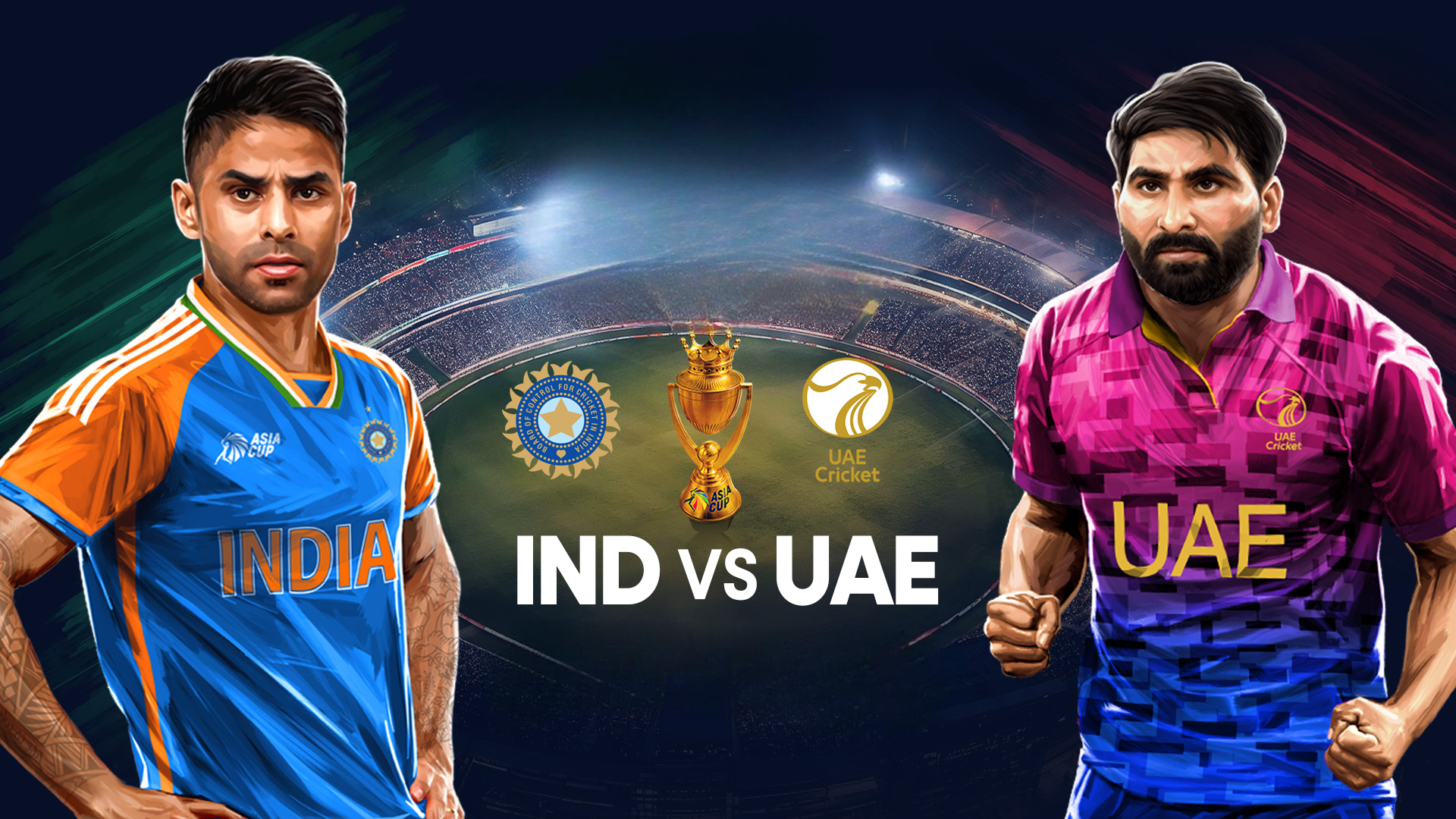
The United Arab Emirates national cricket team vs India national cricket team rivalry is a classic David-vs-Goliath tale in international cricket. Since their first clash in 1994, India has dominated every encounter across ODIs and T20Is, showcasing superior depth, tactics, and star power. UAE, as an emerging associate nation, has shown flashes of resilience—fighting knocks from players like Shaiman Anwar and Alishan Sharafu—but the gap in experience and resources remains wide. Matches often turn into masterclasses from India’s bowlers (Ashwin’s spin webs, Kuldeep’s wrist-spin magic) and batters (Rohit’s anchors, Abhishek’s blitzes). Fan emotions run high with the Indian diaspora turning UAE venues into home grounds, while pressure always weighs heavier on the underdogs. This one-sided yet inspiring story highlights cricket‘s global growth and UAE’s ongoing quest for parity.
Recent United Arab Emirates National Cricket Team Vs India National Cricket Team
| Tournament | Venue | Date | Toss | UAE Score | India Score | Result | Series | Player of the Match |
|---|---|---|---|---|---|---|---|---|
| Asia Cup T20I | Dubai International Cricket Stadium | Sep 10, 2025 | India (field) | 57 all out (13.1 overs) | 60/1 (4.3 overs) | India won by 9 wkts (93 balls remaining) – a record-fast chase that stunned the home crowd | Men’s T20 Asia Cup 2025 | Kuldeep Yadav (IND) – 4/7 in a spell that turned the game into a rout |
| Asia Cup T20I | Shere Bangla National Stadium, Dhaka | Mar 3, 2016 | UAE (bat) | 81/9 (20 overs) | 82/1 (10.1 overs) | India won by 9 wkts (59 balls remaining) – clinical dominance under lights | Asia Cup 2016 | Rohit Sharma (IND) – 39 off 28, anchoring with effortless power |
| World Cup ODI | WACA Ground, Perth | Feb 28, 2015 | UAE (bat) | 102 all out (31.3 overs) | 104/1 (18.5 overs) | India won by 9 wkts (187 balls remaining) – UAE’s grit met India’s spin mastery on a bouncy track | ICC Cricket World Cup 2015 | Ravichandran Ashwin (IND) – 4/25, weaving a web that exposed batting frailties |
| Asia Cup ODI | Rangiri Dambulla International Stadium | Jul 16, 2004 | UAE (field) | 144 all out (35 overs) | 260/6 (50 overs) | India won by 116 runs – a commanding display in humid conditions | Asia Cup 2004 | Rahul Dravid (IND) – 104, a captain’s knock full of class and control |
| Austral-Asia Cup ODI | Sharjah Cricket Stadium | Apr 13, 1994 | India (bat) | 202/9 (50 overs) | 273/5 (50 overs) | India won by 71 runs – UAE’s bold ODI debut chase fell short against seasoned pros | Pepsi Austral-Asia Cup 1993-94 | Sachin Tendulkar (IND) – 63, blending aggression with finesse in a landmark opener |
Head-to-Head Overview
| Category | Details |
|---|---|
| Total Matches Played | 5 Matches (3 ODIs + 2 T20Is) |
| India Wins | 5 (Higher than UAE; 100% win rate) |
| United Arab Emirates Wins | 0 (No wins recorded) |
| Highest Team Total | India 273/5 (ODI, 1994 Sharjah) |
| Lowest Team Total | UAE 57 all out (T20I, Asia Cup 2025 Dubai) |
| Super Over Matches | None |
| First Match | April 13, 1994 (ODI, Austral-Asia Cup, Sharjah) – India won by 71 runs |
Key Player Analysis: United Arab Emirates National Cricket Team vs India National Cricket Team
In this lopsided United Arab Emirates national cricket team vs India national cricket team rivalry—spanning just five senior internationals—India’s stars have consistently shone brighter, turning matches into showcases of their depth. On the Indian side, spin wizard Ravichandran Ashwin set the tone early with his 4/25 in the 2015 World Cup Perth clash, dismantling UAE’s middle order with clever variations and flight. Fast-forward to the 2025 Asia Cup T20I in Dubai, and Kuldeep Yadav stole the show with a devastating 4/7 in 2.1 overs, including a lethal burst that claimed three wickets in one over—earning him Player of the Match and highlighting wrist-spin as India’s killer weapon against UAE’s fragile batting.
All-rounder Shivam Dube complemented that demolition with 3/4, exploiting the lower order with seam movement and cutters. Batting-wise, Rohit Sharma has anchored chases effortlessly: an unbeaten 57 off 55 in 2015 (World Cup) and 39 off 28 in the 2016 Asia Cup T20I, blending elegance with aggression. Young gun Abhishek Sharma exploded in 2025 with a blistering 30 off 16 (including a first-ball six), powering the record-fastest chase. Shubman Gill finished unbeaten in that rout (20 off 9), showing composure under lights.
For UAE, resilience comes from unsung heroes. Shaiman Anwar tops their efforts with a gritty 43 off 48 in 2016 (Asia Cup) and 35 in 2015—fighting knocks amid collapses. Opener Alishan Sharafu provided the only real resistance in 2025 with 22 off 17, showing promise with quick cuts and drives. Captain Muhammad Waseem has battled hard across formats, but the lack of big partnerships limits impact. UAE bowlers like Amjad Javed or Junaid Siddique (who got Abhishek in 2025) occasionally strike, yet they rarely contain India’s firepower.
Overall, India’s key players dominate with tactical mastery—spin strangling UAE, pace adding early pressure, and top-order batters sealing easy wins. UAE’s fighters like Anwar and Sharafu offer hope, but the analysis screams one truth: India’s stars elevate the mismatch into a masterclass, while UAE’s rely on grit to earn respect in defeat.
| Player | Team | Format Focus | Key Stats/Performances | Impact Highlight |
|---|---|---|---|---|
| Kuldeep Yadav | IND | T20I/Recent | 4/7 (2.1 overs) in 2025 Asia Cup | Dismantled UAE for record low; 3 wickets in one over |
| Ravichandran Ashwin | IND | ODI | 4/25 (10 overs) in 2015 World Cup | Spin web that collapsed middle order |
| Shivam Dube | IND | T20I | 3/4 in 2025 Asia Cup | Lower-order destruction; economical death bowling |
| Rohit Sharma | IND | Multiple | 57* (55) in 2015; 39 (28) in 2016 | Anchored chases with class and power |
| Abhishek Sharma | IND | T20I | 30 (16) with first-ball six in 2025 | Explosive start to record chase |
| Shaiman Anwar | UAE | Multiple | 43 (48) in 2016; 35 (49) in 2015 | Top scorer for UAE; defiant resistance |
| Alishan Sharafu | UAE | T20I | 22 (17) in 2025 Asia Cup | Best recent effort; quick scoring intent |
| Muhammad Waseem | UAE | Captain | Consistent but low scores; leadership role | Fights for pride amid pressure |
The Dawn of a One-Sided Rivalry: First Encounters in the 1990s and Early 2000s
The rivalry between the United Arab Emirates national cricket team and India national cricket team began in the mid-1990s, a time when UAE cricket was in its infancy as an associate member, while India was already a full ICC powerhouse with stars like Sachin Tendulkar and Mohammad Azharuddin. The first encounter came on April 13, 1994, during the Austral-Asia Cup, a triangular series hosted by UAE in Sharjah. This marked UAE’s debut in ODIs, pitting them against two giants: India and Pakistan.
In that historic opener at Sharjah Cricket Stadium, India batted first and posted a commanding 273/5, thanks to solid contributions from Navjot Sidhu and Vinod Kambli. UAE, in their maiden ODI outing, showed pluck but crumbled under pressure, bowled out for 202 in 49.2 overs. India won by 71 runs, setting the tone for a lopsided dynamic. The gap in experience, resources, and talent was stark—UAE relied on expatriate players and local talent still developing, while India flexed their depth.
No further clashes occurred in the 1990s or immediate early 2000s between the full senior teams in official internationals. UAE’s path remained sporadic against top sides, with occasional warm-ups or associate tournaments, but nothing recorded against India until later. These early moments highlighted the underdog spirit: UAE fans in the stands cheered every boundary, dreaming of parity, while Indian supporters treated it as a routine outing. The desert air carried hope for the hosts, but reality favored the visitors every time.
| Match No. | Date | Format | Venue | Toss Winner | India Score | UAE Score | Result | Margin | Key Performer (India) | Key Performer (UAE) |
|---|---|---|---|---|---|---|---|---|---|---|
| 1 | April 13, 1994 | ODI | Sharjah Cricket Stadium | India | 273/5 (50 overs) | 202 all out (49.2 overs) | India won | 71 runs | Navjot Sidhu / Vinod Kambli (contributions in building total) | Limited standout; team effort in chase |
World Cup Spotlight: The 2015 Perth Thriller Where UAE Showed Fight
The World Cup Spotlight: The 2015 Perth Thriller Where UAE Showed Fight wasn’t exactly a nail-biter in the end, but it carried real significance for the United Arab Emirates national cricket team in their India national cricket team rivalry. On February 28, 2015, at the WACA Ground in Perth during the ICC Cricket World Cup Pool B clash, UAE won the toss and elected to bat first under cloudy skies. What followed was a gritty but ultimately futile effort from the associate nation against a rampaging Indian side.
UAE started promisingly with openers Andri Berenger and Amjad Ali, but the Indian pace attack—led by Umesh Yadav and Bhuvneshwar Kumar—struck early. The middle order collapsed under spin pressure, especially from Ravichandran Ashwin, who spun a web with his variations. Shaiman Anwar top-scored with a fighting 35, showing flashes of class, while Khurram Khan added 14. Yet, UAE were bundled out for a paltry 102 in just 31.3 overs—a total that screamed vulnerability against world-class bowling.
India’s chase was clinical. Rohit Sharma anchored with an unbeaten 57 off 55 balls, full of elegant drives, while Virat Kohli chipped in 33 not out. They reached 104/1 in 18.5 overs, winning by 9 wickets with 187 balls to spare. Ashwin earned Player of the Match for his 4/25 spell, his first four-wicket haul in World Cups.
For UAE, this wasn’t just another defeat; it was a learning curve on the biggest stage. Their bowlers extracted some swing, but the lack of depth showed. Fans in the stands—many Indian expats—cheered politely, but UAE supporters applauded every defiant shot, sensing progress amid the mismatch. The aggression came from India’s relentless fielding, with sharp catches and tight lines. Pressure moments? UAE’s top order crumbled quickly, but Anwar’s resistance gave a glimpse of fight. This match highlighted the growing gap yet UAE’s resilience in facing giants.
| Team | Innings | Total / Wickets | Overs | Key Batsmen (Runs/Balls) | Key Bowlers (Wickets/Runs/Overs) | Extras | Fall of Wickets Highlights | Result |
|---|---|---|---|---|---|---|---|---|
| United Arab Emirates | 1st | 102 all out | 31.3 | Shaiman Anwar 35 (49), Khurram Khan 14 (32), Swapnil Patil 10 (20) | Ravichandran Ashwin 4/25 (10), Umesh Yadav 2/15 (6.3), Mohammed Shami 2/20 (6) | 10 | 7/1 (1.4), 13/2 (4.6), 28/3 (10.2), 41/4 (16.4), 44/5 (17-ish), etc. | Bowled out in 31.3 overs |
| India | 2nd | 104/1 | 18.5 | Rohit Sharma 57* (55), Virat Kohli 33* (41), Shikhar Dhawan 14 (19) | Manjula Guruge 1/26 (5), Amjad Javed 0/20 (4) | 0 | 29/1 (Dhawan out early) | Won by 9 wickets (187 balls remaining) |
| Man of the Match | – | – | – | Ravichandran Ashwin (4/25) | – | – | – | India’s dominant victory |
The Modern Era Begins: Asia Cup 2025 Dubai Showdown and Record-Breaking Chase
The Modern Era Begins: Asia Cup 2025 Dubai Showdown and Record-Breaking Chase marked a brutal, one-sided chapter in the United Arab Emirates national cricket team vs India national cricket team rivalry. On September 10, 2025, at the Dubai International Cricket Stadium during the Men’s T20 Asia Cup Group A opener, India elected to field first under lights. What unfolded was utter dominance from Suryakumar Yadav’s side against the hosts.
UAE’s innings crumbled spectacularly. Openers struggled against India’s varied attack—Kuldeep Yadav’s wrist-spin wreaked havoc with a sensational 4/7 in just 2.1 overs, including a hat-trick-like burst, while Shivam Dube chipped in with 3/4. Alishan Sharafu top-scored with a brave 22 off 17, but the rest folded cheaply. UAE were skittled for 57 in 13.1 overs—their lowest T20I total ever and the second-lowest in Asia Cup history. This exposed tactical frailties: poor shot selection against spin and inability to rotate strike.
India’s chase was a record-smashing blitz. Abhishek Sharma blasted 30 off 16 balls with aggressive strokeplay, Shubman Gill finished unbeaten on 20 off 9, and they raced to 60/1 in just 4.3 overs—winning by 9 wickets with 93 balls remaining. This became the fastest chase in men’s T20I history by overs/balls, a humiliating statement in UAE’s backyard.
The Dubai crowd, packed with Indian expats, erupted in joy; UAE fans watched in stunned silence, their hopes dashed early. Aggression shone through India’s relentless bowling and fearless batting—no mercy shown. Pressure? Immense for UAE from ball one, minimal for India. Kuldeep earned Player of the Match for dismantling the lineup. This clash signaled the modern era’s harsh reality: India’s supremacy only growing, UAE still fighting for respect.
| Team | Innings | Total / Wickets | Overs | Key Batsmen (Runs/Balls) | Key Bowlers (Wickets/Runs/Overs) | Extras | Fall of Wickets Highlights (Approx. Overs) | Result |
|---|---|---|---|---|---|---|---|---|
| United Arab Emirates | 1st | 57 all out | 13.1 | Alishan Sharafu 22 (17), Muhammad Waseem 3 (5), Rahul Chopra 3 (runs limited) | Kuldeep Yadav 4/7 (2.1), Shivam Dube 3/4 (overs limited), others chipped in | Minimal | Early collapses: 26/1 (3.4), 29/2 (4.4), 47/3 (8.1), 48/4, then rapid fall | Bowled out cheaply; lowest vs India in T20Is |
| India | 2nd | 60/1 | 4.3 | Abhishek Sharma 30 (16), Shubman Gill 20* (9), Suryakumar Yadav 7* (2) | Simranjeet Singh 1 wicket (limited impact) | Low | Only 1 wicket early in chase | Won by 9 wickets (93 balls remaining); fastest T20I chase record |
| Man of the Match | – | – | – | Kuldeep Yadav (4/7) | – | – | – | India’s record-breaking demolition |
Tactical Evolution Over the Years: Spin Mastery, Pace Battles, and UAE’s Rising Resilience
The Tactical Evolution Over the Years: Spin Mastery, Pace Battles, and UAE’s Rising Resilience tells a story of stark contrasts in the United Arab Emirates national cricket team vs India national cricket team rivalry. Early clashes in the 1990s saw India rely on balanced pace and spin attacks from legends like Javagal Srinath and Anil Kumble, overwhelming UAE’s inexperienced lineup with disciplined lines and swing. UAE bowlers, often expatriate-led, lacked variety and struggled to contain India’s depth.
By the 2015 World Cup in Perth, India’s pace trio—Bhuvneshwar Kumar, Umesh Yadav, Mohammed Shami—dominated with seam movement, while Ravichandran Ashwin’s off-spin variations dismantled the middle order. UAE showed early resilience through better shot selection against pace but crumbled under spin pressure, highlighting their vulnerability to wrist-spin.
The modern T20 era, especially Asia Cup encounters, shifted tactics dramatically. India’s spin mastery exploded: wrist-spinners like Kuldeep Yadav exploited UAE’s poor footwork against turn, delivering devastating spells with flight, dip, and googlies. Pace bowlers added yorkers and slower balls for death-over control. In 2016 and 2025 T20Is, India’s varied attack—seam-up cutters mixed with spin—restricted UAE to low totals, showcasing ruthless efficiency.
UAE’s rising resilience shines through incremental improvements: better fitness, local talent development, and tactical awareness against spin via sweep shots and aggressive intent. Yet, overawed by India’s big names, they often falter in execution. Pace battles remain one-sided—India’s express speed exploits UAE’s top-order fragility—while spin continues to be the killer weapon. UAE’s fightback lies in building partnerships and rotating strike, but the gap persists. This evolution underscores India’s tactical superiority evolving from conventional to innovative, while UAE grows in grit against overwhelming odds.
| Match Date & Format | Venue | India Bowling Tactics Highlight | Key Spin Figures (Wickets/Economy) | Key Pace Figures (Wickets/Economy) | UAE Resilience Moments | Outcome & Tactical Note |
|---|---|---|---|---|---|---|
| Apr 13, 1994 (ODI) | Sharjah | Balanced attack: seam swing + early spin control | Limited spin impact (Kumble debut era) | Srinath/Azharuddin pace setup | Decent chase effort (202 all out) | India won by 71 runs; UAE showed fight but lacked depth against varied bowling |
| Feb 28, 2015 (ODI, WC) | Perth (WACA) | Pace early breakthroughs + Ashwin spin web | Ashwin 4/25 (10 overs) | Yadav 2/15, Shami 2/20, Kumar support | Anwar 35 fighting knock; brief partnerships | India won by 9 wkts; Spin mastery exposed UAE middle-order weakness |
| Mar 3, 2016 (T20I, Asia Cup) | Dhaka (Mirpur) | All-rounder variety: pace cutters + spin grip | Jadeja/Ashwin shared wickets | Bhuvneshwar 2/8 (4 overs) | Anwar 43 off 48; resisted early collapse | India won by 9 wkts; Spin & pace combo restricted UAE to 81/9 |
| Sep 10, 2025 (T20I, Asia Cup) | Dubai | Wrist-spin destruction + seam support | Kuldeep Yadav 4/7 (2.1 overs) | Dube 3/4 (all-round impact) | Sharafu 22 quickfire; brief defiance | India won by 9 wkts (93 balls rem); Record low 57 all out; Spin overawed UAE batters |
| Overall Trend (All Formats) | Various | Shift to spin-heavy in subcontinent/flat tracks; pace for bounce/seam abroad | Spinners average <20 in recent clashes | Pacers economical in powerplay/death | Improved strike rotation & fitness; still vulnerable to turn | India 100% win rate; Tactics evolved to exploit UAE’s spin weakness while maintaining pace threat |
Fan Emotions, Pressure Cooker Moments, and the Indian Diaspora Factor
Fan Emotions, Pressure Cooker Moments, and the Indian Diaspora Factor paint a vivid picture in the United Arab Emirates national cricket team vs India national cricket team rivalry—one where passion often outshines the scoreboard. For Indian supporters, especially the massive diaspora in Dubai, Sharjah, and Abu Dhabi, these matches feel like home games. Blue jerseys flood stadiums (or at least sections of them), chants of “India! India!” echo, and every boundary sparks wild celebrations. Yet, against UAE, the vibe stays low-key compared to India-Pakistan clashes—more routine dominance than high-stakes drama. In 2015 Perth, the small but vocal crowd cheered Rohit’s elegant drives, while UAE fans applauded Anwar’s gritty 35 amid inevitable defeat.
Pressure cooker moments? For UAE players and supporters, every ball carries weight—facing legends like Ashwin or Kuldeep feels overwhelming, with early collapses amplifying nerves. Indian fans expect wins, so tension builds only if UAE show fight; otherwise, it’s relaxed enjoyment. The 2025 Asia Cup Dubai opener saw surprisingly empty stands despite the home advantage—former player Aakash Chopra questioned the lack of buzz, wondering why the Indian diaspora didn’t pack the house for a rare white-ball return. Still, pockets of UAE locals and expats cheered defiantly for every run, their pride in hosting giants undimmed.
The Indian diaspora factor dominates: thousands celebrate India’s wins with street parties in Bur Dubai (though more wildly for Pakistan games), turning venues into mini-India. UAE fans, often a mix of locals and South Asian expats, root quietly for the underdog, appreciating the spectacle without aggression. No real hostility flares—it’s respectful mismatch energy. Emotions swing from quiet hope (UAE) to satisfied pride (India), with pressure heaviest on the hosts to avoid humiliation in their backyard.
| Match Date & Format | Venue | Indian Diaspora/Fan Emotion Highlights | UAE Fan/Local Emotion Highlights | Pressure Cooker Moments | Overall Atmosphere & Diaspora Impact |
|---|---|---|---|---|---|
| Apr 13, 1994 (ODI) | Sharjah | Polite cheers from expats; routine support for stars like Tendulkar era | Hopeful applause for every boundary in debut; learning curve pride | Minimal for India; immense for UAE debutants vs giants | Low-key; Sharjah as early neutral ground for diaspora viewing |
| Feb 28, 2015 (ODI, World Cup) | Perth (WACA) | Vocal but small crowd; satisfaction with easy win | Defiant cheers for Anwar’s resistance; quiet acceptance | UAE top-order collapse under Ashwin; pressure on bowlers | Small, vocal Indian support; diaspora far from home but engaged |
| Mar 3, 2016 (T20I, Asia Cup) | Dhaka (Mirpur) | Strong backing; expectations met with low total chase | Brief hope from Anwar’s 43; frustration at collapse | Early UAE wickets; spin pressure intense | Neutral venue; Indian fans dominant in energy |
| Sep 10, 2025 (T20I, Asia Cup) | Dubai | Relaxed joy at record chase; some disappointment over empty stands | Stunned silence after 57 all out; pride in hosting despite loss | Kuldeep’s 4/7 burst; UAE batters overawed from ball one | Surprisingly low buzz; diaspora didn’t fill stadium as expected |
| Overall Rivalry Trend | Various (Sharjah/Dubai/Perth) | Consistent pride in dominance; street celebrations for bigger wins | Underdog grit; applause for resistance; respect for spectacle | Always on UAE: survival vs humiliation; low on India | Diaspora turns UAE venues “home-like” but hype missing vs UAE; peaceful passion |
The Future of UAE vs India Clashes: Can the Underdogs Close the Gap?
looks ahead with cautious optimism for the United Arab Emirates national cricket team and continued dominance from the India national cricket team. As of early 2026, no direct senior bilateral series looms immediately, but the paths cross in bigger tournaments. UAE qualified for the ongoing ICC Men’s T20 World Cup 2026 (co-hosted by India and Sri Lanka, starting February 7, 2026) after strong showings in the Asia/EAP qualifiers, topping groups and beating Japan emphatically. They’re in Group D alongside heavyweights like New Zealand, South Africa, Afghanistan, and Canada—tough, but exposure to high-level cricket.
UAE’s growth stems from the ILT20 league, providing competitive reps to stars like Muhammad Waseem (captain), Alishan Sharafu, and emerging talents such as Mayank Kumar and Muhammad Jawadullah. Recent form includes solid qualifier wins, but a pre-World Cup series thrashing by Ireland and a heavy warm-up loss to Italy highlight gaps in consistency against pace and depth.
India, defending champions and favorites (+138 odds), boast stars like Suryakumar Yadav, Jasprit Bumrah, and Abhishek Sharma. Predictions favor India heavily in any clash—experts see them winning the tournament outright. UAE’s best hope? Upset potential in T20s via aggressive batting, better spin handling, and home-like conditions if venues favor them.
Closing the gap? Possible long-term through sustained league play, youth development, and more associate-full member interactions. Short-term? Unlikely—India’s resources dwarf UAE’s. Yet, every defiant performance (like Sharafu’s knocks) builds belief. Future clashes, perhaps in Asia Cups or World Cups, could see narrower margins if UAE capitalizes on ILT20 momentum. For now, the underdogs dream big while India remains the benchmark.
| Aspect | UAE’s Current Strengths & Progress | India’s Overwhelming Advantages | Potential for Gap Closure (Short-Term 2026-2028) | Potential for Gap Closure (Long-Term 2030+) | Key Upcoming Opportunities / Risks |
|---|---|---|---|---|---|
| Squad Depth & Talent Pool | ILT20 exposure; players like Waseem, Sharafu, Jawadullah gaining experience | World-class depth: Bumrah, Yadav, Sharma, Pandya, etc. | Low—India’s pipeline endless | Medium—UAE youth academies growing | T20WC 2026 Group D; possible Asia Cup rematches |
| Recent Form (2025-2026) | Qualifier success (beat Japan 8 wkts); qualifier top runs (Sharafu 283) | Dominant Asia Cup 2025 win (9 wkts vs UAE); defending T20WC champs | Very Low—UAE losses in warm-ups/series | Medium—Consistent wins vs associates | Warm-ups showed vulnerabilities (e.g., Italy thrashing) |
| Tactical Improvements | Better aggression in T20s; spin resistance via sweeps | Spin mastery (Kuldeep, Chakaravarthy); pace variety | Low—Still overawed by wrist-spin | High—If ILT20 hones execution | Need to rotate strike vs India’s varied attack |
| League & Domestic Exposure | ILT20 foundation; franchise cricket boosts skills | IPL + international calendar; unmatched pressure handling | Medium—ILT20 helps bridge experience gap | High—More global leagues possible | UAE players in ILT20 key for confidence |
| Prediction Odds / Expert Views | Longshots (+100000 for T20WC win); group stage exit likely | Favorites (+138 to win T20WC 2026) | Very Low—Experts predict India dominance | Medium—If UAE reaches Super 8/10 regularly | T20WC 2026: UAE vs NZ opener tough; upset dream alive |
| Fan & Infrastructure Support | Growing local pride; diaspora helps but not vs India | Massive Indian diaspora in UAE turns venues “home” | Low—Pressure always higher on UAE | Medium—More home series could build buzz | Hosting future events; need packed stands for morale |
| Overall Gap Assessment | Incremental gains; resilience building | Sustained supremacy in all formats | Unlikely in next 2-3 years | Possible narrowing in T20s with investment | Realistic goal: Competitive totals, fewer collapses |
Conclusion
In the end, the United Arab Emirates national cricket team vs India national cricket team stats paint a picture of overwhelming Indian supremacy—no losses for India in five senior internationals. Yet, each defeat fuels UAE’s development through leagues like ILT20 and qualifier triumphs. Future clashes in Asia Cups or World Cups could see tighter margins if UAE builds consistency. For now, it’s a reminder of cricket’s beauty: giants set benchmarks, underdogs chase dreams. The rivalry endures not for wins alone, but for the hope and spectacle it brings to fans worldwide.
Frequently Asked Questions (FAQs)
How many times have India and UAE played international cricket matches?
The senior teams have faced off in 5 matches: 3 ODIs and 2 T20Is. India has won all of them convincingly.
What is UAE’s lowest total against India?
UAE’s lowest score came in the 2025 Asia Cup T20I in Dubai, where they were bowled out for 57—their record low against India and one of the lowest in Asia Cup T20 history.
Has UAE ever beaten India in any format?
No, UAE has never defeated India in senior international cricket. India’s win record stands at 100% in their head-to-head encounters.
What was the most competitive match between the two sides?
The 1994 Sharjah ODI (India won by 71 runs) saw UAE chase 274 gamely, reaching 202/9—arguably their most competitive showing despite the loss.
When was the last India vs UAE match, and what happened?
The most recent clash was the 2025 Asia Cup T20I in Dubai on September 10. India elected to field, bowled UAE out for 57, and chased 60/1 in just 4.3 overs for a 9-wicket win with 93 balls to spare—setting a record for the fastest T20I chase by balls remaining.