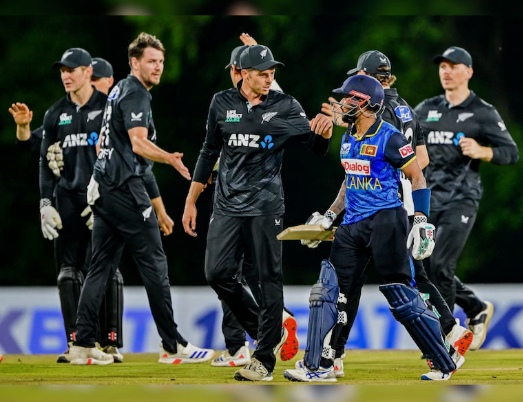
The rivalry between Sri Lanka National Cricket Team and New Zealand National Cricket Team has produced some of international cricket’s most tactical and emotional contests. From spin-friendly battles in Colombo to swing-dominated clashes in Wellington, both teams have consistently challenged each other across Tests, ODIs, and T20Is. Their encounters are filled with dramatic scorecards, legendary player performances, close finishes, and unforgettable World Cup moments. Over the years, stars like Kumar Sangakkara, Mahela Jayawardene, and Kane Williamson shaped this rivalry with brilliance and leadership. The competition remains respected globally because every series delivers pressure, strategy, and unforgettable cricketing drama.
Recent Matches Head-to-Head
Date
Match Format / Series
Venue
Winner
Margin of Victory
Feb 25, 2026
T20 World Cup
Colombo, SL
New Zealand
Won by 61 runs
Jan 11, 2025
Bilateral ODI Series
Auckland, NZ
Sri Lanka
Won by 140 runs
Jan 08, 2025
Bilateral ODI Series
Hamilton, NZ
New Zealand
Won by 113 runs
Jan 05, 2025
Bilateral ODI Series
Wellington, NZ
New Zealand
Won by 9 wickets
Jan 02, 2025
Bilateral T20I Series
Nelson, NZ
Sri Lanka
Won by 7 runs
Dec 30, 2024
Bilateral T20I Series
Mt. Maunganui, NZ
New Zealand
Won by 45 runs
Dec 28, 2024
Bilateral T20I Series
Mt. Maunganui, NZ
New Zealand
Won by 8 runs
Head-to-Head Record Evolution in Numbers
Format
Total Matches
New Zealand Wins
Sri Lanka Wins
Draws / Ties / No Result
Test
39
18
10
11
ODI
108
54
44
10
T20I
29
17
11
1
Total
176
89
65
22
Top Performances
Performance Metric
Record Holder
Team
Stat Summary
Historical Match Details
Most Career Runs (ODI)
Kumar Sangakkara
SL
1,568 runs
Scored between 2001 and 2015
Most Career Runs (T20I)
Ross Taylor
NZ
342 runs
Scored across 17 matches
Highest Individual Innings
Stephen Fleming
NZ
274 runs
Hit during the 2003 Test match in Colombo
Highest Team Total
Sri Lanka Team
SL
602/5d
Set during the 2024 Test series
Most Career Wickets (Test)
Muttiah Muralidaran
SL
82 wickets
Collected across 14 Test matches
Most Career Wickets (T20I)
Lasith Malinga
SL
26 wickets
Highlights include a famous 4-in-4 hat-trick
Best Bowling Innings (ODI)
Sir Richard Hadlee
NZ
5 wickets for 25 runs
Historic spell at Bristol in the 1983 World Cup
Best Bowling Innings (T20I)
Rachin Ravindra
NZ
4 wickets for 27 runs
Match-winning spell in the 2026 T20 World Cup
Biggest Wins and Closest Matches
Category
Match Format
Winner
Winning Margin
Match Details and Venue
Biggest Win (Runs)
One-Day International (ODI)
Sri Lanka
Won by 189 runs
2007 Bilateral Series (Auckland, NZ)
Biggest Win (Wickets)
One-Day International (ODI)
New Zealand
Won by 10 wickets
2015 Bilateral Series (Christchurch, NZ)
Biggest Win (T20Is)
Twenty20 International (T20I)
New Zealand
Won by 65 runs
2022 ICC Men’s T20 World Cup (Sydney, AUS)
Closest Match (Tied / Super Over)
Twenty20 International (T20I)
Sri Lanka
Won via Super Over
2023 Bilateral Series (Auckland, NZ) – Both teams hit 196 runs
Closest Match (1-Wicket Finish)
One-Day International (ODI)
New Zealand
Won by 1 wicket
2013 ICC Champions Trophy (Cardiff, WAL)
Closest Test Match (Runs)
Test Match
Sri Lanka
Won by 59 runs
1992 Bilateral Test Series (Moratuwa, SL)
Closest Recent White-Ball Game
Twenty20 International (T20I)
Sri Lanka
Won by 7 runs
2025 New Year’s Day Match (Nelson, NZ) – SL scored 218/5
When Colombo First Tested New Zealand’s Patience
The rivalry between Sri Lanka National Cricket Team and New Zealand National Cricket Team started with slow-burning Test battles where patience mattered more than aggression. Sri Lanka relied heavily on spin-friendly pitches in Colombo, while New Zealand entered matches with disciplined fast bowlers and defensive tactics. Early scorecards often reflected low-scoring contests dominated by bowlers. Sri Lanka gradually became stronger at home, especially through middle-order partnerships and tactical spin changes. New Zealand, however, remained dangerous with swing bowling under cloudy conditions. These early clashes created respect between the teams and laid the foundation for a rivalry built on adaptability, resilience, and tactical awareness. Fans slowly became emotionally invested as every series produced tense sessions and dramatic batting collapses that changed the direction of matches.
Season
Score
Winning Team
Performance
Key Moment
1984
SL 397 vs NZ 221
Sri Lanka
Strong spin attack
Historic early Test success
1987
NZ 285 vs SL 244
New Zealand
Swing bowling dominance
Seamers controlled Colombo
1990
SL 356 vs NZ 340
Sri Lanka
Balanced batting effort
Close finish created tension
1992
NZ 301 vs SL 198
New Zealand
Tactical fast bowling
Pressure collapse from SL
The 1990s Battles That Changed the Rivalry Forever
The 1990s transformed the Sri Lanka versus New Zealand rivalry into a fiercely competitive contest. Sri Lanka’s fearless batting style began troubling New Zealand bowlers, especially after the rise of aggressive openers and attacking middle-order players. New Zealand responded with disciplined field settings, slower bowling variations, and tactical patience. Bilateral ODI series during this decade featured several close finishes, with both teams exchanging memorable wins. Sri Lanka’s confidence grew after major ICC tournament performances, while New Zealand developed a reputation for upsetting stronger teams through clever planning. Fans witnessed emotional contests filled with momentum swings and pressure moments. The rivalry no longer looked one-sided because both teams consistently challenged each other in different conditions, producing scorecards packed with dramatic partnerships, collapses, and match-winning bowling spells.
Season
Score
Winning Team
Performance
Key Moment
1994
SL 251 vs NZ 248
Sri Lanka
Aggressive batting
Final over thriller
1995
NZ 276 vs SL 201
New Zealand
Pace attack success
Top-order collapse
1997
SL 398 vs NZ 241
Sri Lanka
Dominant batting display
Massive partnership
1999
NZ 265 vs SL 262
New Zealand
Calm chase under pressure
Tight World Cup battle
World Cup Encounters and Knockout Pressure Moments
ICC tournaments pushed this rivalry to another emotional level because knockout cricket magnified every mistake. Sri Lanka often entered tournaments with dangerous spinners and experienced batters, while New Zealand depended on disciplined bowling and sharp fielding. Their World Cup meetings produced unforgettable moments where momentum shifted within a few overs. Captains played a huge role in tactical changes, especially while handling pressure during run chases. Fans from both countries remember collapses, brilliant catches, and match-winning partnerships that shaped tournament standings. Some matches featured bowlers dominating batting lineups, while others turned into dramatic chases under lights. Every World Cup clash added another chapter to the rivalry because players understood the emotional and historical importance of defeating each other on cricket’s biggest stage.
Season
Score
Winning Team
Performance
Key Moment
2003 WC
NZ 208 vs SL 154
New Zealand
Strong bowling unit
SL batting collapse
2007 WC
SL 219 vs NZ 208
Sri Lanka
Spin domination
Semi-final pressure
2011 WC
SL 265 vs NZ 217
Sri Lanka
Balanced performance
Crowd pressure in Colombo
2015 WC
NZ 332 vs SL 242
New Zealand
Explosive batting
Fast scoring powerplay
Spin Versus Swing: The Tactical Identity of the Rivalry
One of the most fascinating parts of this rivalry is the contrast in playing styles. Sri Lanka traditionally trusted spin bowling, slower pitches, and patient batting partnerships, especially at home. New Zealand preferred swing bowling, bounce, athletic fielding, and disciplined line-and-length tactics. These differences created tactical battles that cricket fans admired for decades. In Sri Lanka, New Zealand batters struggled against turning deliveries and humid conditions. In New Zealand, Sri Lankan batters faced bounce and seam movement that tested technique and patience. Captains frequently adjusted field placements depending on pitch behavior and weather conditions. The rivalry became a chess match where every bowling change mattered. Several scorecards reflected dramatic batting collapses because adapting quickly to unfamiliar conditions often decided the winner.
Season
Score
Winning Team
Performance
Key Moment
2001
SL 274 vs NZ 190
Sri Lanka
Spin-controlled victory
Turning wicket impact
2005
NZ 318 vs SL 214
New Zealand
Swing bowling dominance
Early wickets changed game
2012
SL 287 vs NZ 285
Sri Lanka
Tactical chase success
Calm finishing partnership
2018
NZ 178 vs SL 140
New Zealand
Pace-friendly conditions
Fast bowling pressure
Sangakkara, Jayawardene, Williamson and the Era of Modern Greatness
Modern cricket elevated the rivalry through legendary players who consistently delivered under pressure. Kumar Sangakkara and Mahela Jayawardene became symbols of Sri Lanka’s batting strength with elegant stroke play and tactical intelligence. On the other side, Kane Williamson brought calm leadership and technical brilliance to New Zealand cricket. Their performances shaped major bilateral series and ICC clashes. Fans admired how these players handled pressure with composure despite hostile conditions and emotional expectations. Several matches were decided by individual brilliance rather than team dominance. Partnerships, centuries, and tactical captaincy decisions became central talking points. This era gave the rivalry global recognition because world-class players consistently produced memorable cricket across formats.
Season
Score
Winning Team
Performance
Key Moment
2009
SL 320 vs NZ 276
Sri Lanka
Sangakkara century
Dominant batting control
2013
NZ 285 vs SL 284
New Zealand
Williamson masterclass
Last over finish
2015
NZ 331 vs SL 236
New Zealand
Aggressive batting display
Fast scoring partnership
2019
SL 244 vs NZ 243
Sri Lanka
Tactical bowling comeback
Dramatic one-run victory
Heartbreak Finishes and Last Over Drama
Sri Lanka and New Zealand have repeatedly produced matches that tested nerves until the final ball. Some contests ended with miraculous run chases, while others featured heartbreaking collapses under pressure. Fans experienced emotional highs and devastating lows as bowlers defended impossible totals or batters finished games with fearless stroke play. Captains often trusted experienced bowlers during tense final overs, leading to unforgettable pressure moments. T20 cricket especially intensified the rivalry because momentum shifted rapidly. Several scorecards included sudden batting collapses, crucial dropped catches, and match-winning sixes that stunned stadium crowds. These dramatic finishes strengthened the emotional connection between supporters and players. Even neutral cricket fans followed these clashes because the rivalry consistently delivered suspense, unpredictability, and unforgettable cricketing theater.
Season
Score
Winning Team
Performance
Key Moment
2010
SL 259 vs NZ 258
Sri Lanka
Nerve-filled chase
Winning boundary late
2014
NZ 167 vs SL 165
New Zealand
Death bowling brilliance
Final over tension
2016
SL 194 vs NZ 190
Sri Lanka
Counterattack batting
Late wickets changed game
2022
NZ 146 vs SL 141
New Zealand
Controlled final overs
Pressure defense success
Home Fortress Versus Overseas Survival
Home advantage has always shaped this rivalry because both teams perform differently in familiar conditions. Sri Lanka dominated on spinning surfaces where batters needed patience and strong footwork. New Zealand controlled matches on green pitches with swing-friendly weather and disciplined seam bowling. Touring teams regularly struggled to adapt, leading to unpredictable series results. Captains who adjusted fastest to conditions usually succeeded. Fans in Colombo created loud atmospheres that pressured visiting teams, while New Zealand crowds supported aggressive cricket and energetic fielding. Statistical standings often showed massive differences between home and away performances. This contrast added complexity to the rivalry because victories overseas carried extra emotional and historical value. Every successful overseas tour became a statement about resilience, preparation, and tactical maturity.
Season
Score
Winning Team
Performance
Key Moment
2006
SL 352 vs NZ 187
Sri Lanka
Spin-friendly dominance
Massive innings lead
2010
NZ 412 vs SL 233
New Zealand
Fast bowling attack
Bounce troubled batters
2018
SL 287 vs NZ 285
Sri Lanka
Smart run chase
Home crowd energy
2023
NZ 257 vs SL 151
New Zealand
Seam bowling control
Away batting collapse
Conclusion
The Sri Lanka versus New Zealand rivalry continues to stand as one of cricket’s most balanced and strategically fascinating contests. Both teams built their identities differently, with Sri Lanka mastering spin and subcontinent conditions while New Zealand developed a reputation for discipline, swing bowling, and fearless cricket overseas. Across decades, their meetings have delivered iconic scorecards, emotional fan moments, and unforgettable performances under pressure. From World Cup clashes to thrilling bilateral series, this rivalry has consistently evolved with new generations of players carrying forward its intensity. Even today, every encounter between these two teams attracts global attention because fans expect tactical battles, dramatic finishes, and high-quality cricket from two respected international sides.